Rehab after a total knee replacement usually involves several weeks to a few months of outpatient physical therapy, with full recovery taking four months to a year. The early weeks are a race against stiffness: getting the new knee fully straight and bending far enough to climb stairs and sit comfortably, while swelling settles. Near Carmel, the matching team proposes an independent, Indiana-licensed therapist who works one-on-one in a private suite and follows your surgeon’s protocol from your first outpatient visit.
Last reviewed By the Monon Therapy Collective editorial team
- Daily activities
- Most resume within 3 to 6 weeks
- Driving
- Commonly about 4 to 6 weeks, per your surgeon
- Full recovery
- 4 months to a year
- Biggest early risk
- A knee that stiffens before it bends
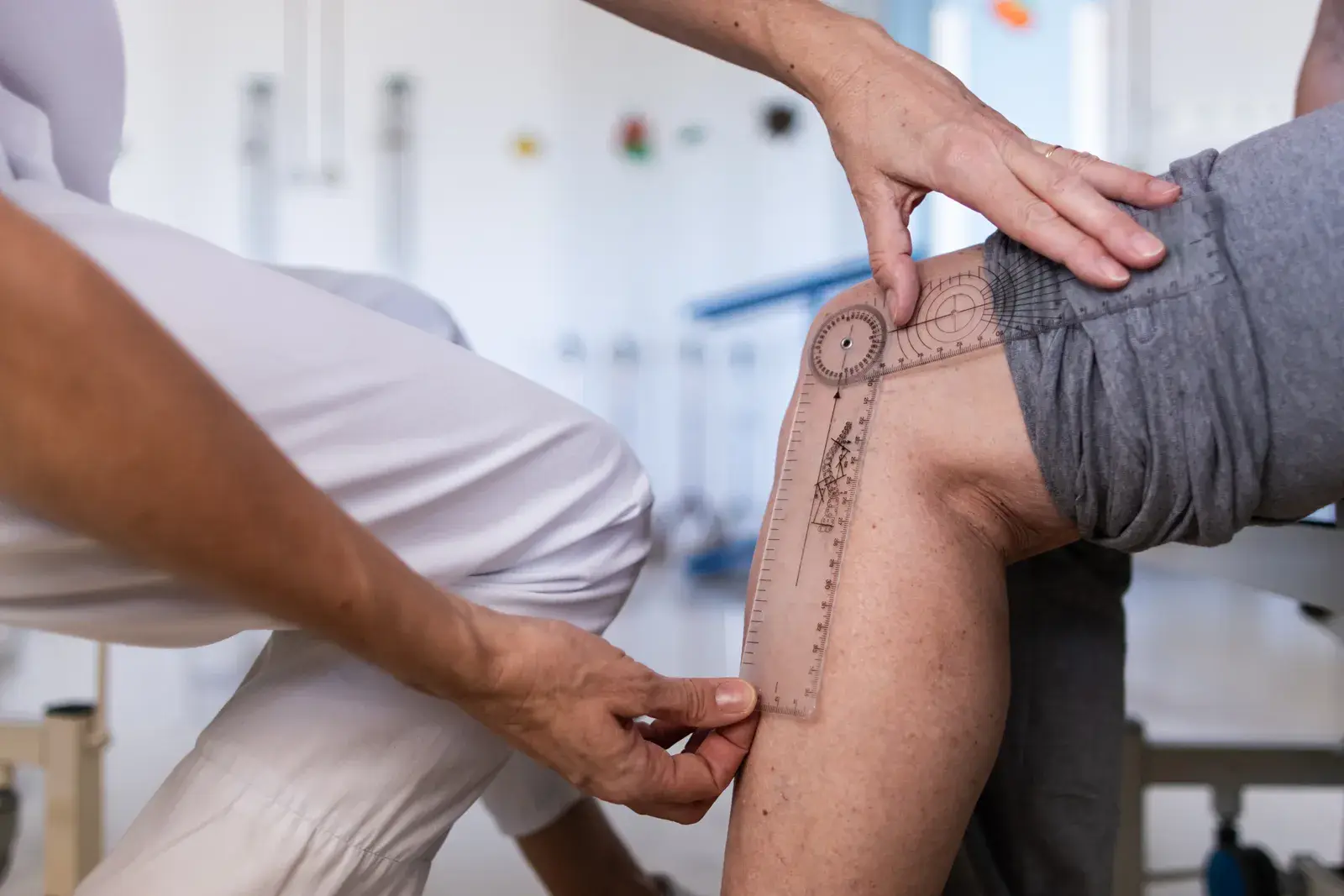
How much should a new knee bend and straighten, and by when?
The two numbers that matter most early on are extension, how close the knee gets to fully straight, and flexion, how far it bends. A straight knee lets you walk without a limp; a bend of roughly 90 degrees covers sitting and a car seat, while stairs and rising from a low chair ask for somewhat more.
Therapists measure both angles with a goniometer, a hinged ruler, at most visits in the first weeks because the trend matters more than any single reading. Motion gained in the first six weeks is far easier to keep than motion fought for later, when scar tissue has matured. If bending stalls badly, your surgeon may discuss a procedure described in the manipulation under anesthesia rehab guide, which is why stalled numbers are reported promptly.
Swelling, pain and poor sleep all limit motion. Managing them with elevation, ice, walking in short bouts and the medicine plan from your surgeon is part of rehab, not a separate problem.
What does each stage of knee replacement rehab look like?
Recovery after a total knee replacement moves through four broad stages. The ranges below come from mainstream patient sources and typical protocols; your surgeon’s instructions and your own progress decide when you move on.
| Time after surgery | Goals | Typical milestones |
|---|---|---|
| Days 1 to 14 | Walk safely, control swelling, start bending and straightening | Walking with a walker or cane, getting in and out of bed and the car with help |
| Weeks 2 to 6 | Motion, quadriceps strength, wean off walking aids | Bend nearing 90 degrees or more, short walks without a device, stairs with a rail |
| Weeks 6 to 12 | Strength, balance, endurance, normal stairs | Driving if cleared, longer walks, step-overs and getting up from the floor |
| 3 to 12 months | Return to hobbies and low-impact sport | Golf, cycling, swimming and long walks as the surgeon allows |
How do I get through the first two weeks at home with a new knee?
Expect the first two weeks to be the hardest part: the knee is swollen, nights are broken, and simple jobs like showering or getting into the car take planning. OrthoInfo notes that most people need help for several weeks with cooking, shopping, bathing and laundry, so line that help up before surgery rather than after.
Short, frequent walks around the house beat one long outing. Set a rhythm of exercises, walking and elevating the leg above heart level several times a day, and keep a log of your bend and straighten numbers if your therapist gives you a way to measure them. Pain and stiffness at night are common for several weeks and usually improve as swelling falls.
Plan the trip to outpatient visits too. A front passenger seat pushed fully back and slightly reclined makes getting in easier, and a plastic bag on the seat helps you swivel. Indiana winters add one more task: if your surgery is between December and March, ask someone to salt the path from the door to the car before your first outing.
Which knee replacement decisions belong to the surgeon?
The surgeon controls weight-bearing status, any brace or motion restrictions, wound care, blood-clot prevention, and when you may drive, kneel or return to particular sports. Most total knee replacements allow full weight on the leg straight away, but a revision, a bone graft or a fracture during surgery can change that.
Your therapist controls the daily work: which exercises, how hard, how to handle a swollen day, and when to drop the cane. If you have Medicare, the plan of care your therapist writes must be certified by a physician or another qualified provider, which normally happens through your surgeon’s office. Coverage questions are covered in how many sessions after knee replacement and on the cost page.
How do outpatient sessions in a Carmel suite help after a knee replacement?
Outpatient sessions combine hands-on work to ease stiffness, measured bending and straightening, and steadily heavier strength work for the quadriceps, hip and calf. Many people move from home therapy to an outpatient suite once they can manage the car, and the garage at Carmel City Center is a short walk away.
The suites have a bench, a cable system and a lifting rack, so practice can include realistic tasks: getting up from a low seat, stepping onto a box the height of your stairs at home, carrying a light bag. Long walks on the flat, paved Monon Trail become a good test of endurance once your surgeon and therapist agree. Sit-to-stand practice is one of the exercises most people keep long after discharge.
- Heel slides, seated bends and supported straightening for motion
- Quadriceps sets progressing to supported squats and step-ups
- Walking practice to remove the limp, then balance work
- Stair practice with one rail, then without
What should I do in the weeks before a knee replacement?
Use the weeks before surgery to build quadriceps strength, practise the first exercises while you are comfortable, and prepare the house for a walker. People who go in stronger and better informed usually find the first two weeks less daunting.
Move rugs, set up a firm chair with arms, put frequently used items at waist height and arrange help with cooking and driving for several weeks. The knee replacement checklist walks through the house, and the prehab before joint replacement guide covers a short pre-surgery exercise plan.
Warning signs after a knee replacement
Contact your surgeon’s office the same day for these; call 911 for chest pain or sudden breathlessness.
- New calf pain, tenderness or swelling of the calf, ankle or foot
- Sudden shortness of breath or chest pain
- Fever above the level your surgeon gave you, or shaking chills
- Increasing redness, warmth or drainage from the incision
- A sudden increase in knee pain or a knee that suddenly will not move
If you think it is an emergency, call 911.
