Rehab after a partial knee replacement is usually quicker than after a total knee: you can typically put full weight on the leg right away, many people walk without a cane within three to four weeks, and physical therapy commonly continues for about three to four months. Because the surgeon resurfaces only one worn section of the knee and leaves the healthy parts and ligaments, the work focuses on regaining motion fast and then strengthening the whole leg. Near Carmel, the matching team proposes an independent, licensed therapist who sees you one-on-one in a private suite.
Last reviewed By the Monon Therapy Collective editorial team
- Weight bearing
- Usually full weight right away
- Off the cane
- Often within 3 to 4 weeks
- Therapy course
- About 3 to 4 months
- Everyday activities
- Most resumed by about 6 weeks
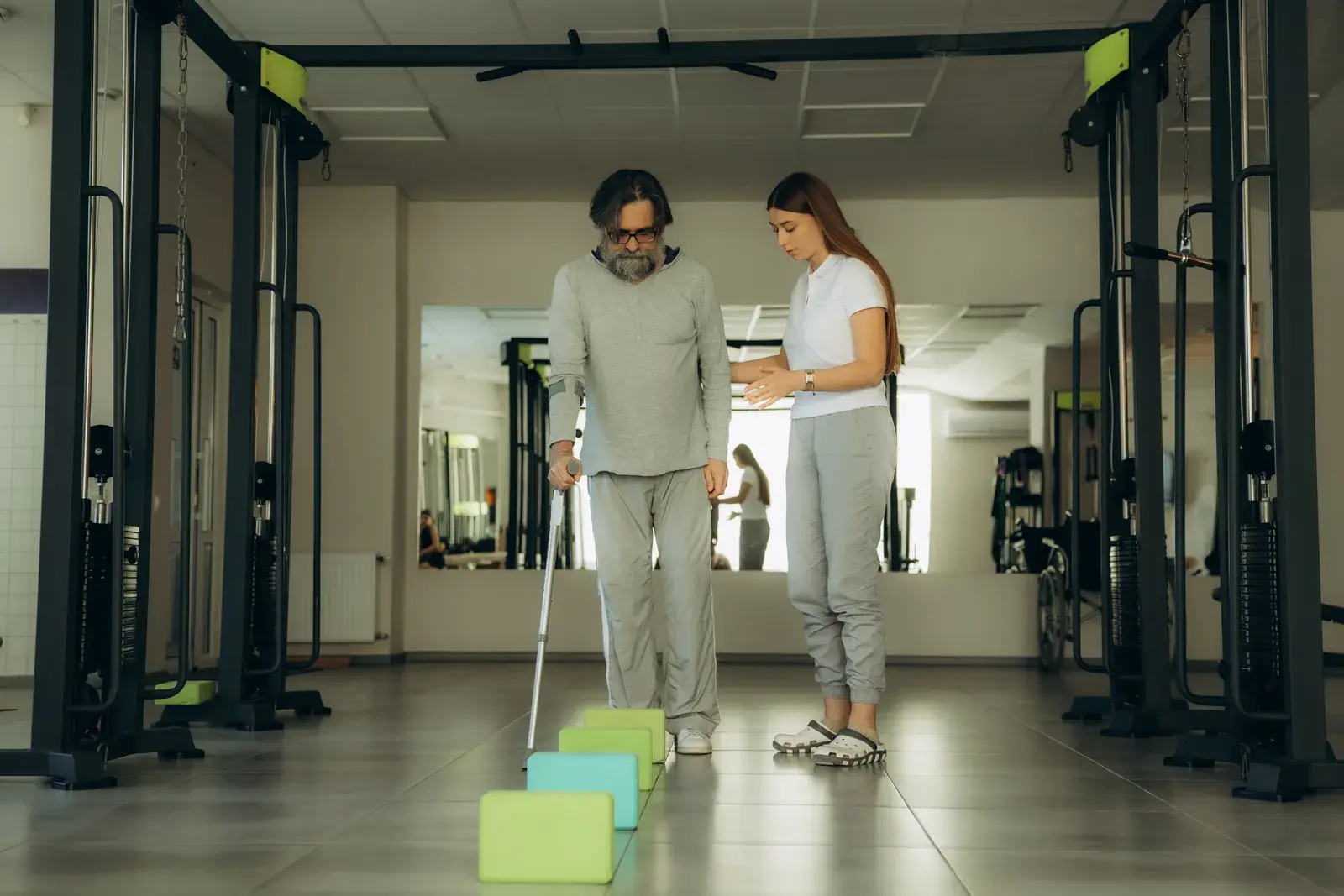
How is rehab after a partial knee different from rehab after a total knee?
The main difference is speed and starting point: less of the joint is disturbed, so pain and swelling are usually lower and motion tends to return sooner. The rehab ingredients are the same as after a total knee, motion, quadriceps strength, walking and stairs, but most people move through them faster.
A partial replacement, also called a unicompartmental knee arthroplasty, replaces just the inner (medial), outer (lateral) or kneecap (patellofemoral) section. The cruciate ligaments are usually kept, so the knee can feel more like your own. That also means the rest of the knee is still a natural joint that can wear over time, which is part of why surgeons steer people away from jogging and other high-impact activity afterward.
Faster is not the same as finished. The quadriceps still shuts down after any knee surgery and needs deliberate rebuilding, and skipping that work is a common reason the knee feels weak months later. For the longer version of this recovery, compare the total knee replacement rehab guide.
What is the usual timeline after a unicompartmental knee replacement?
A typical course runs from walking on the day of surgery to most everyday activities by about six weeks, with strength still improving for several months. Treat these as common ranges, not targets, and follow your surgeon’s schedule.
| Time after surgery | Goals | Typical milestones |
|---|---|---|
| Days 0 to 7 | Walk with a device, start bending, control swelling | Full weight on the leg, home the same day or next day for many |
| Weeks 1 to 4 | Restore bend and full straightening, normal walking | Walking without a cane or walker for many people by weeks 3 to 4 |
| Weeks 4 to 8 | Strength, stairs without a rail, longer walks | Most daily activities back by around week 6 |
| Months 2 to 4 | Leg strength, balance, return to low-impact sport | Cycling, swimming, golf and doubles tennis as the surgeon allows |
What limits does a partial knee surgeon usually set?
Surgeons generally allow full weight and free motion after a partial knee, so the protocol tends to focus on wound care, clot prevention, driving and long-term activity choices. The bigger instruction is often about the future: low-impact activity is encouraged, high-impact running and jumping are usually discouraged.
If you had a kneecap (patellofemoral) replacement rather than an inner or outer one, early exercise choices around squatting and stairs may differ, and your therapist will follow that specific guidance. Bring the operative report so your therapist knows exactly which compartment was resurfaced.
Your therapist owns the rest: how quickly to progress strength work, when you no longer need the cane, and how to respond when the knee swells after a busy day. Because recovery is quicker, the risk is overdoing it in week two or three when the knee feels good but the tissues around the incision are still healing; a sensible rule is that activity should not leave the knee more swollen the next morning.
Which exercises carry most of the load after a partial knee replacement?
Quadriceps strength, full straightening and confident stair climbing carry most of the recovery. In the suites, that usually means a progression from quad sets and heel slides to step-ups, supported squats and controlled step-downs, with a handrail at first.
The step-down exercise is a useful marker of progress, because going down stairs asks the quadriceps to work while lengthening, which is often the last thing to return. Balance drills follow, since many people with knee arthritis lost single-leg control long before surgery. Daily walks on the Monon Trail, building distance gradually, are a practical way to rebuild endurance near Carmel City Center.
- Motion: heel slides, seated knee bends, supported straightening
- Strength: quad sets, straight-leg raises, step-ups, split squats
- Control: step-downs, single-leg balance, sit-to-stand without hands
- Endurance: stationary bike, then longer outdoor walks
When can I go back to work, drive and travel after a partial knee?
Desk workers often return within a few weeks of a partial knee replacement, while jobs with long standing, climbing or kneeling usually take longer; your surgeon makes the final call, and your therapist can describe what you can safely do at work now. Driving depends on which knee was operated on, your car and your pain medicine, and is cleared by the surgeon.
Travel is mostly a question of blood-clot risk and stiffness. Long car rides or flights in the first weeks call for breaks every hour or so to walk and pump the ankles, and some surgeons want to be told about any flight in the early period. A trip planned for golf season or a summer holiday is a reasonable goal to share with your therapist, who can shape the program around the walking and stair demands of that trip.
Returning too fast is less of a risk than staying too cautious. People who feel well early sometimes stop their exercises at four weeks and then plateau, with a leg that tires on stairs or long walks months later. Finishing the strength phase is what turns a good operation into a capable leg.
Should I see a therapist before my partial knee surgery?
A short course of prehab is worth considering, especially if your quadriceps is weak or the knee no longer straightens fully, because you will rebuild from wherever you start. Two or three visits can set up a home program and rehearse walking with a device.
Strengthening before surgery also tests the decision itself: some people with arthritis in one compartment find exercise eases symptoms enough to postpone surgery, and others confirm they are ready. The knee osteoarthritis physical therapy page covers that non-surgical side, and the physical therapy questionnaire is the way to ask the matching team for a therapist before or after the operation.
After a partial knee replacement, call the surgeon about
- A swollen, tender or warm calf on the operated side
- Chest pain or breathlessness, which needs 911
- Wound redness that spreads, or any drainage after the first few days
- Fever or feeling generally unwell
- Pain that is steadily worsening rather than easing week to week
If you think it is an emergency, call 911.
