A knee giving out has two broad kinds of cause: a structural one, such as a torn ACL, a kneecap that slips sideways or a meniscus fragment catching, and a strength or pain one, where the thigh muscles switch off for a moment, common with arthritis and kneecap pain. A knee that buckled with a pop and swelled within a day should be checked by a physician. Most other giving way improves with strength and control training from a licensed physical therapist, available near Carmel without a referral.
Last reviewed By the Monon Therapy Collective editorial team
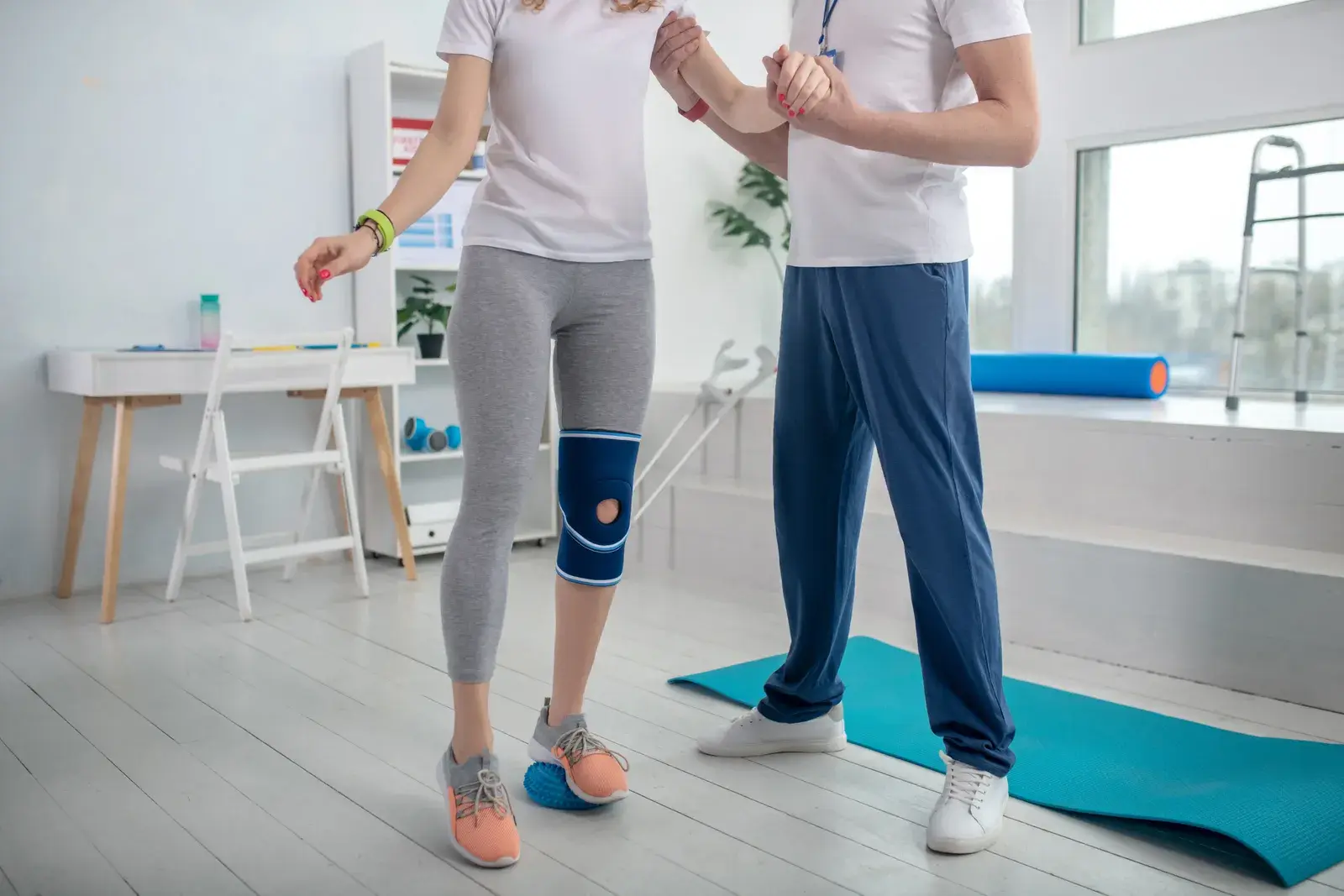
Did it give way with a pop, or does it just buckle sometimes?
The first episode is the key clue. A knee that gave way during a pivot or landing, with a pop and swelling within 24 hours, follows the pattern AAOS OrthoInfo describes for an ACL tear. A sudden sideways shift of the kneecap during a twist, often with the kneecap visibly out of place for a moment, points to patellar instability.
A knee that buckles for a split second on stairs or when stepping off a curb, without a dramatic first injury, is more often a muscle inhibition problem: pain or swelling briefly shuts down the quadriceps, the leg folds, and you catch yourself. That pattern is common in arthritic knees and in people with kneecap pain.
Which knee problems cause buckling and instability?
Giving way is a symptom shared by several knee problems. How it happens and what follows it, swelling, locking or simply a scare, point toward the most likely one.
| Likely cause | What it tends to feel like | Read more |
|---|---|---|
| ACL tear | Pop during a pivot or landing, rapid swelling, later shifting with turns or cutting | ACL injury |
| Kneecap instability or dislocation | Kneecap slides out to the side, fear when the knee is twisted or the kneecap is pushed | Patellar dislocation |
| Meniscus tear | Catching or locking, joint-line pain, the knee gives way with twisting | Meniscus tear |
| Knee osteoarthritis with weak quadriceps | Brief buckling on stairs or uneven ground, stiffness and ache | Knee osteoarthritis |
| Kneecap pain with muscle inhibition | Sudden fold during stairs or squats when pain flares, no swelling | Runner’s knee |
What instability tests does a physical therapist use?
A therapist tests the ligaments with gentle hands-on maneuvers, such as the Lachman test, which draws the shinbone forward to gauge the ACL, and side-to-side stress for the collateral ligaments. They check kneecap movement and watch for apprehension, the guarding reaction when the kneecap is nudged outward, and press the joint line for meniscus tenderness.
Then comes function: single-leg standing while the therapist spots you, step-downs, and later hops and change-of-direction tasks, comparing sides. Quadriceps strength is measured as carefully as possible, because a large strength gap often explains buckling on its own. If a ligament tear seems likely, your therapist will advise seeing a physician about imaging and a surgical opinion.
Can strengthening stop my knee from giving out?
For many people, yes. Rebuilding quadriceps and hip strength and practicing balance and landing control reduces buckling from arthritis, kneecap pain and some meniscus problems. AAOS notes that after a first kneecap dislocation, exercises and bracing are the usual first treatment, with a goal of returning to normal activities within 1 to 3 months.
An ACL-deficient knee is more variable. AAOS says non-operative management with physical therapy is always an option, and that the choice between rehab alone and reconstruction depends on your individual needs and recovery goals; people who want to return to pivoting sports such as basketball, soccer or volleyball usually have that conversation with a surgeon. Exercises such as the step-down are common in this work; your therapist decides when you are ready.
What should I do after my knee buckles?
Check for swelling over the next day, whether you can fully bend and straighten, and whether you can walk normally. Ice, elevation and a short break from sport are reasonable while you watch it. If it swelled fast, locks, or keeps giving way, see a physician before returning to sport.
If you are older and the knee buckles on stairs, treat it as a falls risk too: use the handrail and clear trip hazards at home. Balance and fall prevention therapy covers that side. When you are ready, the knee questionnaire reaches the matching team, who propose a therapist in the network.
Get same-day medical care if your knee
- Gave way with a pop and swelled within hours
- Is locked and will not straighten
- Looks deformed, or the kneecap stayed out of place
- Cannot take your weight, or you fell and hit your head or cannot get up
If you think it is an emergency, call 911.
