Physical therapy for rock climbers deals with the fingers, elbows and shoulders that take the load on small holds and steep walls: finger pulley strains, inner and outer elbow tendon pain, and shoulder problems from dynamic moves, plus ankle injuries from bouldering falls. Climbers near Carmel can describe the injury in a short questionnaire, and the matching team suggests an independent, Indiana-licensed therapist working in a private suite at Carmel City Center. Rehab usually ends with a graded return to crimping and hangboard loading.
Last reviewed By the Monon Therapy Collective editorial team
- Common problem areas
- Finger pulleys, elbows, shoulders, ankles
- Typical return path
- Open-hand grips first, then crimps and hangboard
- Specialist hand care
- Depends on therapists in the network at the time
- Suite hours
- Mon to Fri 5 AM to 9 PM; Sat and Sun 7 AM to 4 PM
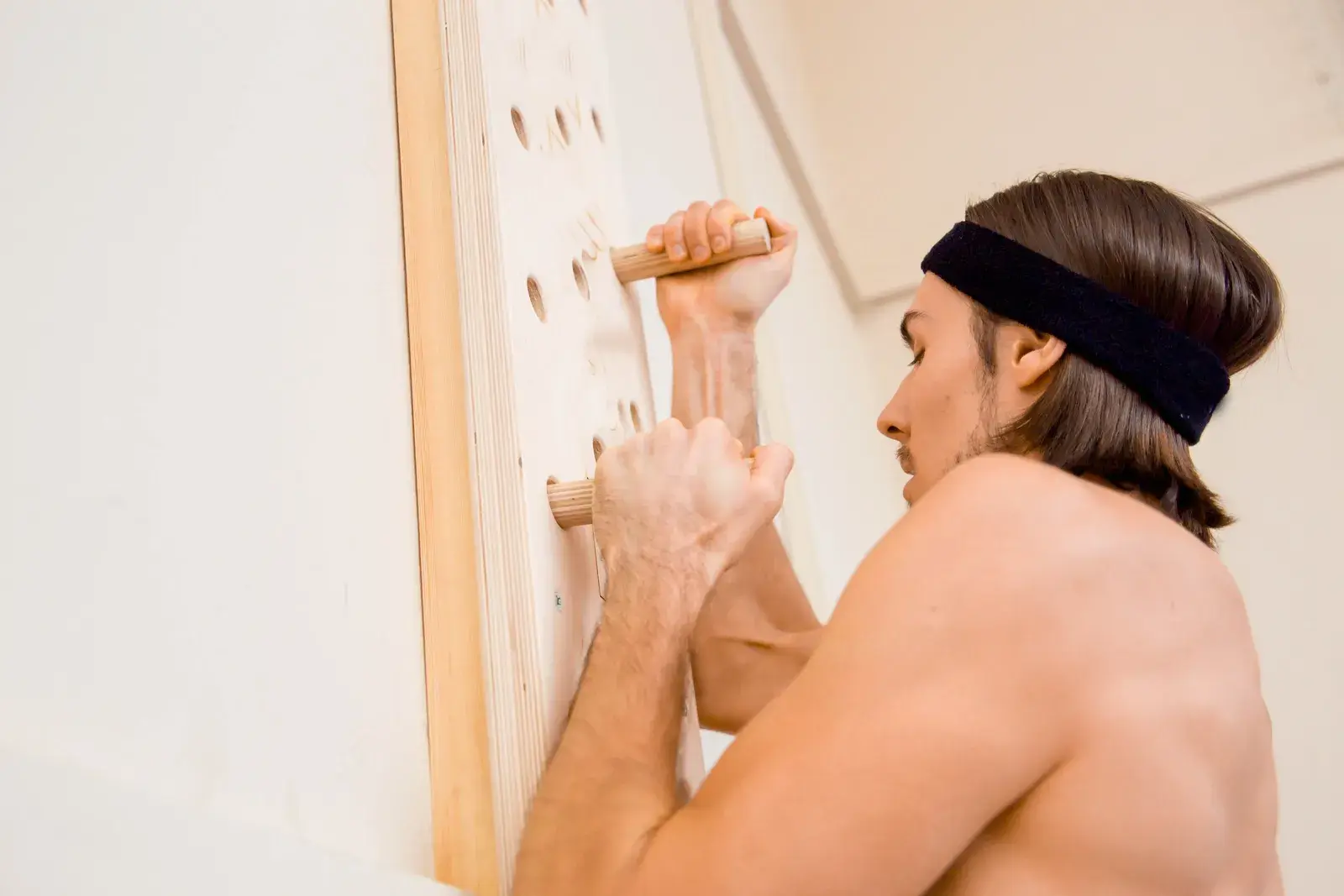
What injuries do boulderers and sport climbers bring to physical therapy?
Climbing injuries concentrate in the fingers, elbows and shoulders because those structures hold your body weight on small edges and steep angles. Bouldering adds ankle and knee injuries from falls onto pads, and long sessions on a hangboard or system wall add overuse pain.
The list links to a full page for each problem a therapist commonly sees in climbers. Finger pulley injuries have no page of their own yet and are covered in the next section.
- Inner elbow pain, often called climber’s elbow, which overlaps with golfer’s elbow
- Tennis elbow from gripping and pinching
- Shoulder labral tear and shoulder impingement from gastons, undercling and dynamic catches
- Wrist pain on the pinky side from slopers and underclings
- Ankle sprain after a bouldering fall between pads
- Trigger finger, which can be confused with pulley pain
What is a finger pulley injury, and when does it need a hand surgeon?
A pulley is a band of tissue that holds a finger’s flexor tendon close to the bone, and a hard crimp can strain or tear one, often in the ring or middle finger. Many climbers feel or hear a pop, followed by pain on the palm side of the finger and swelling.
A mild strain is often managed with relative rest, taping and a graded return to load. A visible bowstring, where the tendon lifts away from the bone when you bend the finger against resistance, or a pop with significant swelling, are reasons to see a physician or hand surgeon before any rehab. Ultrasound or MRI is sometimes used to grade the injury.
Hand-focused rehab is a specialty. Whether a therapist in the network has that focus depends on who is in the network at the time; the matching team tells you before anything is booked, and points you elsewhere if not. The hand therapy page explains what that specialty involves and how to choose a provider.
How does a therapist rebuild finger and elbow load safely?
Finger and elbow rehab in climbers is about controlled, progressive tendon loading, because tendons and pulleys adapt more slowly than muscle. A therapist starts with grips that load the injured tissue least, such as open hand and a large edge, and increases edge depth, grip position and time under tension only when the previous level stays quiet the next day.
For elbows, slow resisted work such as the wrist extensor eccentric for outer elbow pain, or flexor loading for inner elbow pain, usually comes first. Antagonist work matters too: climbers pull far more than they push, so a suite with a cable system and dumbbells is useful for pressing, rotator cuff and scapular strength that the wall never trains.
| Step | What changes | Watch for |
|---|---|---|
| Off the wall | Range of motion, isometric grip, antagonist strength | Pain at rest settling |
| Easy climbing | Large holds, open hand, no crimps, low angle | No pain during or the next morning |
| Graded holds | Smaller edges, half crimp, then steeper walls | Swelling or pain along the finger |
| Hangboard | Low load, open hand, short holds, building slowly | Next-day stiffness in the injured finger |
| Projecting | Hard moves, full crimp, dynamic catches | Agreed with your therapist |
Can Indiana climbers keep training while an injury heals?
Usually yes, in a modified form. Many climbers can keep footwork, technique on big holds, leg and core strength and antagonist work while a finger or elbow settles, which protects fitness and makes the wait easier.
Central Indiana climbers train mostly indoors and travel for rock, often to the Red River Gorge in Kentucky. A therapist can plan the return around a trip date, which is a concrete and honest goal: if the injured finger is not ready for hard crimps by then, an easier itinerary on bigger holds is often still possible.
How do climbers start with the matching team?
Fill in the physical therapy questionnaire, mention climbing and which finger, elbow or shoulder hurts, and add any trip or competition date. A person on the matching team reads it and proposes a therapist in the network whose focus and schedule fit, then the therapist’s office confirms benefits and books.
The suites are steps from the Monon Trail with garage parking a short walk away, and weekday hours from 5 AM suit climbers who train in the evening. If you also have elbow pain when gripping outside the gym, at a keyboard or a toolbox, mention that as well.
See a physician first if a climbing injury involves
- A finger tendon that visibly lifts from the bone when you bend against resistance.
- A finger you cannot fully bend or straighten after a pop.
- A ground fall with head impact, neck pain, or numbness in the arms or legs: call 911.
- A shoulder that dislocated or a sudden loss of arm strength.
If you think it is an emergency, call 911.
