A wrist extensor eccentric is a slow lowering exercise: with your forearm resting on a table, palm down and hand over the edge, you hold a light weight, use your other hand to help lift the wrist up, then lower it slowly using only the sore side. It loads the muscles and tendons that attach to the outside of the elbow, which is why it is one of the classic exercises for tennis elbow. It is general education here, not a prescription; a physical therapist chooses the weight, speed and progression after examining your arm.
Last updated By the Monon Therapy Collective editorial team
- Main tendon
- Wrist extensors at the outside of the elbow (including ECRB)
- Equipment
- A light dumbbell, a full water bottle or a can
- Key detail
- Lift with help, lower slowly on your own
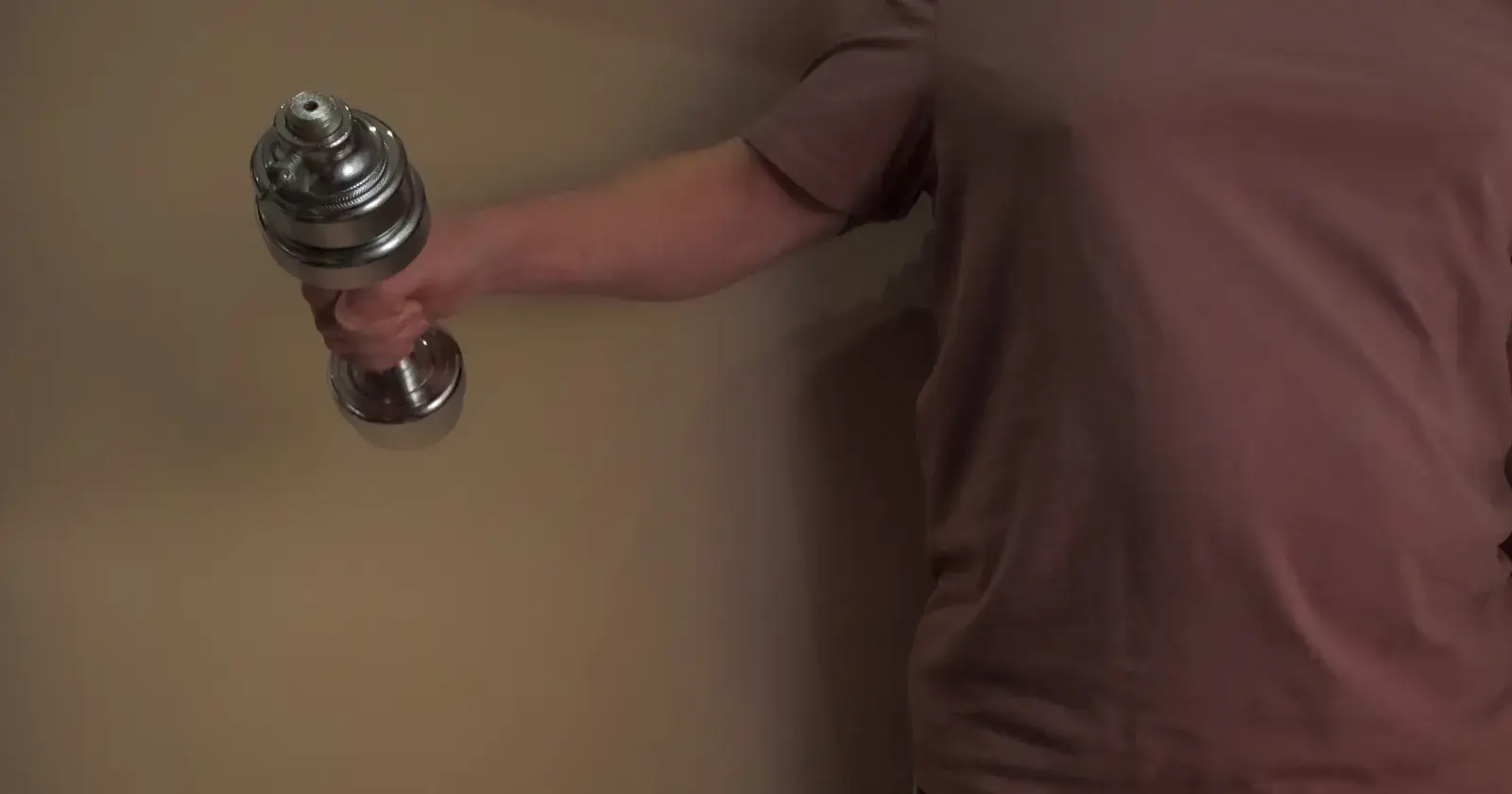
Why lower the weight slowly instead of lifting it?
Lowering slowly is an eccentric contraction, meaning the muscle is working while it lengthens, and it lets you put useful load through the tendon while skipping the lifting half that often hurts most. Using the other hand to lift the weight back up is what makes that possible.
Tendons tend to respond to steady, progressive load rather than complete rest, which is why loading exercises sit at the center of most tennis elbow plans. Some therapists add the lifting half, or slow holds, as the arm settles; the eccentric is a starting point, not the whole program. For a sense of time frames, see how long tennis elbow lasts.
Should the elbow be bent or straight for wrist extensor eccentrics?
Start with the elbow bent and the forearm supported on a table, then progress toward a straighter elbow if your therapist advises it. The tendon most often involved in tennis elbow, the extensor carpi radialis brevis (ECRB), crosses the elbow joint, so straightening the elbow places it under more tension.
That makes elbow position a simple way to adjust difficulty without changing the weight. A straight-elbow version is closer to how the arm works when you hit a backhand or reach for a tool, so it often appears later in rehab for players and tradespeople.
Who usually ends up doing this exercise?
People whose pain sits on the bony bump on the outside of the elbow and flares with gripping, lifting with the palm down or twisting a lid are the usual candidates. That includes many people who have never played tennis.
- Pickleball players, especially after a jump in court time; see physical therapy for pickleball players.
- Tennis players working on backhand technique and load.
- Tradespeople who grip tools all day; see physical therapy for tradespeople.
- Desk workers with long hours of mouse use, and people with pain while gripping, described in elbow pain when gripping.
What are the easier and harder versions of wrist extensor loading?
A full water bottle is the usual first weight; a light dumbbell, a straighter elbow and slower lowering make it harder. A therapist often adds grip work and shoulder strength alongside.
| Version | How it differs | Often used when |
|---|---|---|
| Isometric hold | Hold the wrist level against light resistance, no movement | Pain is too high for any movement under load |
| Water bottle eccentric, elbow bent | Light load, short lever | The first weeks of loading |
| Dumbbell eccentric, elbow bent | More load | The water bottle feels easy the next day |
| Dumbbell eccentric, elbow straighter | More tension on the tendon | Later rehab, closer to sport or work |
| Flexible bar twist | A rubber bar twisted by both hands | A common alternative that also trains the eccentric phase |
How to do a wrist extensor eccentric, step by step
Support the forearm
Sit beside a table and rest your forearm on it, palm facing down, with your wrist and hand hanging just past the edge.
Hold the weight
Hold a light weight or a full water bottle. Keep your grip firm but not white-knuckled.
Lift with help
Use your other hand to lift the back of the hand up until the wrist is bent upward.
Lower slowly
Let go with the helping hand and lower the weight slowly, over about three to four seconds, using only the sore arm.
Reset and repeat
Lift again with the helping hand and repeat for the number of repetitions your therapist set.
Stop and get your elbow checked if
- Your ring and little fingers go numb or tingle, which can point to cubital tunnel syndrome.
- Pain started with a fall or a sudden heavy lift and the elbow is swollen or bruised.
- You cannot fully straighten or bend the elbow.
- The pain is on the inside of the elbow rather than the outside; that usually needs a different exercise.
If you think it is an emergency, call 911.
