Not always. A mild pulled muscle, or grade 1 strain, often settles in about 10 days to 3 weeks with sensible self-care and a gradual return to activity. Physical therapy is worth it when the strain is moderate or severe, when you cannot walk or use the limb normally, when it keeps coming back, or when you need to return to running or sport safely. A big pop, a visible gap or heavy bruising needs a physician’s look first.
Last reviewed By the Monon Therapy Collective editorial team
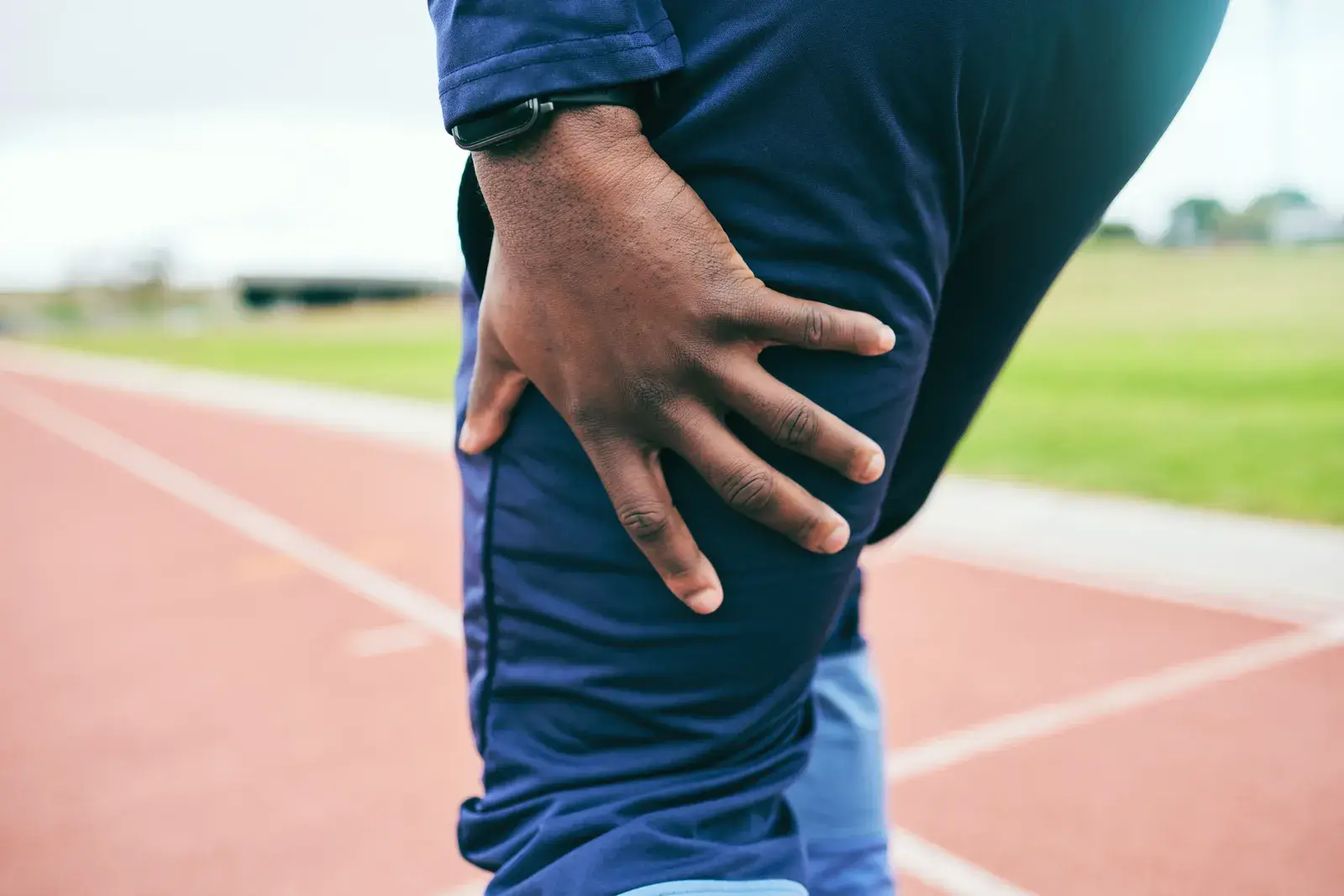
Which pulled muscles usually heal without physical therapy?
A mild strain, where the muscle is overstretched with only minor fiber damage, usually heals on its own. OrthoInfo describes grade 1 thigh strains as healing in roughly 10 days to 3 weeks, and the NHS says most sprains and strains feel better after about two weeks. You can usually walk, the pain is localized, and there is little or no bruising.
For these, a few days of protection followed by gradually returning to normal movement is often all that is needed. The key is the word gradually: going straight back to sprinting or heavy lifting while the muscle is still tender is how a mild strain becomes a recurring one.
A sensible test before returning to sport is whether you can contract the muscle hard, stretch it fully and do a few faster movements without pain. If any of those still hurts, give it more time.
When does a muscle strain need a therapist or a doctor?
See a professional when the strain is more than mild or is not following the normal path. A physician should see you first when the signs suggest a complete tear or a fracture; a physical therapist can see you directly for most other strains in Indiana, without a referral, for up to 42 days.
One injury is time sensitive: a sudden pain high in the back of the thigh near the sit bone, with heavy bruising, can mean the hamstring tendon has pulled off the bone. That needs an orthopedic opinion quickly, because OrthoInfo notes this injury may call for surgical reattachment, and that decision should not wait.
- See a physician first: a loud pop with a visible dent or gap in the muscle
- See a physician first: you cannot bear weight or use the limb at all
- See a physician first: heavy bruising high on the back of the thigh after a sudden injury
- Good reason for physical therapy: no clear improvement after about two weeks
- Good reason for physical therapy: the same muscle has strained before
- Good reason for physical therapy: you want to return to running, a team sport or lifting
What does physical therapy add to healing a strained muscle?
It replaces guesswork with a graded plan. A therapist checks strength, flexibility and how the muscle tolerates load, then progresses you from gentle contractions to heavier and faster work. OrthoInfo stresses that full strength and pain-free function should be restored before returning to sport, and testing that is a large part of what therapy does.
The other half is preventing the next one. Previous strain is a well-known risk factor for another, so a therapist looks at what loaded the muscle beyond its capacity: fatigue late in a game, a sudden jump in training, or a weak link elsewhere. For hamstrings, that often means lengthening-strength work such as the Nordic hamstring curl once the muscle is ready.
Which muscle strains are common around Carmel, and where can I read more?
The muscle that strains depends on what you do. Sprinting in softball and soccer at Grand Park tends to catch hamstrings, quick lunges on the pickleball court catch calves, and heavy bench pressing catches the chest. Each has its own pattern, timeline and return rules.
- Hamstring strain: back of the thigh, often during sprinting
- Calf strain: a sudden pull in the calf on a push-off, common in racket sports
- Groin strain: inner thigh, from cutting and kicking in soccer and hockey
- Quad strain: front of the thigh, from kicking or explosive starts
- Hip flexor strain: front of the hip, from sprinting and high knees
- Pec strain: chest and front of the shoulder, usually on a heavy bench press
What should I do in the first few days after pulling a muscle?
Protect it for two to three days, then start moving it gently. The NHS advises protection, rest, ice for up to 20 minutes every two to three hours, compression and elevation in the first two to three days, and avoiding heat, alcohol and massage during that early window, because they can increase swelling.
After that, easy pain-free movement helps the muscle heal in a more organized way than total rest. Walking, gentle range of motion and light contractions are usually fine if they do not sharpen the pain. The NHS also suggests avoiding strenuous activity such as running for up to eight weeks for more significant strains. If you are unsure, the two-minute questionnaire gets you matched with a therapist in the network who can check it.
Related questions
Should I stretch a pulled muscle?
Not hard in the first few days. Gentle movement within comfort is fine, but forceful stretching of a fresh strain can aggravate it. A therapist adds stretching as healing progresses.
How do I know if it is a pulled muscle or something else?
A strain usually follows a specific moment of effort and hurts when you contract or stretch that muscle. Pain that came on without any effort, spreads, or comes with numbness or swelling in the calf needs a medical check.
How long until I can run again after a pulled muscle?
Mild strains often allow easy running within a few weeks, while severe tears can take months. Return when you can walk, jog and do strength tests without pain, not on a fixed date.
Can I see a physical therapist for a muscle strain without seeing a doctor?
Yes, in Indiana a physical therapist can evaluate and treat you without a referral for up to 42 days, and will send you to a physician if anything suggests a more serious injury.
Keep reading
- How long does a pulled hamstring take to heal?
- How soon should I see a physical therapist after an injury?
- Should I use heat or ice for pain?
- Sports physical therapy in Carmel
- Hamstring strain physical therapy in Carmel
- Return-to-sport testing in Carmel
This page is general education, not medical advice. A physical therapist can only advise on your situation after an examination.
