Rehab after a broken collarbone begins with gentle shoulder movement once the bone starts to heal, then builds reach, shoulder blade control and strength after the fracture has fully healed. The American Academy of Orthopaedic Surgeons says most people return to regular activities within three months, whether the break was treated in a sling or fixed with a plate. Near Carmel, you can ask the matching team for an independent, Indiana-licensed physical therapist whose one-on-one sessions take place in private suites at Carmel City Center.
Last reviewed By the Monon Therapy Collective editorial team
- Share of adult fractures
- About 5 percent (AAOS)
- Usual treatment
- Sling; surgery for some displaced breaks
- Regular activities
- Most people within 3 months
- Hardware
- Plates usually stay unless they bother you
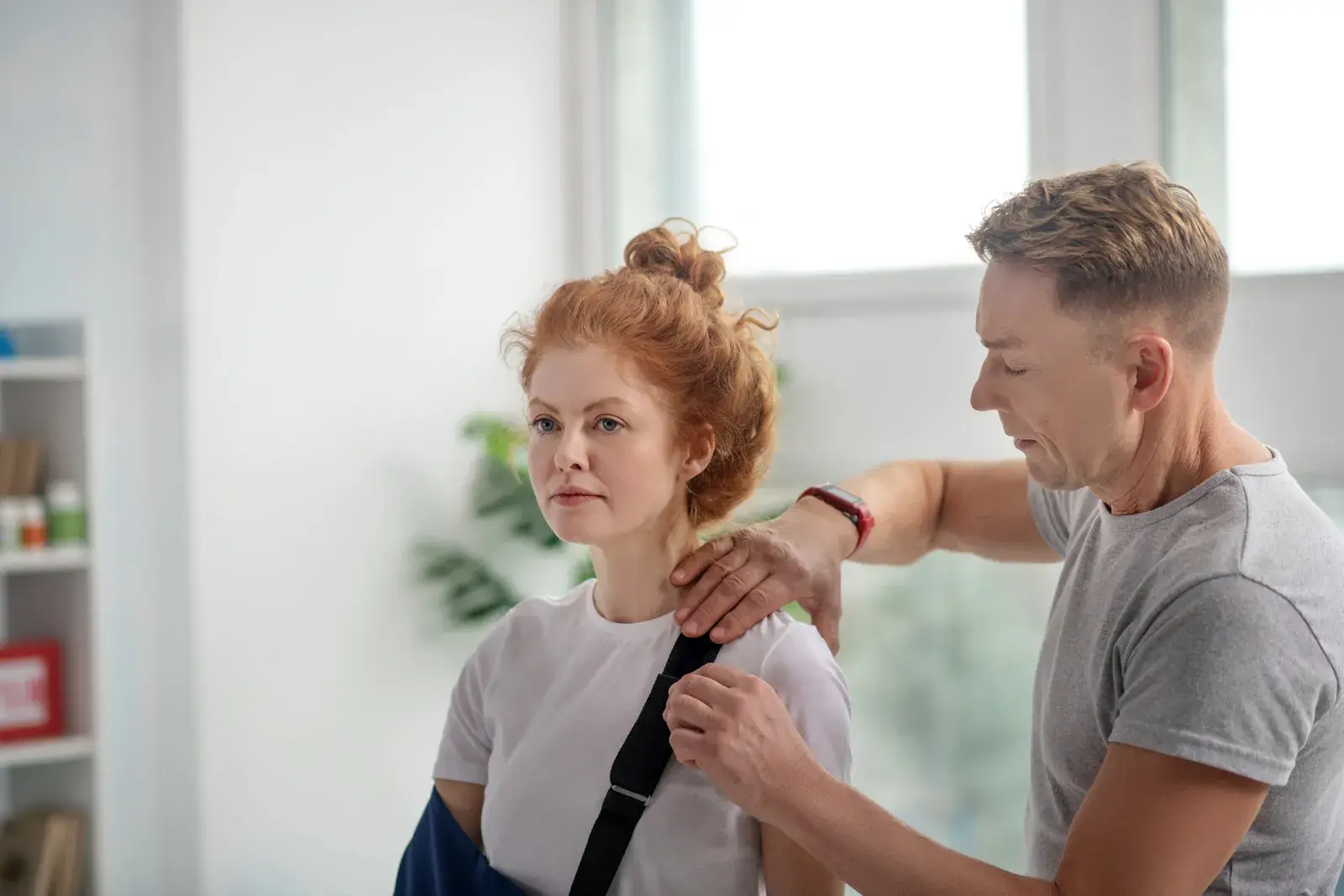
Does a broken collarbone need physical therapy if it heals in a sling?
Many simple collarbone fractures heal well in a sling with a home exercise program, and supervised therapy is most useful when the shoulder stays stiff, weak or painful after the bone has healed, when surgery was needed, or when you are returning to sport or physical work.
The clavicle, or collarbone, runs between the breastbone and the shoulder blade and is the only bony link between the arm and the trunk. OrthoInfo notes that clavicle fractures make up about 5 percent of adult fractures and that most happen from a fall onto the shoulder or an outstretched arm. On the Monon Trail that often means a bike crash; on the court or ice, a hard fall.
OrthoInfo also describes a simple sling for comfort while the bone heals, with gentle shoulder exercises starting as pain decreases and more demanding strengthening added once the fracture is fully healed. Healing can be slower in people with diabetes or who use tobacco.
How does collarbone rehab progress from the sling to full strength?
It moves from gentle motion while the bone knits, to full range, to strength and sport-specific work after healing is confirmed. The timings below are common; your doctor adjusts them for the fracture position and whether a plate was used.
| Time after the break or surgery | Goals | Typical milestones |
|---|---|---|
| 0 to 2 weeks | Comfort and protection | Sling most of the time; elbow, wrist and hand movement; pendulum swings if allowed |
| 2 to 6 weeks | Gentle shoulder motion | Sling weaned as pain settles; assisted reaching below shoulder height; no lifting |
| 6 to 12 weeks | Full range and early strength | Overhead reach restored; band and light weight work once healing is confirmed |
| 3 to 4 months | Return to regular activity and most sport | Heavier lifting, push-ups, cycling outdoors and racquet sports as cleared |
| 4 months and beyond | Contact sport and heavy work | Progressive loading to full demands after your doctor confirms solid healing |
What does shoulder rehab after a broken collarbone actually involve?
It involves restoring shoulder reach in every direction, then retraining the shoulder blade muscles and the rotator cuff so the arm moves smoothly and strongly. Because the collarbone acts as a strut for the shoulder blade, a period in a sling often leaves the blade sitting forward and the muscles that control it weak.
Early sessions might use pendulum swings while leaning on a table, table slides and assisted reaching with a stick. Later, the cable system and dumbbells in a private suite allow light rows, the prone Y, T and W series and banded external rotation. Push-ups and pressing overhead come last, because they load the collarbone directly.
Your therapist will compare the injured shoulder with the other one for range and strength, watch how the shoulder blade moves as you raise the arm, and set a plan for the tasks you need: reaching a top shelf, carrying a child, a tennis serve, or holding a bike’s drops for an hour.
Neck and upper back stiffness is a frequent side effect of weeks in a sling, because people hold the shoulder up and forward to guard it. Gentle neck movement, thoracic mobility work such as the open book stretch, and posture breaks during desk work often ease the aching that people blame on the fracture itself.
- Pendulum swings and table slides early
- Assisted then active reaching overhead
- Shoulder blade setting and rows
- Rotator cuff strengthening with bands
- Graded pressing and push-ups after healing
Which collarbone recovery choices belong to the treating doctor?
Your doctor decides whether surgery is needed, how long you wear the sling, when you may lift and when you may return to contact sport. OrthoInfo warns that lifting or returning to activity too early can let fragments move or make hardware fail.
Plates and screws are usually not removed unless they cause discomfort; some people find a plate rubs on a backpack strap or seatbelt. If removal is needed, rehab usually resumes quickly. If your shoulder pain is at the outer end of the collarbone rather than the middle, our page on an AC joint sprain covers that nearby injury.
When can cyclists ride again after a broken collarbone?
Many cyclists ride an indoor trainer within a few weeks if it is comfortable and the doctor agrees, and return outdoors once they can grip, brake and absorb road bumps without pain, often near the three-month mark OrthoInfo gives for regular activities. A crash is what usually caused the injury, so being able to catch yourself matters before riding on the road or trail.
An upright position on the trainer puts less load through the shoulder than leaning onto drop bars. When you return outdoors, flat stretches of the Monon Trail make a gentler start than rougher roads. Our page on physical therapy for cyclists covers the wider rehab picture for riders.
Racquet and paddle players follow a similar logic. Pickleball dinks and tennis groundstrokes usually come back before overhead smashes and serves, which load the collarbone and shoulder at the end of their range. A therapist can check overhead strength and control on the cable system before you try them on court.
What can you do in the first days after the break to help later rehab?
There is no time for prehab before a collarbone break, but the first days still matter. Keep the elbow, wrist and fingers moving, sleep propped up if lying flat hurts, and do not let the neck and upper back stiffen from guarding.
Wear the sling as instructed and avoid lifting with the injured arm. Keep walking daily, since gentle cardio keeps up fitness and mood while the arm rests. When your doctor approves outpatient therapy, the two-minute questionnaire helps the matching team find a therapist who fits your schedule. If the patient is under 18, a parent or legal guardian completes it and attends sessions.
Get prompt medical care after a collarbone fracture if you notice
- Numbness, tingling or weakness spreading down the arm, or a cold or pale hand
- Shortness of breath or chest pain (call 911)
- Skin over the break that is tented, broken or turning dark
- Increasing pain, a new bump or a grinding feeling weeks into healing
If you think it is an emergency, call 911.
