Overuse injuries in young athletes come from repeated stress without enough recovery, and they often affect growth plates, which AAOS OrthoInfo notes are weaker than the nearby ligaments and tendons. Heel pain in a growing soccer player, a sore knee below the kneecap in a basketball player, or an aching elbow in a pitcher are typical examples. Many settle with a change in training load and a guided strengthening plan, which is why pain that grows with activity is worth acting on early. For a child under 18, a parent or legal guardian completes the questionnaire and attends visits.
Last reviewed By the Monon Therapy Collective editorial team
- Weak link while growing
- Growth plates, not ligaments
- Biggest warning sign
- Pain that increases with activity
- Common prevention advice
- Fewer teams per season, regular breaks
- Under 18
- A parent or guardian completes the form and attends
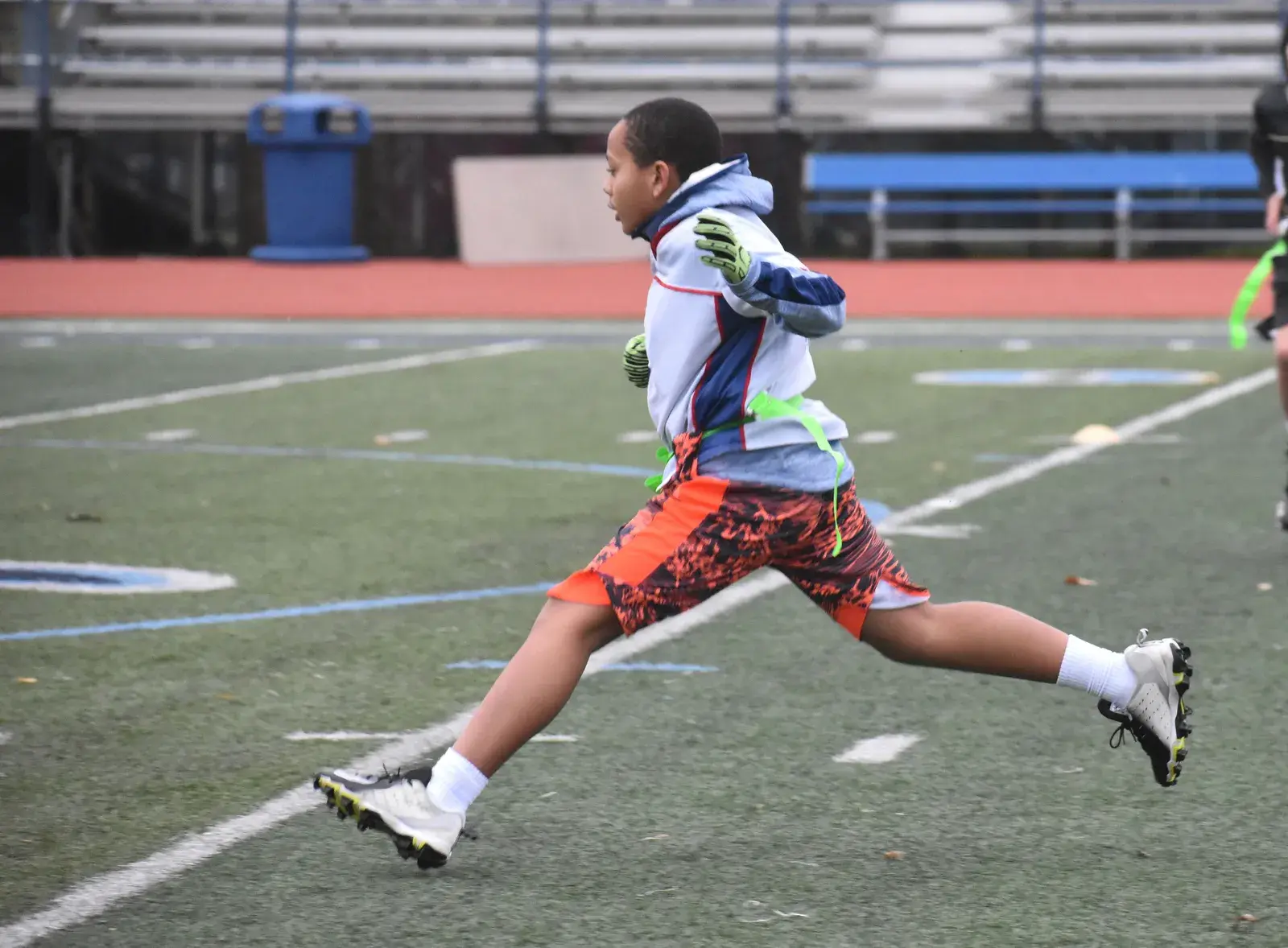
How is an overuse injury different from a sports accident?
An overuse injury builds slowly from the same motion repeated thousands of times, while an acute injury happens in one moment, such as a fall or a twisted ankle. Overuse pain usually starts as an ache after practice, then appears during practice, and eventually limits play if nothing changes.
Because there is no single dramatic moment, kids often keep quiet about it, and parents notice only a change in how their child runs, throws or jumps. The injury reflects the training load more than any single bad step, which is good news: changing the load usually changes the outcome.
Why do growth plates make kids more prone to overuse pain?
Growth plates are areas of developing cartilage near the ends of bones, and during childhood and the teen years they are softer than the tendons that pull on them. When a strong tendon tugs repeatedly on a growth area, the bone end gets irritated before the tendon does.
Growth spurts make this worse. Bones lengthen quickly and muscles and tendons lag behind, so they pull harder for a few months. That is why a 12-year-old who played the same schedule last year without trouble can suddenly develop heel or knee pain. OrthoInfo warns that repetitive stress can injure a growth plate and disrupt normal growth, so persistent pain near a joint in a growing child deserves a proper look.
Which overuse injuries go with which youth sports?
Each sport loads the body in its own pattern, so the common injuries cluster by sport. The table matches the usual suspects to the activities that tend to cause them; it is a guide to what to ask about, not a way to diagnose your child at home.
| Injury | Where it hurts | Sports that often produce it | Read more |
|---|---|---|---|
| Sever’s disease | Back of the heel, worse after running | Soccer, basketball, running, gymnastics | Sever’s disease |
| Osgood-Schlatter disease | Bony bump just below the kneecap | Basketball, volleyball, soccer, dance | Osgood-Schlatter disease |
| Jumper’s knee | Tendon below the kneecap | Volleyball, basketball, track jumps | Patellar tendinitis |
| Throwing elbow and shoulder | Inside of the elbow, top of the arm | Baseball and softball pitching, catching | Shoulder pain when throwing |
| Stress fracture | Pinpoint pain on a bone, often shin or foot | Cross country, track, dance | Stress fracture |
| Low back stress injury (spondylolysis, which can progress to a slipped vertebra) | One side of the low back, worse arching | Gymnastics, football linemen, diving | Spondylolisthesis |
What warning signs should make a parent pull back on training?
Pain that increases with activity is the clearest signal, according to OrthoInfo, followed by swelling, a change in technique and a drop in performance or interest in practice. A child who suddenly does not want to go to practice may be avoiding pain rather than losing motivation.
Ask specific questions instead of "does it hurt?", which most young athletes answer with no. Try "does it hurt when you jump, when you run, or after the game?" and "does it hurt the next morning?" Watch the first few steps out of the car after a game: a limp that warms up and disappears is still a limp.
- Pain that starts earlier in each practice or lasts into the next day
- Limping, favoring one side, or a new throwing or running style
- Swelling or a tender bump near a joint
- Pain at night or at rest, which needs a physician first
How can a family plan a season to lower overuse risk?
Build the calendar around recovery, not just games. OrthoInfo recommends limiting the number of teams a child plays on in one season, avoiding year-round play in a single sport, taking regular breaks and playing other sports, and getting medical clearance before a child returns after an injury, even if they feel fine.
Tournament weekends deserve special attention. Large youth complexes such as Grand Park in Westfield host multi-game weekends where a player may run, jump or throw far more than in a normal week. Plan an easier few days after those weekends, and for baseball and softball families, follow the age-based pitch-count and rest-day guidance in the Pitch Smart recommendations published by Major League Baseball.
Strength and landing practice help too. Short, coached sessions that teach a child to land softly, squat with knees tracking over toes and control single-leg balance are the core of most injury prevention screening programs.
What does rehab for a young athlete’s overuse injury usually involve?
Rehab for a young athlete usually combines a temporary change in training load, strengthening of the muscles around the sore area, and a stepwise plan back to full practice. Complete rest is rarely the whole answer, because the child loses fitness and the tissue loses tolerance, so the injury tends to return when full play resumes.
For a heel or knee growth-plate problem, a therapist may reduce jumping and sprinting for a few weeks while keeping the child involved in skill work, then rebuild calf, quadriceps and hip strength and reintroduce running and landing. For a throwing arm, the plan often pauses pitching while shoulder blade, rotator cuff and hip strength are trained, followed by a structured return-to-throwing schedule agreed with the coach.
Parents play a bigger role than in adult rehab. A short home program done most days, honest reports of pain after practice and a coach who knows the plan usually make the difference between a few weeks out and a lingering problem that drags through the season.
Who should a parent call first about a child’s overuse pain?
Start with the pediatrician or a sports medicine physician when there is night pain, swelling, a limp, a fall, or pain directly on a bone, because those signs may need imaging. When the problem is a typical activity-related ache, a physical therapist can examine movement, strength and training load and build a plan to keep the child playing safely where possible.
Through the network, a parent or legal guardian fills in the questionnaire for a young athlete and attends every visit. Whether a therapist in the network currently sees younger patients depends on who is practising at the time; the matching team tells you plainly before anything is booked and points you elsewhere if not. More detail is on the children and physical therapy in Carmel answer and the teen athletes page.
Get urgent medical care the same day if
- Your child cannot bear weight, or a limb looks deformed after a fall or collision.
- A head knock is followed by headache, confusion, vomiting or unusual drowsiness (see the CDC HEADS UP concussion guidance).
- Pain comes with fever, redness or warmth over a joint.
- Pain wakes your child at night or persists at rest.
If you think it is an emergency, call 911.
