Spondylolisthesis physical therapy in Carmel, Indiana
Spondylolisthesis means one vertebra has slipped forward on the one below, and most low-grade slips are managed without surgery, with physical therapy at the center. A licensed therapist in the network teaches trunk control that keeps the slipped segment comfortable, then rebuilds lifting, running or sport in stages. Care is one-on-one in private suites at Carmel City Center; for anyone under 18, a parent or guardian completes the questionnaire and attends.
At a glance
Common signs of spondylolisthesis
Also called: Spondylolysis, Isthmic spondylolisthesis, Degenerative spondylolisthesis, Pars defect, Slipped vertebra.
Why does a vertebra slip forward, and who usually gets it?
A vertebra slips forward for one of two main reasons, and they tend to affect very different people. In young athletes, a stress fracture develops in a thin bridge of bone at the back of the vertebra called the pars interarticularis (spondylolysis). If both sides break, the vertebra can creep forward, most often at L5 on the sacrum.
The American Academy of Orthopaedic Surgeons notes this is more likely in sports that repeatedly overextend the lower back, such as gymnastics, football and weightlifting. Cheer, dance and diving ask the lower back for similar arching. Teenagers playing year-round on club teams around Hamilton County are a familiar example of the pattern.
The second type, degenerative spondylolisthesis, appears later in life in the lower lumbar spine, and the American Academy of Orthopaedic Surgeons notes it is more common in women and in people over 50. Here the facet joints and disc wear and loosen enough to let the vertebra drift. It frequently comes with narrowing of the spinal canal, covered on the spinal stenosis page.
What do the grades of spondylolisthesis mean for treatment?
Grades describe how far the vertebra has slipped, and low-grade slips are the ones physical therapy usually manages. Physicians describe a slip as low grade or high grade from the amount of forward movement on an X-ray: a high-grade slip means more than 50 percent of the width of the vertebra has moved forward. High-grade slips carry more risk of nerve problems and more often lead to a surgical opinion.
Physicians may also order flexion and extension X-rays, taken while you bend forward and back, to see whether the slipped vertebra moves more than expected. Excess movement is called instability, and it shapes how cautiously rehab progresses and whether a surgical opinion is sought.
Grade alone does not match pain well. Some people with a grade I slip hurt a great deal, and others discover a slip by chance on an X-ray taken for something else. What guides physical therapy is how irritable the back is, whether nerves are involved, and what you need to get back to.
A physician usually confirms the diagnosis with imaging and decides on activity restrictions or bracing, particularly for an acute stress fracture in a teenager. The therapist then works within those restrictions, keeping in close contact with the physician as the plan progresses.
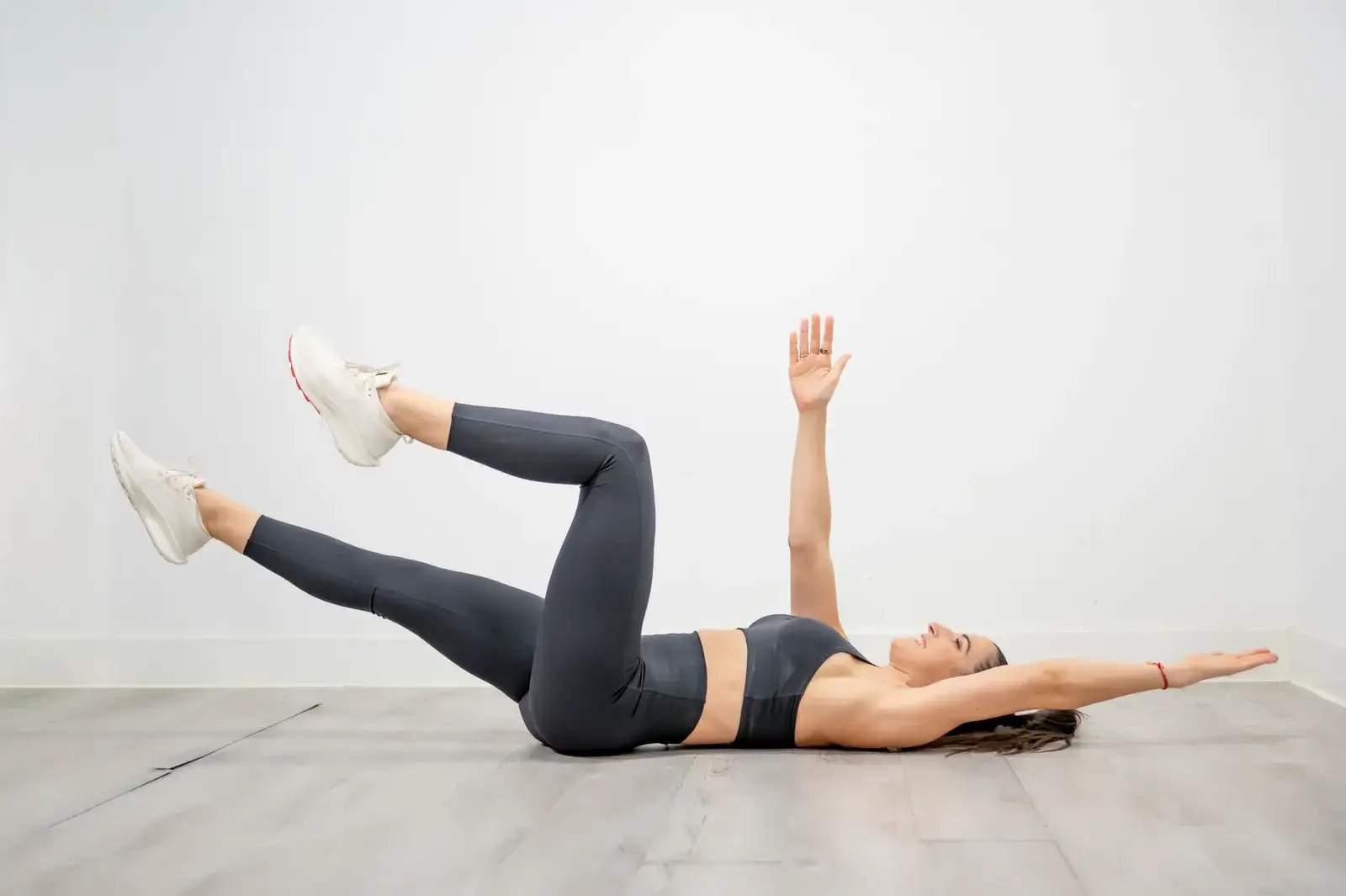
Why do therapists often start spondylolisthesis rehab with the dead bug?
They start there because the dead bug exercise trains the deep abdominal muscles to hold the lower back steady while the arms and legs move, without loading extension. That combination suits a slip that is provoked by arching. Many programs begin on the back, where the spine is supported, and progress toward standing.
Once that control is reliable, the plan adds bird dogs, side planks, hip hinges, split squats and loaded carries, using the cables and dumbbells in the private suite. Hamstring tightness, common with a slip, often eases as the trunk and glutes take over the stabilizing work. Aggressive hamstring stretching is generally less useful than strengthening.
Extension is reintroduced gradually rather than banned forever. For an athlete, that means building toward the arch of a back walkover, a tackle, a backswing or an overhead press only when simpler steps are pain-free. Heavy weightlifters can follow the advice on the physical therapy for weightlifters page.
- Phase 1: pain settling, walking, neutral-spine trunk control
- Phase 2: hip strength, anti-rotation and anti-extension holds
- Phase 3: loaded hinges, squats and carries; light extension
- Phase 4: sport-specific drills, jumps and landing practice
How long before a young athlete with spondylolysis can return to sport?
Return usually takes months rather than weeks for a teenager with an acute pars stress fracture, and the timing is set by the treating physician from symptoms, imaging and how the athlete moves. A period of rest from aggravating sport comes first, sometimes with a brace, followed by graded rehabilitation. The American Academy of Orthopaedic Surgeons notes that athletes whose pain began suddenly are candidates for bracing, while a fracture that has hurt for a long time has a low chance of healing even after several months in a brace.
Clearance is earned in steps rather than by the calendar: pain-free daily life, then full trunk endurance, then running and jumping without symptoms, then sport drills, then practice, then competition. The return-to-sport testing page explains what those checkpoints look like in a structured way.
Rest from sport is hard for a teenager whose identity is built around a team. Good programs keep the athlete involved: attending practice, conditioning on a bike, upper-body work and skill drills that do not arch the back. Staying connected tends to make the long middle stretch of rehab easier to stick with.
For adults with a degenerative slip, improvement often comes over 6 to 12 weeks of regular exercise, and long-term management matters more than a finish line. The American Academy of Orthopaedic Surgeons notes that when symptoms of a degenerative slip have not improved after 3 to 6 months of nonsurgical treatment, a physician may recommend surgery, often a fusion. The spinal fusion rehab page covers recovery from that operation.
Which activities are safe to keep doing with a slipped vertebra?
Walking, cycling and most strength work done with a neutral spine are usually safe, while repeated or forceful back-arching is the movement to limit until a therapist clears it. That generally means pausing back walkovers, heavy overhead pressing with a big arch, and the prone back extensions some gyms still program.
Teenagers often keep training in modified form, for example batting practice without full swings or conditioning on a bike, which helps morale during a long layoff. Parents should know that a teen’s back pain lasting more than two weeks, especially in an extension sport, deserves a medical evaluation rather than a wait-and-see approach. The guide for teen athletes covers more.
When you are ready to be matched, the questionnaire for back pain takes about two minutes. For a patient under 18, a parent or legal guardian completes it and attends sessions. The matching team will tell you honestly whether a therapist in the network currently works with adolescents before anything is booked.
- Usually fine: walking, swimming freestyle, cycling, neutral-spine lifting
- Modify: running hills, overhead pressing, rotational sports
- Pause until cleared: back walkovers, tumbling, heavy back extensions
When to see a physician or go to the ER first
Physical therapy is the right start for most spondylolisthesis. These symptoms are different and need medical attention before, or instead of, a physical therapy visit:
- Loss of bladder or bowel control or numbness in the saddle area
- Weakness in a leg or foot that is getting worse
- Severe back pain after a high-impact fall or collision
- Back pain in a child or teen with fever, night pain or weight loss
- Leg pain or numbness on both sides
- A visible step or change in the shape of the lower back
If you think it is an emergency, call 911.
Two-minute assessment
Get your spondylolisthesis looked at
Tell us how your spondylolisthesis started, how long it has been going on and what it is stopping you from doing. The matching team proposes a therapist in the network who focuses on it, and you hear back, usually within one business day.
- No referral needed to start in Indiana (first 42 days)
- We check which therapists work with your plan before you book
- One-on-one care in a private suite at Carmel City Center
How therapists treat it
Kinds of care used for spondylolisthesis
- Sports physical therapyRehab for active adults that goes past pain relief to the strength, power and movement your sport actually demands.
- Return-to-sport testingCriteria-based testing of strength, hopping, movement and confidence, so your return to sport rests on evidence, not the calendar.
- Orthopedic physical therapyExercise-led care for back, neck, shoulder, hip, knee and ankle problems, delivered one-on-one in a private suite.
Questions
Spondylolisthesis: what people ask
Information on this website is general education, not medical advice, a diagnosis or a treatment plan. Only a licensed clinician who examines you can advise on your condition. If you may be having a medical emergency, call 911.
Something we did not cover? Ask the matching team or ring (888) 353-9975.
Can spondylolisthesis get worse over time?
Most low-grade slips stay stable, especially in adults. Progression is more of a concern during the teenage growth spurt, which is why physicians monitor young patients with repeat imaging.
Should I stop lifting weights if I have a pars defect?
Not necessarily. Many lifters train well with careful load management, though heavy lifts that force back extension may need changing. A therapist can help you adapt your program.
Why are my hamstrings so tight with a slipped vertebra?
Hamstring tightness is a common companion of spondylolisthesis and is thought to be partly protective, as the muscles tense to steady the pelvis. It often eases as trunk and hip strength improve, rather than with aggressive stretching.
Is spondylolysis the same as spondylolisthesis?
No. Spondylolysis is the stress fracture in the pars; spondylolisthesis is the forward slip that can follow if both sides fracture or the joints loosen.
Will a back brace fix the slip?
A brace does not move the vertebra back, but physicians sometimes prescribe one for a teenager’s fresh stress fracture to support healing. Adults rarely need one long term.
Do I need a referral to start physical therapy for spondylolisthesis in Indiana?
Indiana lets a licensed physical therapist evaluate and treat without a referral for up to 42 calendar days. With a known slip, many people already have a physician involved, and coordination helps.
Google reviews
What guests say about FlexWerk
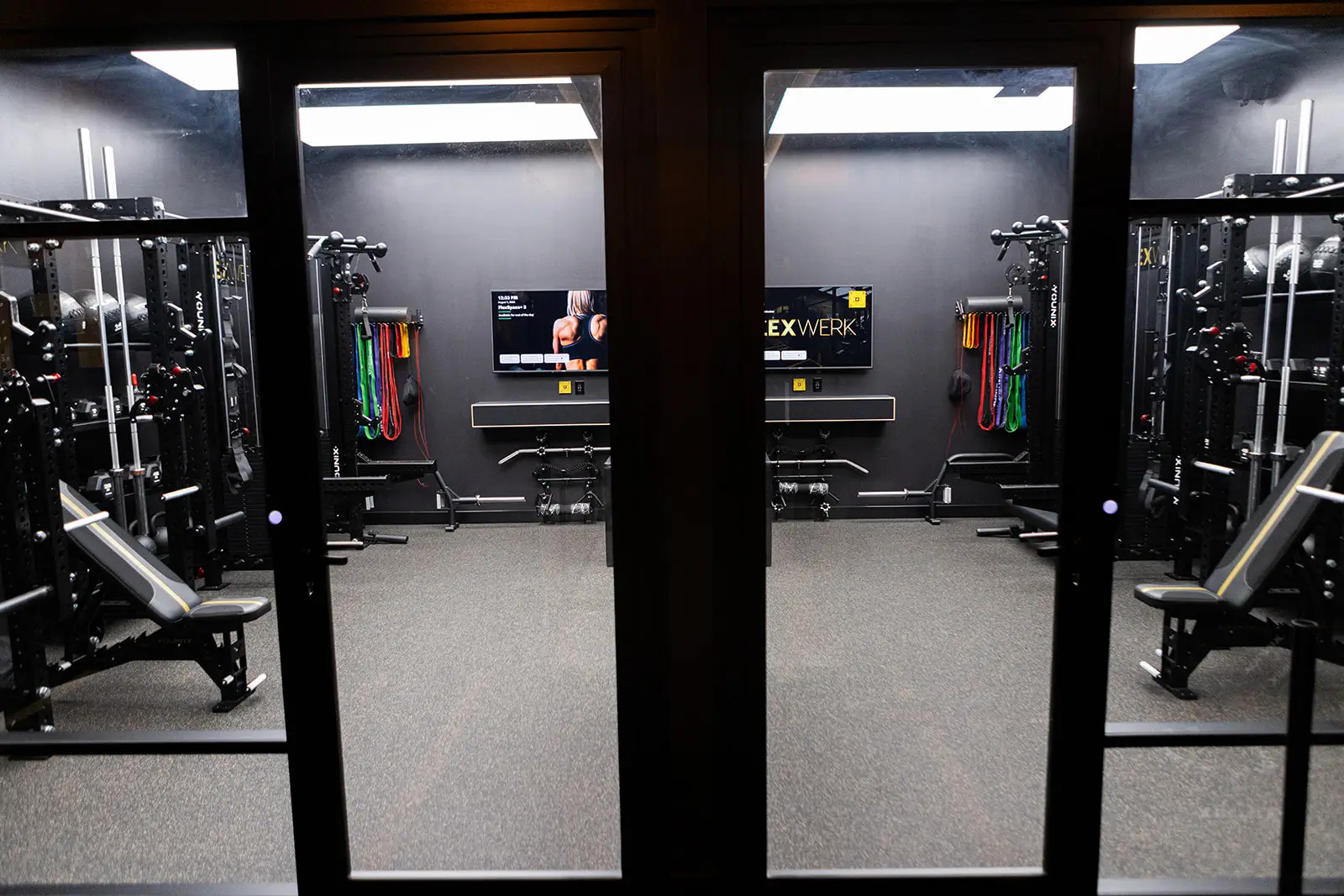
These are live Google reviews of FlexWerk at Carmel City Center, the private-suite facility where therapists in the network practise.
Related
Conditions that travel together
 Low back painActive, one-on-one care for new or long-running low back pain, from first flare-up to confident lifting.
 Spinal stenosisExercise, walking plans and balance work for lumbar spinal stenosis and the leg fatigue it causes when standing and walking.
- Herniated discCalming a bulging or herniated lumbar disc with directional exercise, graded loading and a plan for sitting and lifting again.
Page reviewed By the Monon Therapy Collective editorial team

Carmel City Center · Carmel, Indiana
Start with a conversation
Tell us what hurts and what you want to get back to. We will tell you honestly whether a therapist in the network is likely a good fit for what you describe, and match you with an independent, licensed therapist who is. Only that therapist can assess what will help.
885 Monon Green Blvd, Suite 120, Carmel, IN 46032 · Monday to Friday 5 AM to 9 PM · Saturday and Sunday 7 AM to 4 PM