Wrist pain during push-ups usually comes from loading the wrist in full backward bend, which squeezes the back of the joint and strains the ligaments and tendons that hold the small wrist bones together. Common sources are irritation at the back of the wrist, a ganglion cyst, a past sprain, wrist tendinitis and the cartilage on the pinky side. Pain that began with a fall on an outstretched hand needs an X-ray first, because scaphoid fractures are easy to miss. A physical therapist finds the source and rebuilds tolerance while you train with handles or fists.
Last reviewed By the Monon Therapy Collective editorial team
- Position that provokes it
- Wrist bent back near 90 degrees under body weight
- Quick training change
- Push-up handles, dumbbells or fists keep the wrist straight
- Do not ignore
- Thumb-side pain after a fall on an outstretched hand
- Ganglion cysts
- OrthoInfo: more than half go away on their own
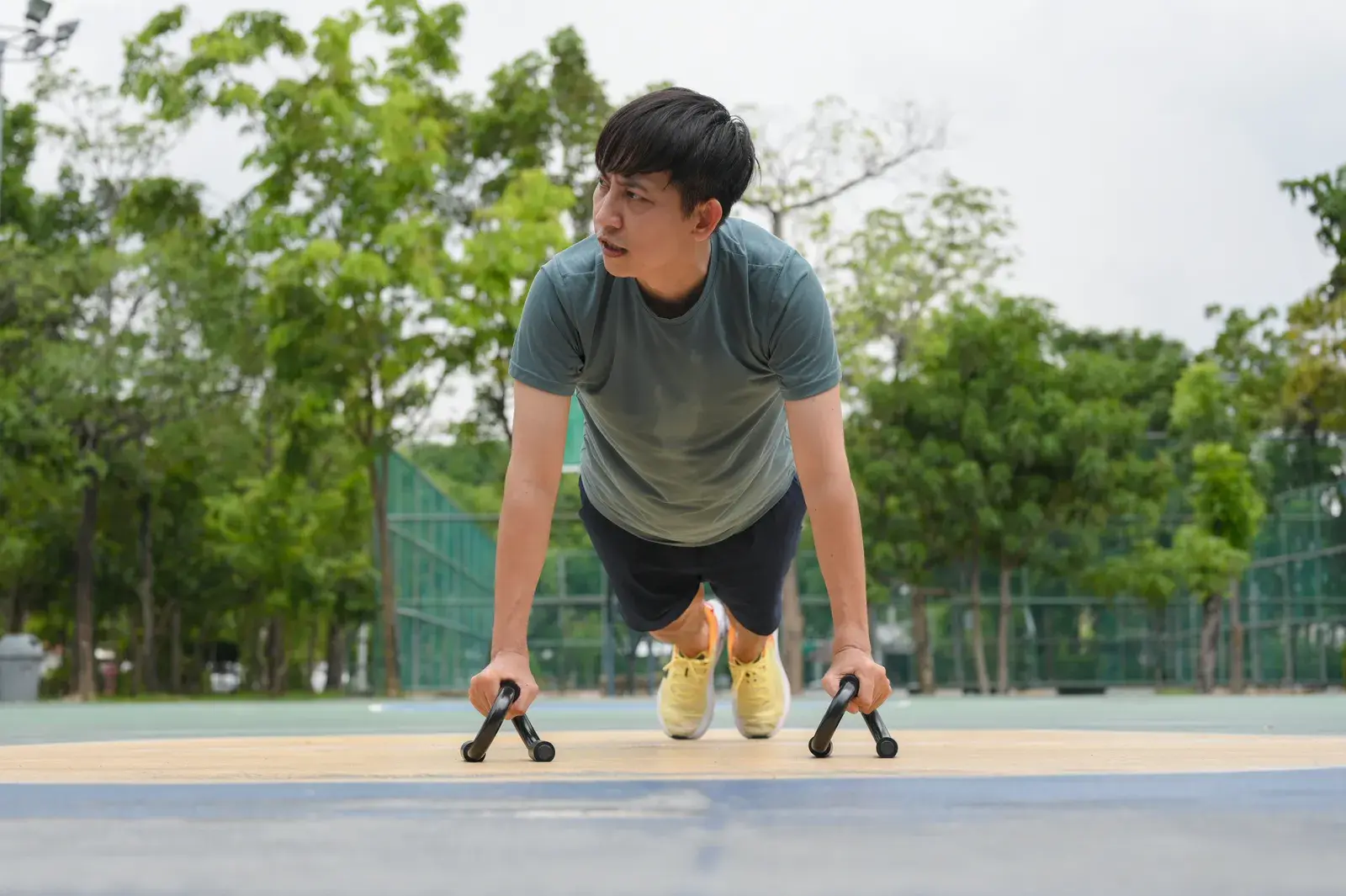
Why does bending the wrist back under load hurt?
A push-up holds the wrist near its end range of backward bend while pressing most of your upper body weight through the palm. That compresses the back of the joint and stretches the front, so anything sensitive in either place shows up quickly, even if the wrist feels fine at the keyboard.
Yoga flows, burpees, planks, handstands and front squats with a clean grip ask the same thing. People with naturally flexible joints sometimes sink further into the bend and load the ligaments more. The table lists the usual causes.
| Likely cause | What it tends to feel like | Where to read more |
|---|---|---|
| Dorsal wrist irritation or impingement | Pinching pain on the back of the wrist at the bottom of a push-up | Wrist tendinitis |
| Ganglion cyst | A firm bump on the back of the wrist, achy when pressed or bent back | Wrist sprain and lumps |
| Old or new wrist sprain | Pain in the middle of the back of the wrist, sometimes a click or weak push | Wrist sprain |
| Pinky-side (TFCC) irritation | Pain on the little-finger side, worse with turning the forearm and weight bearing | Wrist pain on the pinky side |
| Joint hypermobility | General looseness, wrists that sink far back, aches after loaded holds | Joint hypermobility |
Could a fall have broken a bone in my wrist?
Yes, and it is the first thing to rule out. OrthoInfo explains that the scaphoid, a small bone on the thumb side of the wrist, is commonly broken in a fall on an outstretched hand, that the tender spot is the hollow at the base of the thumb called the anatomic snuffbox, and that poor blood supply makes healing problems more likely.
Because these fractures can look like a sprain and do not always show on the first X-ray, a fall on the ice, the court or the trail followed by thumb-side wrist pain deserves a physician’s exam and imaging before you return to push-ups. OrthoInfo also lists a fall onto an outstretched hand as the usual cause of wrist sprains.
How can I do push-ups without wrist pain?
Keep the wrist straighter and reduce the load while it settles. These changes let most people keep training the chest, shoulders and trunk:
- Use push-up handles, hex dumbbells or a bar in a rack so the wrist stays neutral.
- Try push-ups on your fists on a padded surface if handles are not available.
- Raise your hands on a bench or counter; an incline reduces the weight through the wrists.
- Spread the fingers and press through the knuckles and fingertips rather than the heel of the hand.
- Shorten planks or switch to forearm planks until the wrist is calm.
What does a therapist test for wrist pain on push-ups?
The therapist compares wrist motion side to side, then tests the wrist under load, often with a gradual press into a table, to find the angle and weight where pain begins. Tenderness is mapped over specific bones, ligaments and tendons, including the snuffbox and the pinky side.
Grip strength and forearm rotation are measured, and stability tests check how the small bones move against each other. Signs of a fracture, significant ligament instability or a cyst pressing on a nerve lead to a referral to a physician. Specialist hand therapy is a separate discipline; see hand therapy for what that involves and how the matching team tells you whether a therapist in the network offers it.
How do I rebuild wrist tolerance for push-ups?
Rebuild gradually with exercises that strengthen the forearm and train the wrist into extension under rising load. Plans often begin with wall push-ups and hand presses on a table, add wrist curls and grip work, then move to incline and finally floor push-ups as pain allows, usually over several weeks.
Choose “elbow, wrist and hand” on the questionnaire. The matching team proposes an independent, Indiana-licensed therapist and hands you to their office to confirm benefits; sessions run one-on-one in suites with dumbbells, a bench and a rack, which makes the handle and incline options easy to try. If you are returning to the gym after an injury, returning to the gym after surgery covers the progression principles.
When wrist pain needs an X-ray or a doctor
See a physician before more push-ups if:
- The pain began with a fall onto an outstretched hand, especially at the base of the thumb
- The wrist looks deformed, is very swollen or bruised
- You have numbness in the fingers or a lump that keeps growing
- The wrist is hot, red and swollen without an injury
- Both wrists are swollen and stiff in the morning for more than an hour
If you think it is an emergency, call 911.
