Most lower back pain after a deadlift, squat or clean is a muscle or ligament strain that settles within days to a few weeks with sensible activity. Pain that shoots below the knee points to an irritated nerve root, often from a disc, and in teenage lifters a stress fracture of the vertebra (spondylolysis) has to be ruled out. A physical therapist checks which pattern you have and then rebuilds your lifts with planned loads, so the bar returns rather than leaves your training for good.
Last reviewed By the Monon Therapy Collective editorial team
- Most common cause
- Muscle or ligament strain
- Typical course
- MedlinePlus: many feel better within a week; gone after another 4 to 6 weeks
- Bed rest
- Not recommended; stay as active as pain allows
- Teen lifters
- Back pain with arching needs a check for spondylolysis
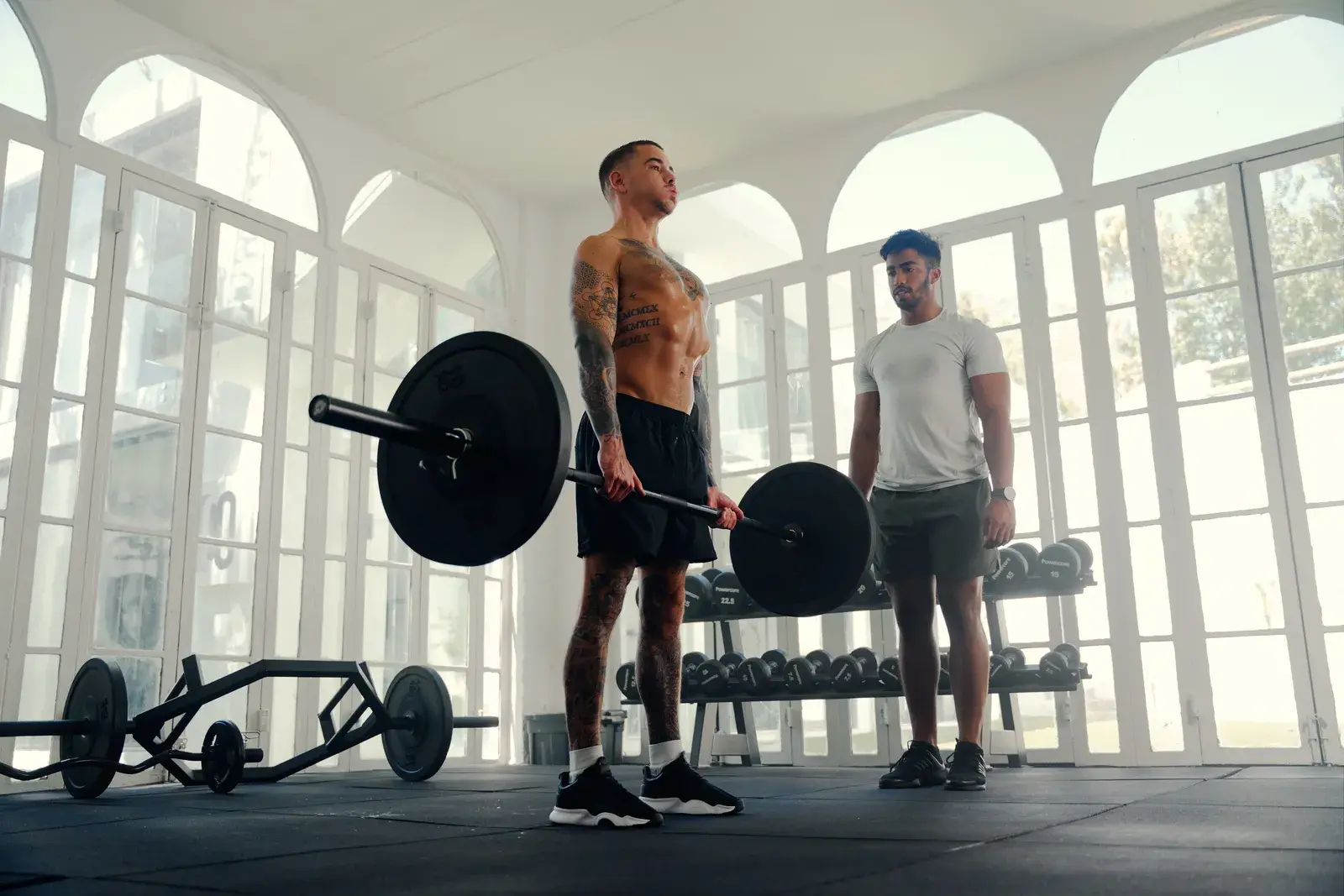
What did I probably hurt when my back went during a lift?
In most adults it is a strain of the muscles and ligaments along the spine, which hurts, spasms and limits bending but is not structural damage. MedlinePlus lists lifting a heavy object as one of the most common moments acute back pain starts, and muscle strain or spasm as a leading cause.
A smaller group irritate a disc or a facet joint, and a few teens and young adults develop a stress fracture in the back of a vertebra. The table shows how these usually differ.
| Likely cause | What it tends to feel like | Where to read more |
|---|---|---|
| Muscle or ligament strain | Ache and spasm in the low back, hard to bend or roll over; no leg symptoms; improves over days | Low back pain |
| Disc herniation with nerve irritation | Back pain plus leg pain, tingling or numbness, often below the knee; sitting and coughing can worsen it | Herniated disc |
| Facet joint irritation | Pain to one side of the spine with arching, twisting or the lockout of a lift | Facet joint pain |
| Spondylolysis or spondylolisthesis | In teens and young adults, low back pain with arching and overhead lifts that keeps returning | Spondylolisthesis |
| Sacroiliac joint pain | Pain over the dimple at the back of the pelvis, worse on single-leg work and stairs | SI joint pain |
What should I do in the first few days after hurting my back lifting?
Stop lifting heavy for now but keep moving. MedlinePlus advises stopping or reducing normal activity only for the first few days, says bed rest is not recommended, and suggests avoiding heavy lifting and twisting for the first 6 weeks while you return to exercise gradually.
Short walks, gentle positions that ease the pain and normal daily tasks help more than lying still. Heat often relaxes spasm; the page on heat or ice for pain explains when each helps. The first-days guide to low back pain in the first 72 hours has a simple plan.
- Walk a few minutes several times a day, on flat ground.
- Find one position that eases the pain, such as lying with knees bent, and use it between walks.
- Skip sit-ups, toe touches and testing the back by bending to see if it still hurts.
- Note any leg symptoms, numbness or bladder changes, and act on the warning list below.
Why do teenage lifters with back pain need a different check?
Young lifters and athletes can develop spondylolysis, a stress fracture in a part of the vertebra called the pars interarticularis. OrthoInfo names gymnastics, football and weightlifting as sports that load the lower back in repeated hyperextension and raise the risk in children and adolescents.
The tell-tale pattern is low back pain with arching, jerks and overhead presses that keeps coming back. A physical therapist who suspects it will refer the athlete to a physician for imaging before progressing loads. For families at Carmel high school weight rooms or club programs, the page on physical therapy for teen athletes explains how that process works; a parent or guardian completes the questionnaire for anyone under 18.
What does a physical therapist look at in a lifter’s back?
The exam starts with what hurts and what does not: bending, arching, side bending, single-leg balance and a neurological screen of strength, sensation and reflexes in the legs. The therapist asks for a straight-leg raise and a slump test to see whether a nerve is sensitive.
Then the lift itself. Your therapist will ask about the set, the load, fatigue and the program, and later watch an unloaded hinge and squat. The private suites have a lifting rack, so the movement can be watched with a dowel and then a light bar rather than described from memory. Technique is checked, but load management usually matters more than chasing a perfect position.
When can I deadlift again after a back tweak?
Most lifters return gradually over a few weeks once daily bending is comfortable, starting with lighter loads, shorter ranges and higher reps. A typical path runs from the hip hinge with a dowel to kettlebell deadlifts, block or trap bar pulls, and then conventional pulls with weekly load increases if the back stays quiet the next morning.
Leg symptoms change the pace. With disc-related pain your therapist may favor movements that keep symptoms out of the leg first; read lifting with a herniated disc for the reasoning. To be matched, choose “lower back” on the questionnaire, and see the page for weightlifters.
When back pain after lifting is an emergency
Go to an emergency department or call 911 if you have:
- Numbness around the groin, genitals or inner thighs
- New trouble passing urine or loss of bladder or bowel control
- Weakness that makes a foot drag or a leg give way
- Severe pain after a fall or a dropped bar onto your back
- Back pain with fever, or with a history of cancer
If you think it is an emergency, call 911.
