Hip pain when sleeping on your side is most often caused by irritated tendons and bursa over the bony point on the outside of the hip, a pattern called greater trochanteric pain syndrome or hip bursitis. Lying on that side presses on the sore spot, and lying on the other side can let the top knee drop and stretch it. Strengthening the hip muscles and changing sleep position usually help over weeks to a few months, and an Indiana-licensed physical therapist near Carmel can assess it without a referral.
Last reviewed By the Monon Therapy Collective editorial team
Why does the outside of my hip hurt only when I lie on it?
It hurts because body weight on a mattress squeezes the tendons and the small fluid sac (bursa) sitting on the greater trochanter, the bony bump you can feel on the side of your upper thigh. When those tissues are already irritated, a few hours of steady pressure is enough to wake you. AAOS OrthoInfo notes that hip bursitis pain is usually worse at night, when lying on the affected hip, and when getting up from a chair.
The tissue involved is usually more tendon than bursa. The gluteus medius and minimus tendons wrap over that bony point, and they become sensitive when they are compressed or overloaded, which is why clinicians increasingly use the wider term lateral hip pain or gluteal tendinopathy.
Is it bursitis, arthritis, or something in my back?
Where the pain sits is the quickest guide: tenderness right on the side of the hip suggests bursitis or tendon irritation, a deep ache in the groin points more toward the joint itself, and pain that starts in the low back or buttock and runs down may be coming from the spine.
| Likely cause | What it tends to feel like | Read more |
|---|---|---|
| Greater trochanteric pain (bursitis or gluteal tendon irritation) | Sore to press on the side of the hip; aches lying on it, climbing stairs and rising from a chair | Hip bursitis |
| Hip osteoarthritis | Deep groin or front-of-thigh ache, morning stiffness, trouble with socks and shoes | Hip osteoarthritis |
| Low back referral | Buttock or outer thigh pain that changes with back movement, sometimes tingling | Sciatica |
| Snapping or irritated IT band region | A clunk at the side of the hip with walking or stairs, tender along the outer thigh | Snapping hip |
Which sleeping position takes pressure off a sore hip?
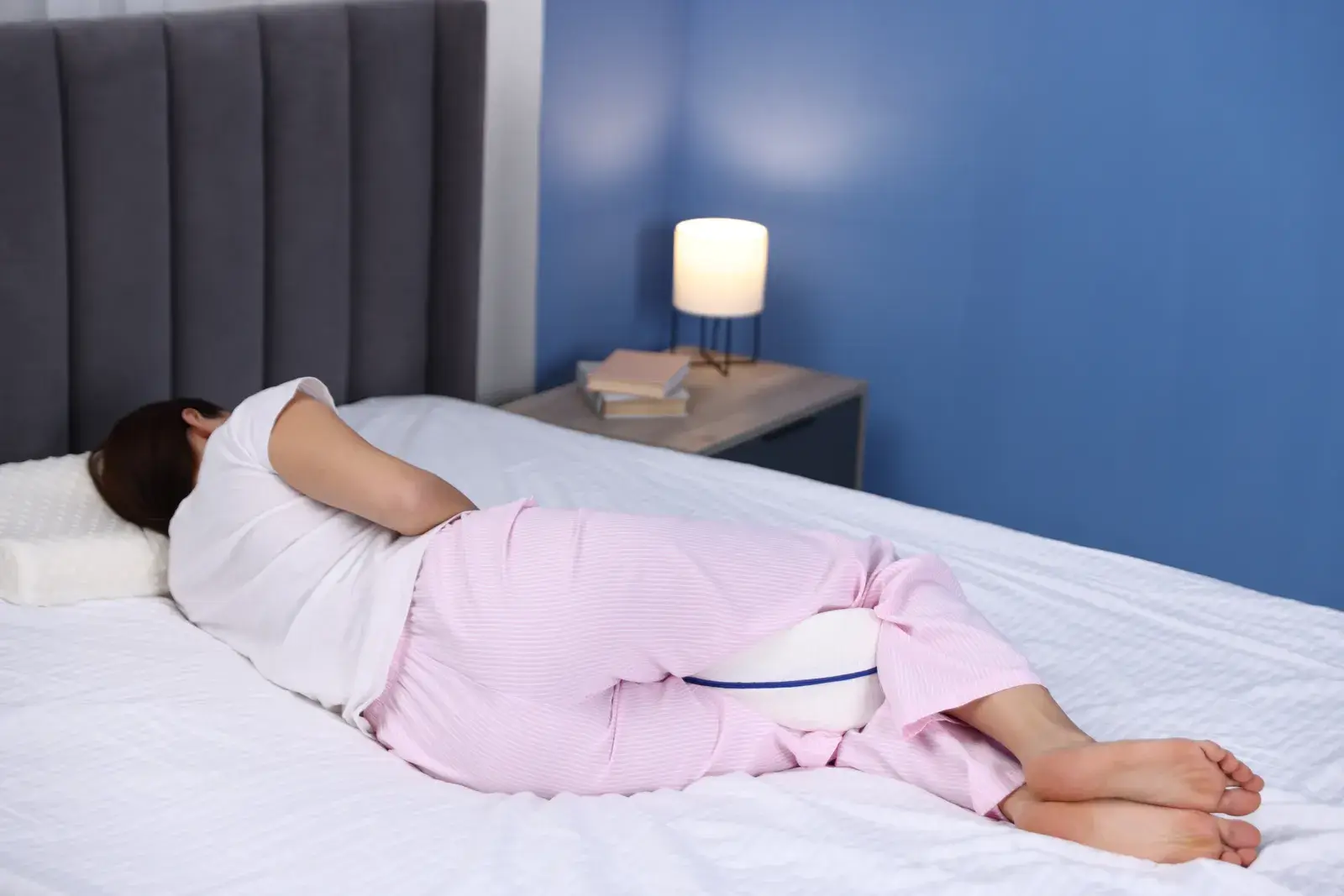
Sleeping on your back, or on the comfortable side with a firm pillow between the knees, usually eases the pressure. The pillow keeps the top knee level with the hip, so the sore tendons on the upper side are not stretched across the bone for hours. Some people add a folded towel under the waist to stop the pelvis tipping.
If you must sleep on the painful side, a soft mattress topper spreads the load. Avoid crossing the top leg over the bottom one, and try not to stand for long with your weight sunk into one hip, the classic way of holding a toddler or waiting in line, since that position compresses the same tissues during the day.
- Back sleeping with a pillow under the knees
- Good-side sleeping with a thick pillow between knees and ankles
- A topper or a softer mattress zone under the hip point
- Getting out of bed by rolling to the side and pushing up, rather than twisting
What will a therapist check to explain night hip pain?
A therapist will press along the side of the hip, test the strength of your hip abductors (the muscles that lift the leg out to the side), and watch you stand on one leg, climb a step and rise from a chair. Standing on one leg for a short while is one simple test clinicians use, since it often provokes the side-of-hip ache when the tendons are irritated.
They will also move the hip joint to look for the stiffness and groin pain of arthritis, and screen the low back, since all three can coexist. Treatment usually means progressive strengthening of the glutes, cutting back positions that squeeze the tendon, and a sensible plan for walking or running volume. The clamshell exercise and glute bridge are two moves people often hear about, though your therapist sets which ones fit and how hard.
How long until I can sleep on that side again?
Many people sleep noticeably better within a few weeks of changing position and starting strength work, though tendon-related hip pain often needs two to three months or longer of steady loading to settle fully. A corticosteroid injection can calm pain for a while, and AAOS lists it among nonsurgical options, but exercise addresses the load the tendon can tolerate.
If you are losing sleep most nights, the online assessment lets the matching team propose a therapist in the network whose hours fit. Suites at Carmel City Center open at 5 AM on weekdays, which helps if you would rather treat it before work than after.
See a physician promptly if night hip pain comes with
- Pain that is constant at night and does not ease with any change of position
- Fever, chills or a hot, swollen hip
- Unexplained weight loss or a history of cancer
- A recent fall followed by trouble walking or putting weight on the leg (call 911 if you cannot stand)
If you think it is an emergency, call 911.
