Burning, tingling or numb skin on the outer thigh is often meralgia paresthetica, in which the lateral femoral cutaneous nerve, a sensation-only nerve, is squeezed near the front of the hip bone. The National Institute of Neurological Disorders and Stroke says most cases improve with looser clothing or weight loss. A lumbar disc, hip bursitis and the iliotibial band can mimic it, so a physical therapist checks skin sensation, the hip and the lower back before suggesting a plan.
Last reviewed By the Monon Therapy Collective editorial team
- Usual culprit
- Lateral femoral cutaneous nerve (meralgia paresthetica)
- What it affects
- Skin sensation only, not muscle strength
- Common triggers
- Tight belts and waistbands, weight gain, pregnancy
- Red flag
- Real leg weakness or numbness spreading below the knee
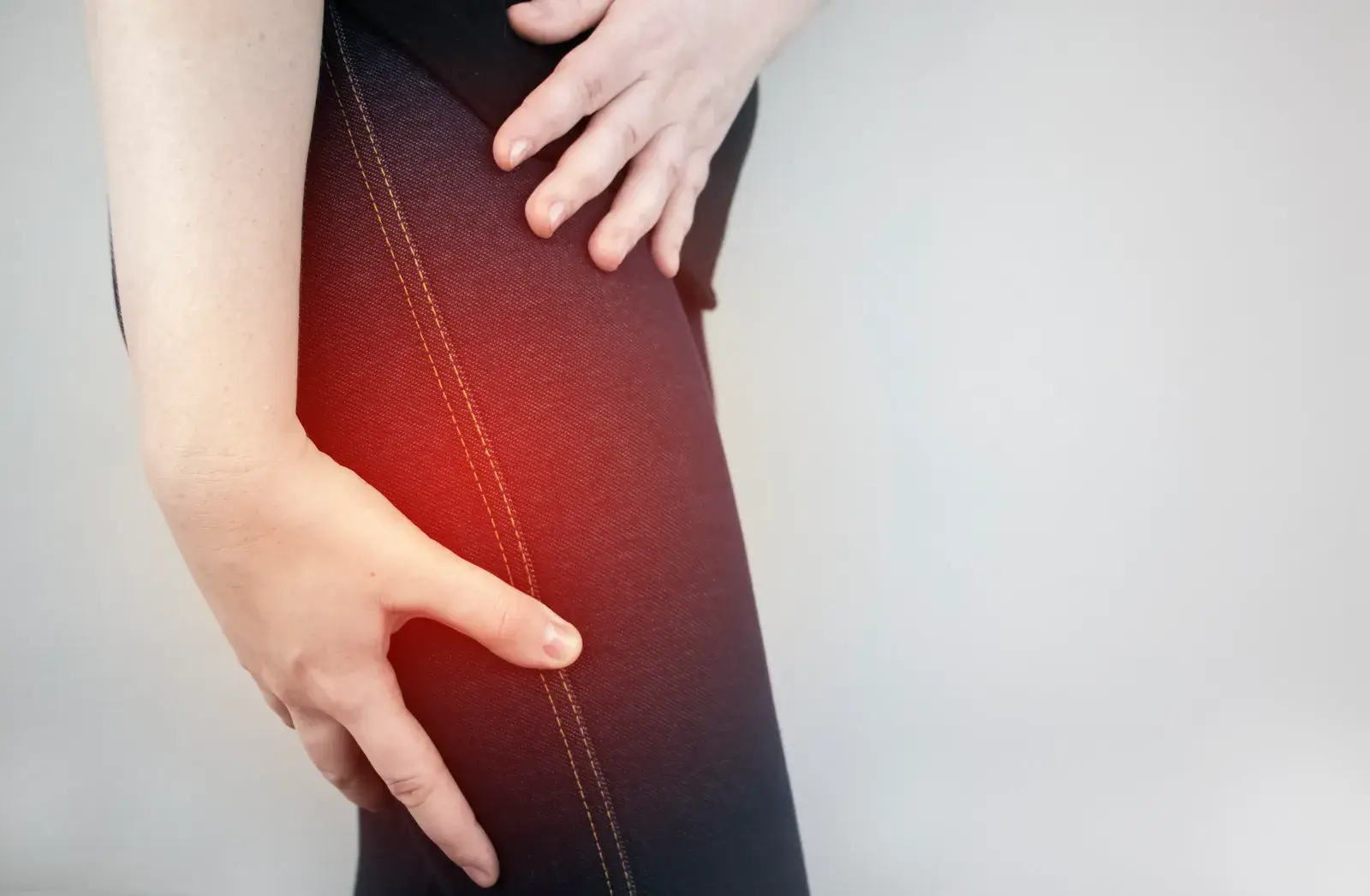
Why would the skin on my outer thigh burn?
The skin on the front and outside of the thigh gets its feeling from one small nerve that slips under the inguinal ligament next to the bony point at the front of the hip. If something presses on it there, the patch of skin it supplies can burn, buzz, go numb or feel painful to the light touch of clothing. NINDS describes exactly this: a patch of skin that is sensitive to touch and sometimes painful, numb or tingling.
Because the nerve carries sensation only, the thigh muscles keep their strength. That is a useful clue: burning skin with a strong leg points to this nerve, while burning with weakness points somewhere else.
| Likely cause | What it tends to feel like | Where to read more |
|---|---|---|
| Meralgia paresthetica | Burning, buzzing or numb skin in a palm-sized patch on the outer thigh; touch from clothing is unpleasant; strength is normal | Peripheral nerve problems |
| Upper lumbar disc or nerve root | Back pain plus thigh symptoms, sometimes weak knee straightening or a changed reflex | Herniated disc |
| Hip bursitis or gluteal tendon pain | An ache on the bony point of the hip, worse lying on that side; tender to press, not a skin burn | Hip bursitis |
| Iliotibial band irritation | Ache along the side of the thigh to the knee, mostly during or after running or cycling | IT band syndrome |
| Diabetic or other neuropathy | Tingling or numbness usually starting in both feet, not one thigh | Peripheral neuropathy |
What squeezes the nerve on the front of the hip?
Pressure at the waistline is the most common story. Tight belts, low-slung jeans, shapewear, a heavy tool belt or a duty belt loaded with gear can all press on the spot where the nerve leaves the pelvis. Weight gain and pregnancy add pressure from the belly above the same point.
Other triggers include long stretches of standing or walking, a seatbelt injury, and occasionally surgery near the hip or pelvis. Diabetes can also leave nerves more vulnerable to this kind of irritation. Workers who wear loaded belts all shift, covered on the pages for first responders and tradespeople, often notice the burn by the end of the day and relief on days off.
How does a physical therapist confirm a squeezed thigh nerve?
The exam maps sensation and rules out the look-alikes. The therapist lightly touches the thigh with a fingertip or cotton to outline the patch that feels different, then tests muscle strength and knee reflexes, which should be normal if only this nerve is involved.
Gentle pressure just inside and below the front point of the hip bone may reproduce the burning. A hip extension stretch can also provoke it. The therapist then screens the lumbar spine with movement and nerve tests, and examines the side of the hip for bursitis or tendon pain. Weakness, reflex changes or a sensory patch that does not fit this nerve leads to a referral to a physician, who may order nerve studies.
What eases a burning outer thigh day to day?
Take the pressure off the nerve. Loosen or drop the belt, switch to suspenders or a looser waistband, redistribute tool or duty gear away from the front of the hip, and break up long standing spells. NINDS notes that most cases improve with looser clothing or weight loss, and many settle on their own.
Physical therapy adds what you cannot do with clothing alone: hip flexor and trunk strength so the pelvis is not hanging forward all day, posture and standing strategies, gentle nerve gliding if it reduces symptoms, and a plan to increase walking without flaring the burn. Your therapist will also suggest a talk with your physician about medication if the pain disturbs sleep.
Can I book a therapist for thigh nerve pain without a referral?
Yes. Indiana’s direct access law lets you start with a physical therapist for up to 42 calendar days without a referral, though some insurance plans still ask for one; the page on referrals in Indiana explains the rules.
Choose “hip” on the two-minute questionnaire and describe the burning patch. The matching team proposes an independent therapist in the network and hands you to that office to confirm benefits and book a one-on-one visit at Carmel City Center.
When thigh burning needs a doctor promptly
Seek medical care rather than waiting for therapy if you have:
- Weakness in the thigh, such as the knee buckling on stairs
- Numbness in the groin or saddle area, or new bladder or bowel problems
- Numbness that spreads quickly or affects both legs
- A rash with burning skin, which can be shingles
- Burning with a new lump in the groin or fever
If you think it is an emergency, call 911.
