
Spinal manipulation in Carmel, Indiana
Spinal manipulation is a quick, small-amplitude thrust applied to a spinal joint, used with exercise to ease back and neck pain and help you move more freely. In Indiana, a physical therapist may only perform it with an order or referral from a physician, osteopathic physician or chiropractor who has examined you, even though other physical therapy can start without one. For people near Carmel, whether a manipulation-trained therapist is in the network depends on who is practising at the time, and the matching team tells you before booking.
How is spinal manipulation different from joint mobilization?
Spinal manipulation, also called thrust manipulation, is a single fast, small movement applied to a joint at the end of its available range, often with an audible pop. Joint mobilization, or nonthrust manipulation, uses slower, repeated movements of varying size that you can stop at any point. Both are forms of manual therapy.
The pop is a sound from inside the joint, not a bone going back into place, and its presence does not decide whether the technique helped. Many people get similar short-term relief from mobilization, which may suit those who dislike the thrust. More on that question is in does cracking your back help.
Why does Indiana require a referral for spinal manipulation by a physical therapist?
Indiana’s direct access law, IC 25-27-1-2.5, lets a physical therapist evaluate and treat without a referral for up to 42 calendar days, but it carves out spinal manipulation. A physical therapist may only manipulate the spine with an order or referral from a physician, osteopathic physician or chiropractor who has examined you.
In practice, that means you can begin an evaluation and exercise-based care without a referral, but if your therapist thinks manipulation would help, they will need that order first. If you already see a physician for your back or neck, asking them for a referral that includes manipulation saves a step. The wider referral rules are summarized in do I need a referral for physical therapy in Indiana.
The manipulation rule and the 42-day limit are separate. Manipulation always needs the order or referral, while the 42-day limit governs other treatment started without one, so ask the therapist’s office whether your referral covers both and what it needs to say.
What does the low back pain clinical guideline say about manipulation?
The 2021 low back pain clinical practice guideline published in the Journal of Orthopaedic and Sports Physical Therapy recommends that physical therapists use thrust or nonthrust joint mobilization to reduce pain and disability in both acute and chronic low back pain. For chronic low back pain with leg pain, it says therapists may use these techniques.
The guideline treats manipulation as one tool alongside exercise, education and staying active, not a stand-alone treatment. Its effects tend to be short-lived on their own, so therapists commonly use the window of easier movement that follows to load and retrain the area. For people with low back pain from long hours on Keystone Parkway or at a desk, the exercise that follows often matters more than the thrust itself.
Manipulation also does not move a disc back into place. When a disc is irritating a nerve, therapists often lean on movement and exercise instead, as described in herniated disc physical therapy.
Who should not have spinal manipulation?
Manipulation is not appropriate when a serious condition could make the spine vulnerable or when symptoms point beyond a simple mechanical problem. A careful examination screens for these first, and a good therapist will choose mobilization or exercise instead, or refer you on, when anything does not fit.
Neck manipulation carries a rare but serious risk involving the arteries in the neck, which is why screening before any neck technique is thorough and why many therapists favor gentler options there. Weakened bone, for example from osteoporosis, is another reason to avoid thrust techniques.
- Suspected fracture, including compression fractures in weakened bone
- Cancer affecting the spine, or unexplained weight loss with new back pain
- Loss of bladder or bowel control, or numbness in the saddle area
- Rapidly worsening weakness or numbness in an arm or leg
- Inflammatory arthritis affecting the upper neck
- Dizziness, double vision, trouble speaking or swallowing with neck pain
What a visit that includes spinal manipulation looks like
A visit that includes manipulation still starts with questions and testing. The therapist checks which movements reproduce your pain, how stiff each spinal level feels, and your nerve function, then explains what they propose and why, and asks for your consent before any thrust.
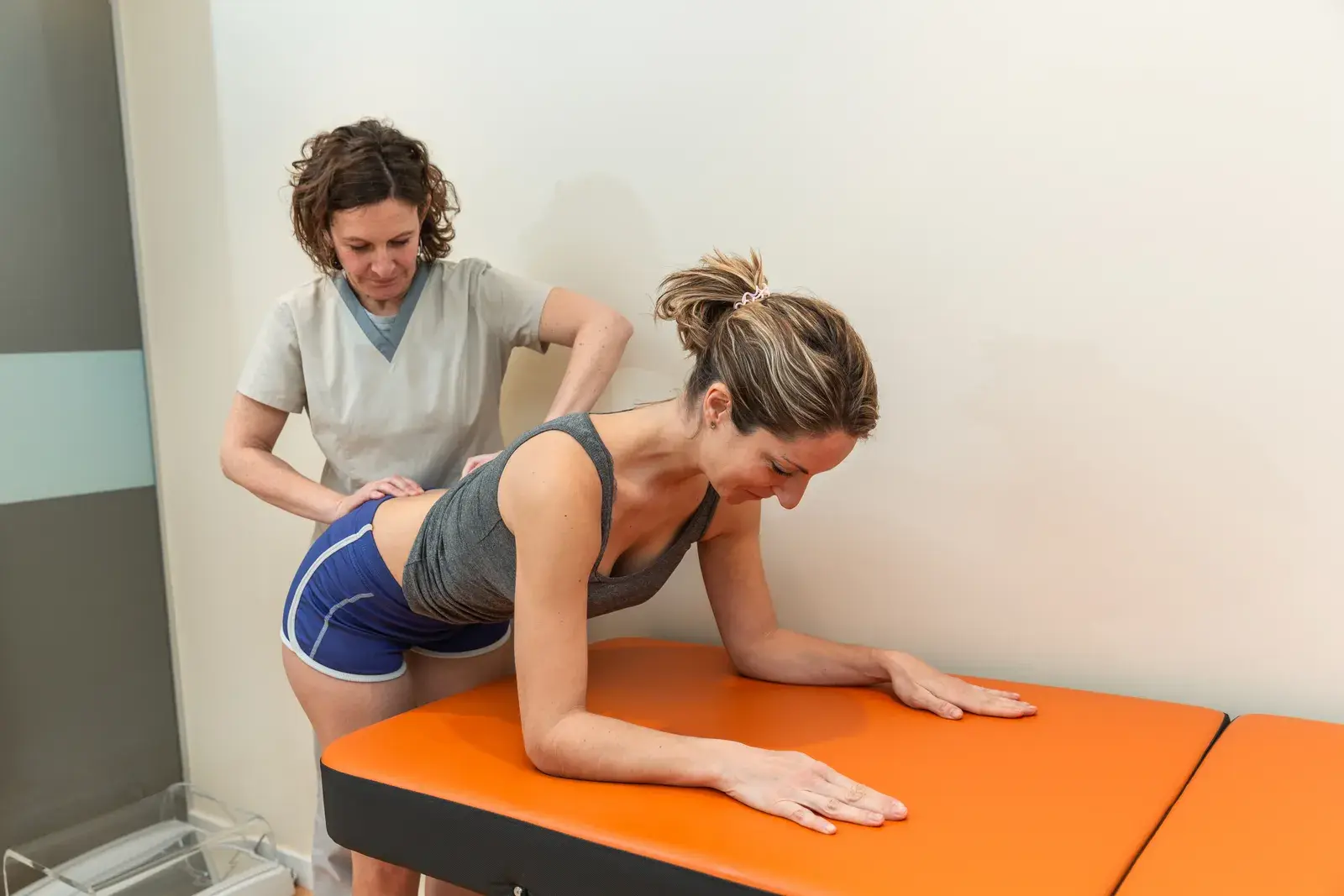
For the low back, you usually lie on your side with the top knee bent while the therapist positions your trunk and pelvis. For the mid back, you might lie on your back with arms crossed. The thrust itself lasts a fraction of a second. Afterward, the therapist retests the movement that hurt, such as bending forward or turning to look over your shoulder, to see whether it changed.
The rest of the session usually turns that change into exercise, for example hip hinge practice, trunk rotation or walking. You can decline manipulation at any point, before or during a session, and ask for mobilization or exercise instead. Declining does not mean giving up on hands-on care; it simply changes which tools your therapist reaches for, and many people with back pain recover well without ever having a thrust technique.
Asking the matching team for a therapist who uses manipulation
The network cannot promise spinal manipulation, because it depends on whether a therapist trained in it is practising in the suites at the time, and every episode also needs the order or referral Indiana requires. If you want it considered, say so in the questionnaire, and the matching team will tell you honestly before booking whether a therapist in the network uses manipulation, and suggest other options if not.
Remember that your therapist, not the matching team, decides whether manipulation suits your examination findings. If you are weighing a physical therapist against a chiropractor, physical therapy vs chiropractor compares the two. To start, complete the low back questionnaire or the neck version, and mention any referral you already have.
Who it helps
Spinal manipulation may be worth discussing if
- Back or neck pain is recent and mostly mechanical, worse with certain movements
- You have used manipulation before and found it helped you start exercising
- Stiffness in the mid back is limiting your golf swing or overhead reach
- You already see a physician or chiropractor who can provide the referral
Conditions
Problems this kind of care treats
 Low back painActive, one-on-one care for new or long-running low back pain, from first flare-up to confident lifting.
 Neck painHelp for stiff, aching necks, neck-related headaches and arm symptoms that start at the neck.
 Facet joint painEasing back pain that flares with arching, twisting and long standing by unloading irritated facet joints and rebuilding strength.
 Mid back painRotation mobility, rib joint care and upper back strength for pain between the neck and the bottom of the ribs.
Two-minute assessment
Not sure which therapist is right for you?
Answer a few questions about what hurts, how long it has been going on and what you want to get back to. Our matching team reads every answer and proposes a licensed physical therapist in the network whose focus, schedule and coverage fit. Two minutes, no obligation.
- No referral needed to start in Indiana (first 42 days)
- We check which therapists work with your plan before you book
- One-on-one care in a private suite at Carmel City Center
Questions
About spinal manipulation
Information on this website is general education, not medical advice, a diagnosis or a treatment plan. Only a licensed clinician who examines you can advise on your condition. If you may be having a medical emergency, call 911.
Something we did not cover? Ask the matching team or ring (888) 353-9975.
Can a physical therapist in Indiana manipulate my spine without a referral?
No. Indiana law requires an order or referral from a physician, osteopathic physician or chiropractor who examined you before a physical therapist performs spinal manipulation, even within the 42-day direct access period.
Is spinal manipulation from a physical therapist the same as a chiropractic adjustment?
The techniques can look similar, but the professions differ in training and approach. Physical therapists usually pair manipulation with exercise and education within a plan of care.
Does spinal manipulation hurt?
Most people feel brief pressure and sometimes hear a pop. Mild soreness for a day or so can happen, and you can always ask for a gentler technique.
How many manipulation sessions will I need?
There is no fixed number. Manipulation is usually used for a few visits early in care, while exercise carries the plan forward.
Is it safe to crack my own back at home?
Occasional self-cracking is not known to cause harm in an otherwise healthy spine, but if you feel the need to do it constantly, that usually points to stiffness or weakness worth assessing.
Can I ask for spinal manipulation on my first visit?
You can ask, but the therapist must first examine you, and in Indiana they also need the required order or referral. Bringing that referral to the first appointment avoids a delay.
Google reviews
What guests say about FlexWerk
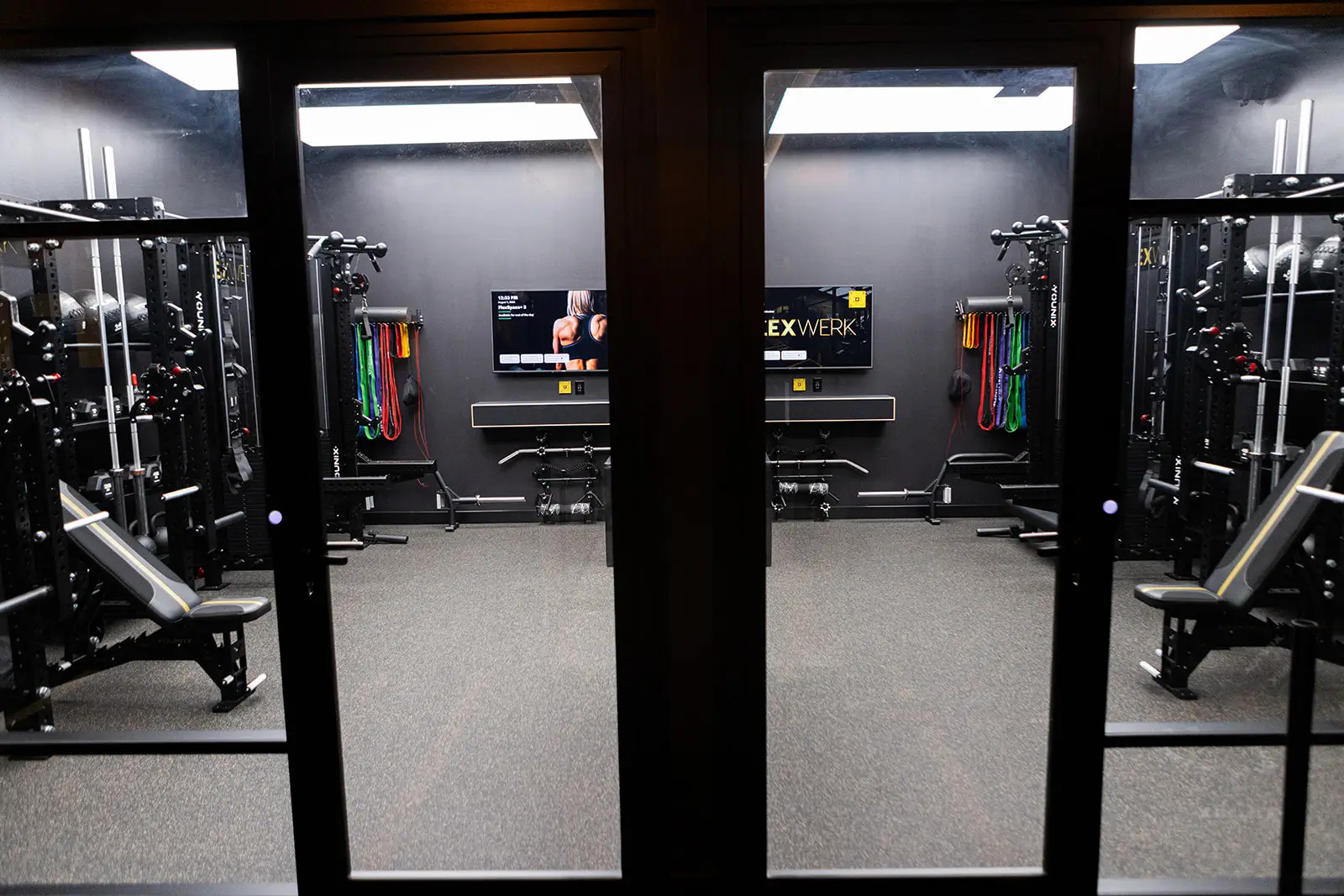
These are live Google reviews of FlexWerk at Carmel City Center, the private-suite facility where therapists in the network practise.
Continue
Related services
 Manual therapyHands-on joint and soft-tissue treatment that eases stiffness so the exercise part of your plan can do its job.
 Orthopedic physical therapyExercise-led care for back, neck, shoulder, hip, knee and ankle problems, delivered one-on-one in a private suite.
 Dry needlingWhat dry needling involves, the training Indiana requires, who should skip it, and how to tell if it is being used well.
Page reviewed By the Monon Therapy Collective editorial team

Carmel City Center · Carmel, Indiana
Start with a conversation
Tell us what hurts and what you want to get back to. We will tell you honestly whether a therapist in the network is likely a good fit for what you describe, and match you with an independent, licensed therapist who is. Only that therapist can assess what will help.
885 Monon Green Blvd, Suite 120, Carmel, IN 46032 · Monday to Friday 5 AM to 9 PM · Saturday and Sunday 7 AM to 4 PM