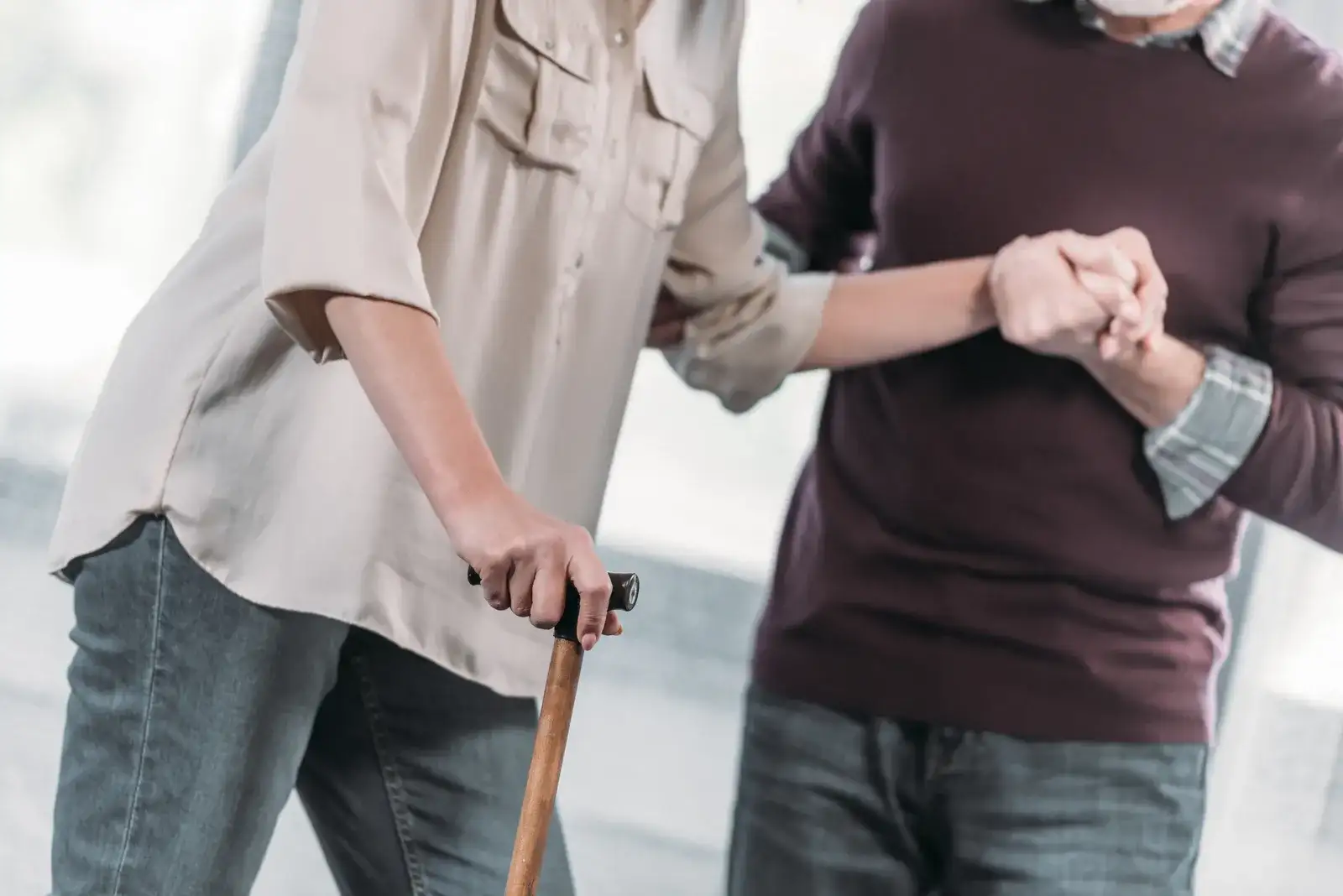
Stroke recovery physical therapy in Carmel, Indiana
Outpatient physical therapy continues stroke recovery after the hospital, inpatient rehab or home health phase, with intensive, repeated practice of walking, balance, transfers and arm and leg use. Recovery is often fastest in the first few months, but meaningful gains can continue long after, and APTA’s locomotor guideline supports moderate to high intensity walking training for people more than six months after a stroke, including years later. Near Carmel, the matching team confirms before booking whether a therapist in the network currently offers neurologic stroke rehab.
At a glance
Common signs of stroke recovery
Also called: Stroke rehabilitation, Post-stroke rehab, CVA rehabilitation, Hemiparesis rehab.
What changes after a stroke does outpatient rehab work on?
Outpatient rehab works on the physical effects of the brain injury: weakness or loss of control on one side (hemiparesis), stiffness, impaired balance, altered sensation and reduced endurance, and on the everyday tasks those affect, such as walking outdoors, stairs, getting in and out of a car and using the weaker arm.
The brain reorganizes in response to practice, a process called neuroplasticity. That is why rehab after stroke relies on many repetitions of meaningful tasks rather than passive treatments. Practice volume and intensity matter, and outpatient care is often where people can push both further than they could in the early weeks.
Many people arrive after inpatient rehab or home health therapy. Others had a milder stroke and went straight home. Either way, the outpatient phase focuses on community life: walking in a parking garage, crossing a street, returning to the Monon Trail or a grandchild’s game. Broader detail on this kind of care is on the neurological physical therapy page.
How does a therapist set goals for walking after a stroke?
Goals come from measured tests and your priorities. Walking speed over 10 meters, the six-minute walk for endurance, balance scales such as the Berg Balance Scale, and timed sit-to-stand give a baseline that is repeated over time. Walking speed in particular helps predict whether someone is likely to walk mostly at home or out in the community.
The therapist examines strength, tone (spasticity), sensation, coordination and the weaker shoulder, which is prone to pain and partial dislocation if the arm hangs unsupported. They also ask about fatigue, mood, swallowing, vision and memory, since these affect what is realistic and may need input from other professionals.
Safety at home is part of the evaluation. The therapist asks about stairs, bathroom layout, rugs, lighting and who is around during the day, and may suggest grab bars, a shower chair or a different walking aid. Small changes like these let you practise more on your own without unnecessary risk of a fall.
Your goals lead: walking the dog, standing to cook, getting back to church or work, or driving again, which needs medical clearance and sometimes a formal driving evaluation.
Many stroke survivors notice that fatigue, not just weakness, limits how much they can do. A therapist tracks how you recover between sessions and builds rest into the plan, so the intensity that drives recovery does not leave you exhausted for the next two days.
Why does high-intensity, task-specific practice matter after a stroke?
Because the nervous system adapts to what it practises, and how hard and how often matters. APTA’s 2020 clinical practice guideline on improving walking after chronic stroke, incomplete spinal cord injury and brain injury (people more than six months out) finds strong evidence for walking training at moderate to high intensity, on a treadmill or over ground with heart rate monitoring, or with virtual reality. It advises against body-weight-supported treadmill training, robot-assisted walking and seated or standing balance drills on their own when the goal is walking speed and distance.
Sessions therefore tend to be active: hundreds of steps, repeated sit-to-stands, step-ups, varied-surface walking, and arm tasks that ask the weaker hand to grasp, reach and carry. Strength training for the weaker leg is included, since weakness, not only coordination, limits many stroke survivors. Gait training and balance work are the core.
Bracing, walking aids and shoulder protection are reviewed so you can practise safely at home. Family members are often taught how to help without doing the work for you.
Spasticity, the tightness and involuntary resistance that can develop in the weaker arm or leg, is managed with regular stretching, positioning and strengthening of the opposing muscles. When it is severe, the therapist may suggest discussing injections or medication with your physician so training can go further.
- Moderate to high intensity walking with heart rate targets
- Repeated sit-to-stand, step-ups and transfers
- Strength training for the weaker leg and trunk
- Task practice for the weaker arm and hand
- Balance work on varied surfaces and in busy settings
- Caregiver training and a home practice schedule
Is it too late for physical therapy a year or more after a stroke?
No. The fastest recovery usually happens in the first three to six months, but many people keep improving walking and strength with focused training long afterwards. A new episode of care can make sense when goals change, function slips, or you never had outpatient rehab at all.
Medicare does not require continued improvement to cover skilled therapy, under the Jimmo settlement; skilled care to maintain function can qualify. Families also carry a lot: the caregivers page covers safe lifting and the caregiver’s own body. Typical stages of care are summarized here.
- Hospital and acute care (days): early mobility and safety checks.
- Inpatient rehab or home health (weeks): intensive daily practice of transfers, walking and self-care.
- Outpatient care (often weeks to months): community walking, endurance, stairs, balance in busy places and arm use.
- Later episodes (months to years): focused blocks when goals change, function slips, or a new skill such as returning to the gym is the aim.
- Ongoing: an independent exercise routine, ideally with periodic re-checks.
Where can a stroke survivor find outpatient physical therapy near Carmel?
Stroke rehab calls for neurologic training, so availability depends on which therapists are in the network at the time. Board certification in neurologic physical therapy, or a therapist who treats stroke regularly, is a good sign. A family member can fill in the two-minute questionnaire with you; the matching team will say honestly whether a therapist in the network offers stroke rehab, and if not, explain what kind of program to look for before anything is booked.
Practical details count for stroke survivors. The suites are reached from garage parking a short walk away, and a one-on-one session in a private suite means no waiting while a therapist splits time between patients. Bring your discharge summaries, any brace or walking aid, and a list of medications.
When to see a physician or go to the ER first
Physical therapy is the right start for most stroke recovery. These symptoms are different and need medical attention before, or instead of, a physical therapy visit:
- New face drooping, arm weakness or speech difficulty: call 911 (BE FAST)
- Sudden severe headache, loss of vision or loss of balance
- A fall with a head strike, especially on a blood thinner
- New calf swelling or pain on the weaker side (possible blood clot)
- Chest pain, fainting or shortness of breath with exercise
- Rapidly increasing confusion or drowsiness
If you think it is an emergency, call 911.
Two-minute assessment
Get your stroke recovery looked at
Tell us how your stroke recovery started, how long it has been going on and what it is stopping you from doing. The matching team proposes a therapist in the network who focuses on it, and you hear back, usually within one business day.
- No referral needed to start in Indiana (first 42 days)
- We check which therapists work with your plan before you book
- One-on-one care in a private suite at Carmel City Center
How therapists treat it
Kinds of care used for stroke recovery
- Neurological physical therapyTask-focused rehab for stroke, Parkinson’s, MS and nerve conditions, tracked with standard balance and walking tests.
- Gait trainingWalking-focused rehab that measures speed and balance, then practises the steps, turns, stairs and surfaces you need for daily life.
- Balance and fall preventionStrength, walking and balance training for older adults who feel unsteady, have fallen, or want to stay confident on their feet.
Questions
Stroke recovery: what people ask
Information on this website is general education, not medical advice, a diagnosis or a treatment plan. Only a licensed clinician who examines you can advise on your condition. If you may be having a medical emergency, call 911.
Something we did not cover? Ask the matching team or ring (888) 353-9975.
How soon after a stroke can outpatient physical therapy start?
Often as soon as you are home and medically stable, either directly from the hospital or after inpatient rehab or home health. Your medical team guides the timing.
Can physical therapy help my shoulder pain after a stroke?
Yes. Shoulder pain on the weaker side is common, and positioning, support, gentle movement and strengthening are standard parts of stroke rehab.
Should family members come to stroke therapy sessions?
It usually helps. Family members can learn safe ways to assist with walking, transfers and home exercise, and can share what they see at home.
Will I need a referral for stroke physical therapy in Indiana?
Indiana direct access allows up to 42 calendar days without a referral, but Medicare requires a physician or qualified provider to certify the plan of care, and many stroke survivors have one already. See the Indiana referral guide.
Is walking on a treadmill safe after a stroke?
Often yes with supervision, a safety harness or handrails as needed and heart rate monitoring. It is a common way to deliver the walking intensity that guidelines recommend.
What should a stroke survivor bring to a first outpatient visit?
Bring hospital and rehab discharge summaries, a medication list, any brace, cane or walker you use, comfortable shoes, and a family member if possible. Notes on what is hardest at home help the therapist set useful goals.
Google reviews
What guests say about FlexWerk
These are live Google reviews of FlexWerk at Carmel City Center, the private-suite facility where therapists in the network practise.
Related
Conditions that travel together
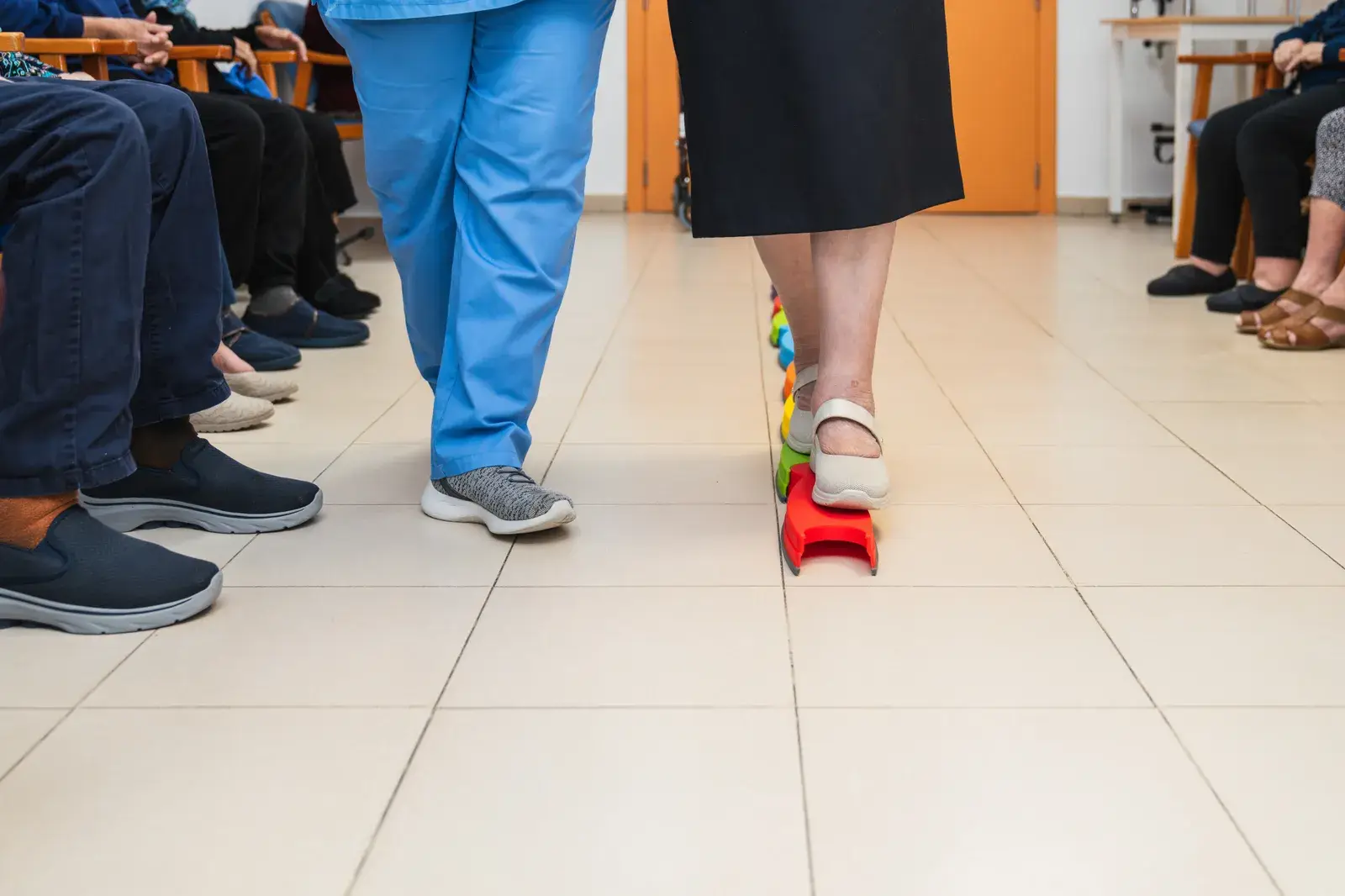 Parkinson’s diseaseExercise-based care for walking, balance, freezing and fall risk in Parkinson’s, with periodic re-checks as needs change.
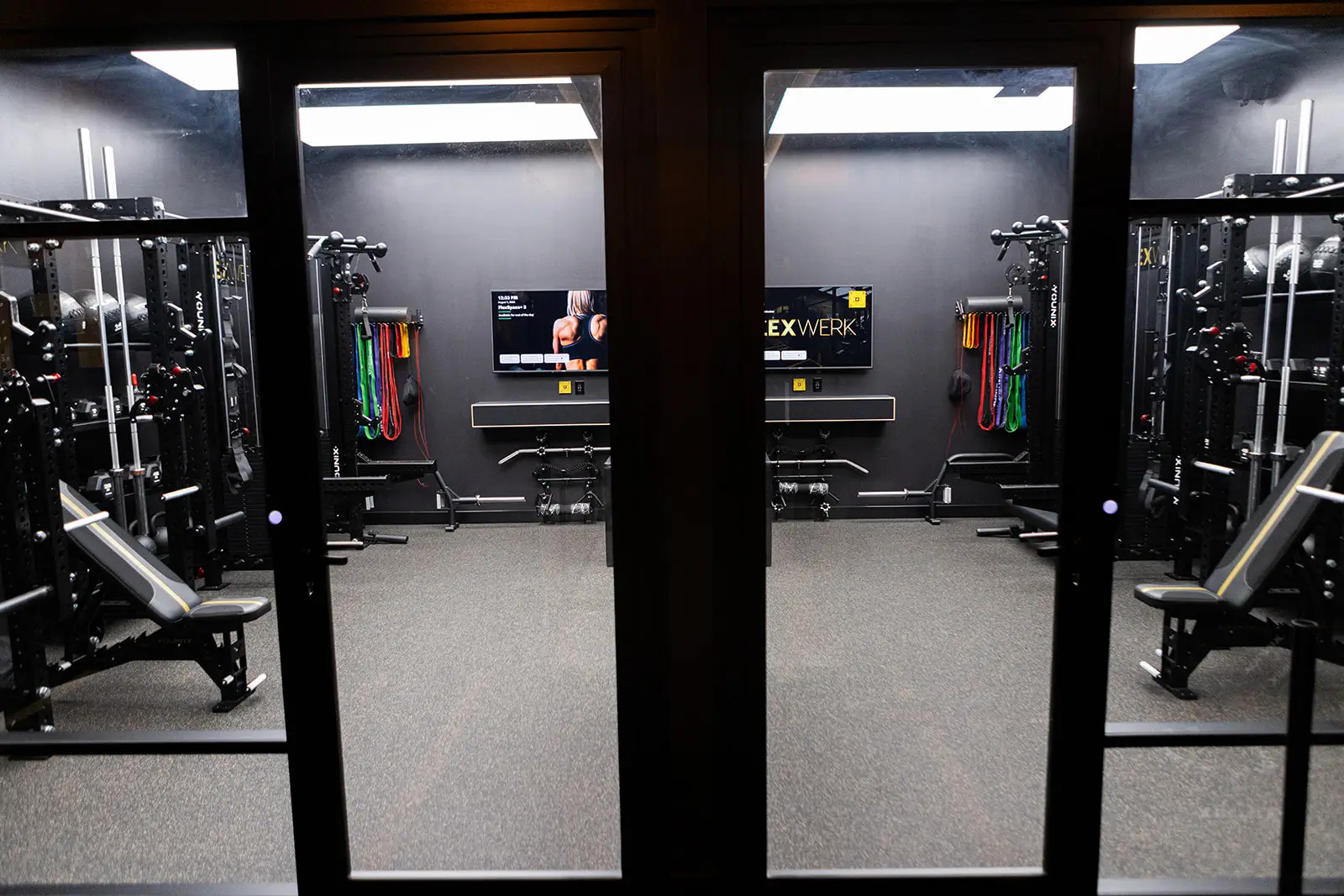 Multiple sclerosisPaced exercise for walking, balance, fatigue and spasticity in MS, with strategies for heat sensitivity and recovery after relapses.
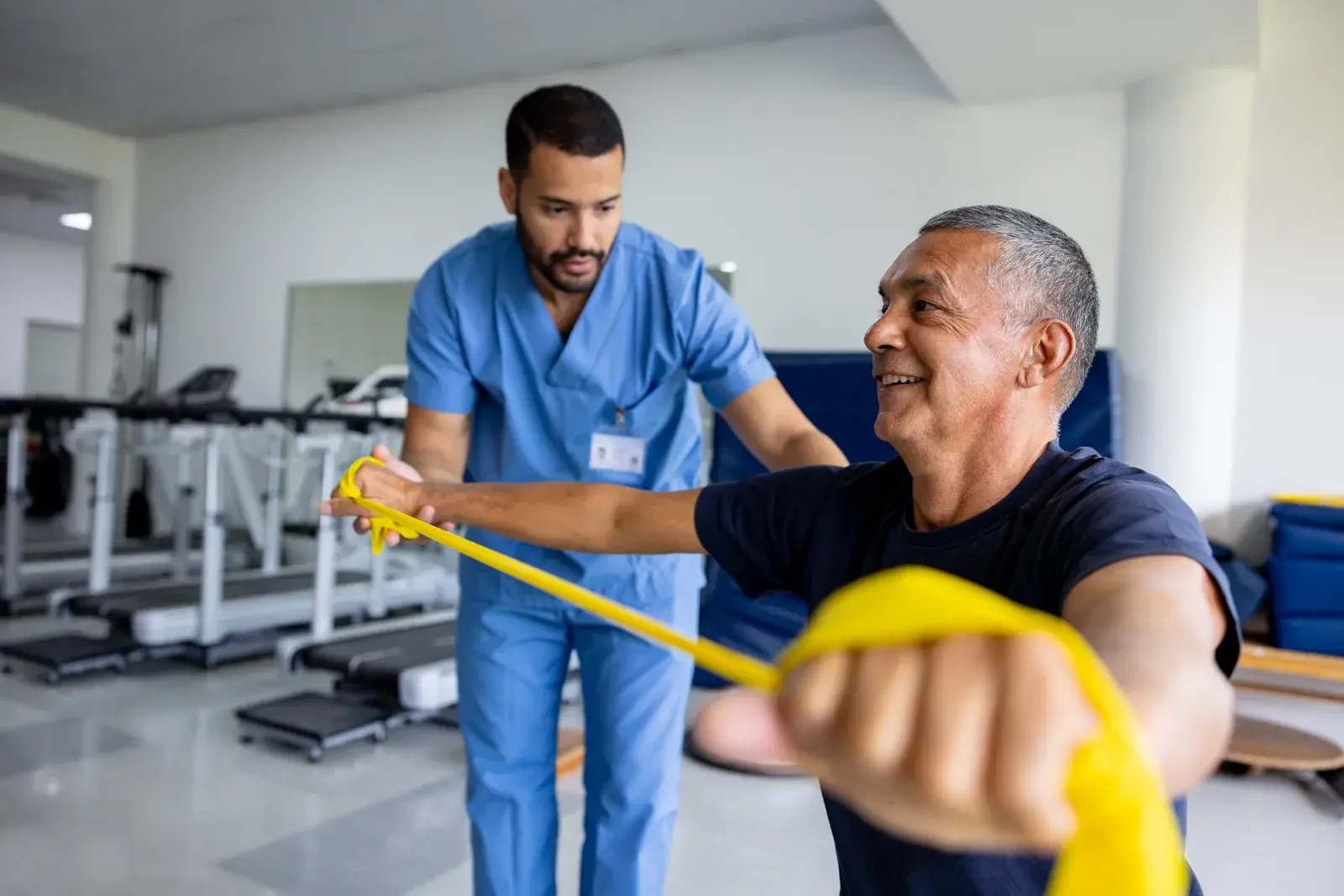 Shoulder painOne-on-one care for impingement-type pain, frozen shoulder, instability and overhead sport shoulders.
Page reviewed By the Monon Therapy Collective editorial team

Carmel City Center · Carmel, Indiana
Start with a conversation
Tell us what hurts and what you want to get back to. We will tell you honestly whether a therapist in the network is likely a good fit for what you describe, and match you with an independent, licensed therapist who is. Only that therapist can assess what will help.
885 Monon Green Blvd, Suite 120, Carmel, IN 46032 · Monday to Friday 5 AM to 9 PM · Saturday and Sunday 7 AM to 4 PM