Morton’s neuroma physical therapy in Carmel, Indiana
Morton’s neuroma is a thickened, irritated nerve between two toes, most often the third and fourth, and conservative care built on shoe changes, a metatarsal pad and forefoot loading changes is the usual first step. In Carmel, the Indiana-licensed physical therapist you are matched with confirms the pattern fits a neuroma, helps you take squeeze off the nerve, and works on the calf, foot and gait habits that load the forefoot. If symptoms persist, a podiatrist or orthopedic foot specialist can discuss injections or surgery.
At a glance
Common signs of morton’s neuroma
Also called: Morton neuroma, Interdigital neuroma, Intermetatarsal neuroma, Plantar digital neuritis.
Why does a nerve between the toes thicken and burn?
A Morton’s neuroma forms when a small nerve running between two metatarsal heads is repeatedly squeezed and rubbed, so its outer layer thickens and becomes sensitive. Despite the name it is not a tumor. It is scar-like thickening around the nerve, most often in the space between the third and fourth toes, sometimes between the second and third.
Anything that crowds the forefoot raises the pressure on that nerve. Narrow or pointed toe boxes, high heels that tip weight forward, tight cycling shoes or ski boots, and sports with long periods on the toes, such as court sports and running, are the usual suspects. Foot shape can add to it, for example a bunion that crowds the other toes or a foot that splays as the arch lowers.
Because the problem is a nerve, the symptoms often feel different from bone or joint pain: burning, electric, numb or tingling, sometimes shooting into the toes. Many people describe a sense of a bunched-up sock that will not go away.
Symptoms tend to come and go at first, flaring during a long day in dress shoes or late in a run, then fading for days. Over time, if the pressure continues, flares can become more frequent and last longer. That early, on-and-off stage is the easiest time to change course with shoes and padding.
What tests help confirm a Morton’s neuroma?
Diagnosis is mostly clinical: the story, where the symptoms sit, and a few hands-on tests. A therapist presses into the space between the metatarsal heads rather than on the bones, squeezes the forefoot from side to side, and feels for a click, called Mulder’s click, that often reproduces the familiar pain.
The therapist will also check the neighboring joints, because pain directly under a toe joint may point to a plantar plate tear or general ball of foot pain instead. Sensation in the toes is tested, and nerve symptoms that spread across the whole sole or both feet prompt a screen for problems higher up, such as a pinched nerve in the back, tarsal tunnel syndrome or peripheral neuropathy.
Ultrasound is the usual imaging choice for confirming a neuroma, and MRI is rarely needed. A physician may order imaging when the diagnosis is unclear or an injection or surgery is being considered. Many people start conservative care without it.
What does conservative care for Morton’s neuroma include?
Conservative care aims to give the nerve more room and less pressure for long enough that it calms down. The single most useful step is usually footwear: a wide, deep toe box, a lower heel and a cushioned or rocker sole. Some people find that simply loosening the forefoot laces makes a noticeable difference within days.
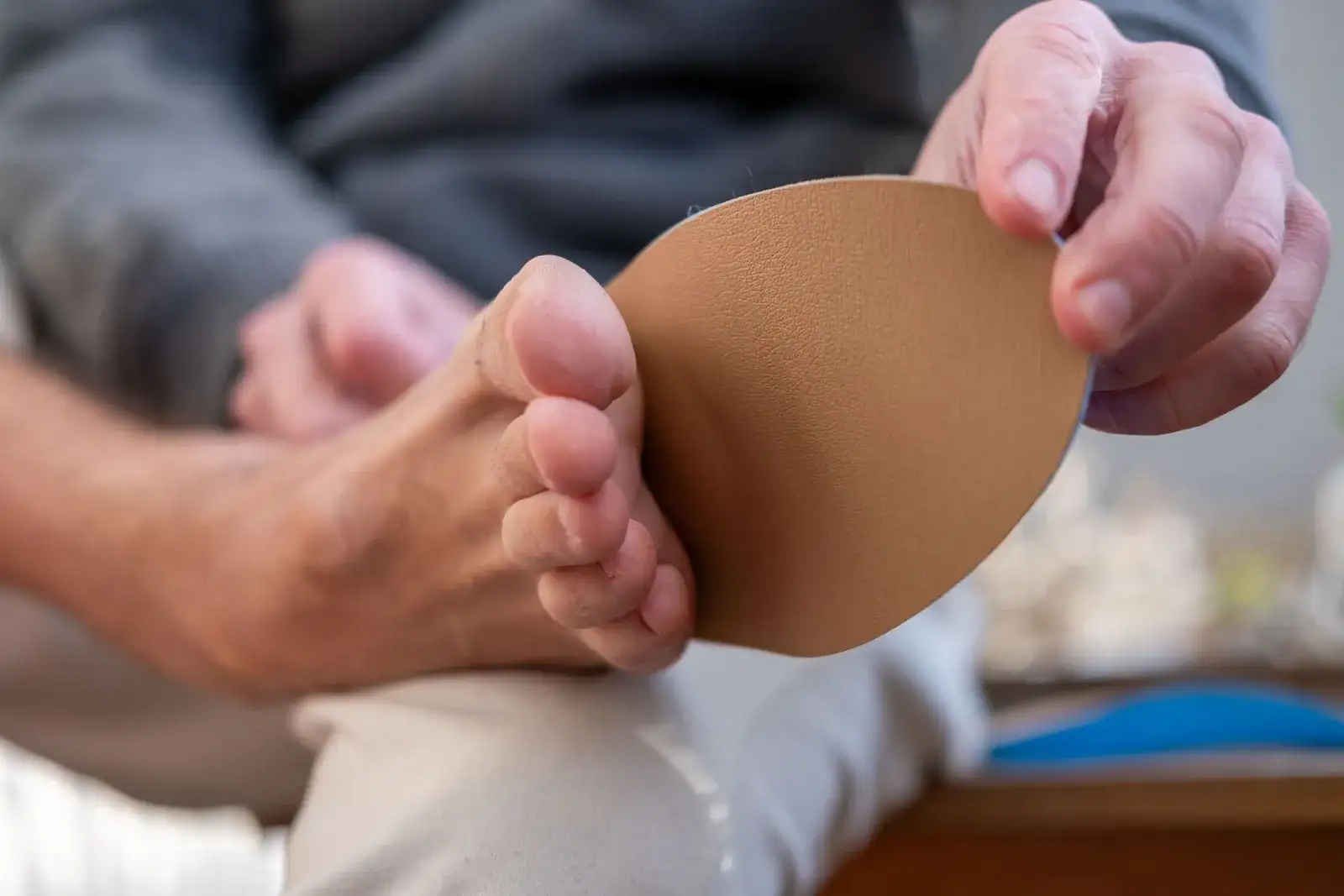
A metatarsal pad placed just behind the metatarsal heads can spread them slightly and lift the nerve out of the pinch. The position is precise, and a therapist can test different spots in your insole until the burning eases rather than worsens. Toe spacers suit some people and irritate others.
Exercise addresses what loads the forefoot: calf flexibility and strength so the heel does not lift early, intrinsic foot strengthening, and hip and calf work for runners and court players. Gait and stride changes may help runners who push hard off the forefoot. Manual techniques such as soft tissue work and joint mobilization of the forefoot may be used for comfort, as described on the manual therapy page.
- Shoes with a wide, deep toe box and lower heel
- Metatarsal pad positioning and insole adjustments
- Calf flexibility and strength
- Intrinsic foot muscle training
- Forefoot mobility and soft tissue techniques for comfort
- Adjusted volume for running, court sports and long standing
How long should I give conservative care before considering an injection or surgery?
Orthopedic guidance generally gives shoe changes, padding and other nonsurgical care 3 to 6 months before surgery is discussed, and many people improve enough in that time to keep going without a procedure. Symptoms that are mild and recent tend to respond better than a neuroma that has burned for a year or more.
If symptoms persist, a podiatrist or orthopedic foot surgeon may discuss a corticosteroid injection, other injection approaches, or surgery to release the ligament over the nerve or remove the thickened section. Those decisions sit with the physician and you. A physical therapist can help you understand the options and keep the rest of the foot and leg strong whichever path you choose.
After surgery, a short period of protected walking is usual, followed by a gradual return to normal shoes and activity. The surgeon’s instructions set that pace.
During those weeks of conservative care, a therapist will usually ask you to keep a simple log of which shoes, activities and days bring the burning on. That record turns vague impressions into a clear picture, and it helps you and any specialist you see later judge whether the changes are working or whether the next step is needed.
What footwear swaps help a Morton’s neuroma right away?
Swap anything narrow, pointed or high-heeled for shoes that let your toes spread, and check the fit late in the day when feet are largest. Cyclists may need to loosen or replace tight shoes, and golfers who walk the course at places around Carmel and Westfield may find a roomier golf shoe makes a long round tolerable again.
Take short breaks from standing, remove shoes and gently massage the forefoot when it flares, and reduce running or court time while symptoms settle. A simple over-the-counter metatarsal pad is low cost and worth trying, positioned behind the sore area rather than under it.
If burning or numbness keeps coming back, or you are unsure whether it is a neuroma at all, start the foot assessment questionnaire. The matching team reads it and proposes a therapist in the network with an orthopedic focus, and the cost and insurance page explains how payment works.
When to see a physician or go to the ER first
Physical therapy is the right start for most morton’s neuroma. These symptoms are different and need medical attention before, or instead of, a physical therapy visit:
- Numbness or burning in both feet, or spreading up the legs
- Weakness of the foot or ankle, or a foot that slaps when you walk
- Back pain with leg symptoms, or numbness in the groin or saddle area
- A wound or color change on the toes in someone with diabetes
- A hard, growing lump on the foot
If you think it is an emergency, call 911.
Two-minute assessment
Get your morton’s neuroma looked at
Tell us how your morton’s neuroma started, how long it has been going on and what it is stopping you from doing. The matching team proposes a therapist in the network who focuses on it, and you hear back, usually within one business day.
- No referral needed to start in Indiana (first 42 days)
- We check which therapists work with your plan before you book
- One-on-one care in a private suite at Carmel City Center
How therapists treat it
Kinds of care used for morton’s neuroma
- Orthopedic physical therapyExercise-led care for back, neck, shoulder, hip, knee and ankle problems, delivered one-on-one in a private suite.
- Manual therapyHands-on joint and soft-tissue treatment that eases stiffness so the exercise part of your plan can do its job.
- Gait trainingWalking-focused rehab that measures speed and balance, then practises the steps, turns, stairs and surfaces you need for daily life.
Questions
Morton’s neuroma: what people ask
Information on this website is general education, not medical advice, a diagnosis or a treatment plan. Only a licensed clinician who examines you can advise on your condition. If you may be having a medical emergency, call 911.
Something we did not cover? Ask the matching team or ring (888) 353-9975.
Is a Morton’s neuroma dangerous?
No. It is a benign thickening around a nerve, not a cancer. It can be very uncomfortable, but it does not spread.
Can a Morton’s neuroma go away on its own?
The thickening may not fully disappear, but symptoms often settle when pressure on the nerve is reduced with better shoes and padding.
Why does taking my shoe off help so much?
Removing the shoe lets the metatarsal heads spread and takes the squeeze off the nerve, which is a classic clue that a neuroma is involved.
Can I run with a Morton’s neuroma?
Many people can, with roomier shoes, looser lacing over the forefoot and a metatarsal pad. Long runs and speed work may need to wait until symptoms calm.
Will a physical therapist give me a steroid injection?
No. Injections are given by physicians or podiatrists. A therapist focuses on shoes, padding, exercise and load management, and can coordinate with the prescriber.
Do toe spacers help a neuroma?
Some people find toe spacers ease the squeeze between the toes, while others find they add pressure inside a shoe. They are worth a short trial in a roomy shoe; stop if the burning increases.
Google reviews
What guests say about FlexWerk
These are live Google reviews of FlexWerk at Carmel City Center, the private-suite facility where therapists in the network practise.
Related
Conditions that travel together
 Ball of foot painHelp for burning or bruised-feeling forefoot pain: calf and toe strength, gait changes, and smarter shoes and pads.
 Plantar plate tearCare for pain under the second toe joint: taping, offloading, footwear and toe strength, with referral if the toe is drifting.
 Peripheral neuropathyBalance, strength and foot-safety training for numb, tingling or weak feet from nerve damage.
Page reviewed By the Monon Therapy Collective editorial team

Carmel City Center · Carmel, Indiana
Start with a conversation
Tell us what hurts and what you want to get back to. We will tell you honestly whether a therapist in the network is likely a good fit for what you describe, and match you with an independent, licensed therapist who is. Only that therapist can assess what will help.
885 Monon Green Blvd, Suite 120, Carmel, IN 46032 · Monday to Friday 5 AM to 9 PM · Saturday and Sunday 7 AM to 4 PM