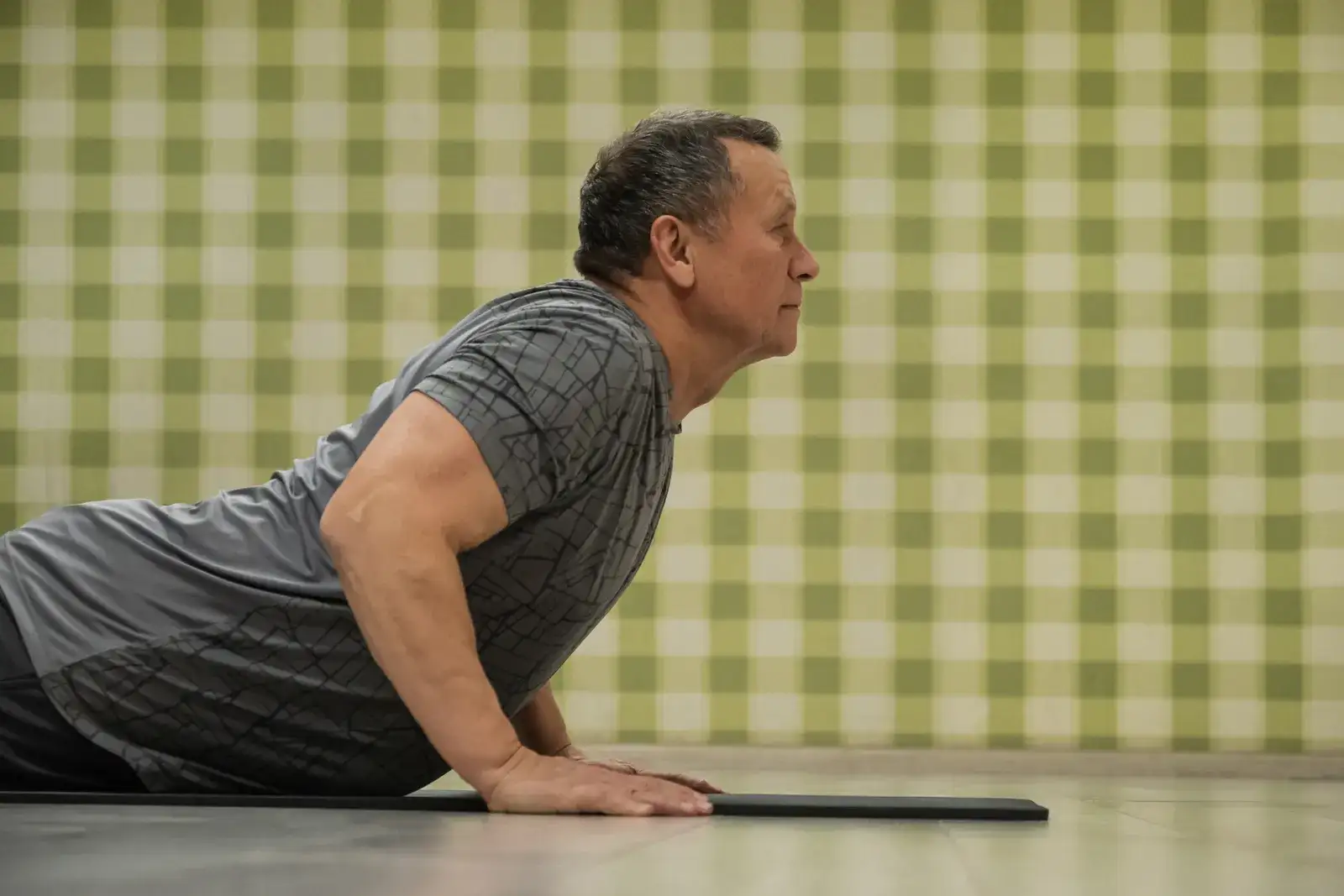
Kyphosis physical therapy in Carmel, Indiana
Kyphosis is an excessive forward rounding of the upper back, and in adults it often responds to targeted strengthening of the back extensor muscles, mobility work for the chest and hips, and balance training. A licensed physical therapist matched through the network in Carmel first works out whether the curve is flexible postural rounding or a fixed change such as old fractures or Scheuermann’s disease, then builds a plan to improve how upright you can stand and how well you move. Exercise cannot remodel bone, but it often changes posture, strength and comfort.
At a glance
Common signs of kyphosis
Also called: Hyperkyphosis, Thoracic hyperkyphosis, Rounded upper back, Dowager’s hump, Hunchback, Postural kyphosis, Scheuermann’s kyphosis.
What makes the upper back round forward more than it should?
Several different processes can produce the same rounded look, and the cause matters more than the shape. Every thoracic spine curves forward somewhat, typically 20 to 45 degrees by AAOS OrthoInfo’s figures, and the curve naturally increases with age, but hyperkyphosis means it has gone beyond that range, generally past about 50 degrees.
In teenagers and younger adults, the most common type is postural kyphosis, a flexible rounding that corrects when you stand tall or lie flat. Scheuermann’s disease is different: during growth, several vertebrae become wedge-shaped, leaving a stiffer curve that does not straighten fully. In older adults, contributors include weakness of the back extensor muscles, disc changes, and vertebral fractures from osteoporosis, some of which happen without much pain.
Long hours bent over a laptop, a phone or a steering wheel do not cause structural deformity on their own, but they do reinforce the flexed position and weaken the muscles that hold you upright. That is the part exercise can most readily change.
Rounding also has knock-on effects beyond appearance. A forward-shifted head and rib cage make it harder to reach overhead, can crowd the space for breathing deeply, and shift your balance point toward your toes. For a golfer at one of the Carmel courses, it can limit the shoulder turn; for an older walker on the Monon Trail, it can make a stumble harder to recover from.
How does a physical therapist measure a rounded upper back?
A physical therapist measures how rounded you are in standing, how much of that rounding you can correct actively, and how the curve affects your movement, strength and balance. The difference between flexible and fixed rounding largely decides how much posture change is realistic.
Common tools are simple and repeatable: the distance from the back of the head to the wall when you stand against it, a flexicurve or inclinometer reading, a count of thin blocks needed under your head when lying flat, and photographs from the side with your consent. The therapist will also test back extensor endurance, shoulder and hip range, and balance, and ask about fractures, height loss and bone density results.
If the curve has changed quickly, is painful, or there is height loss without a known reason, the therapist will suggest a physician visit for X-rays and bone density testing. A sudden increase in rounding can be a sign of a new spinal compression fracture.
Which exercises actually change posture in hyperkyphosis?
The exercises with the most promise are progressive strengthening of the spinal extensors and upper back, paired with mobility for the chest, shoulders and hips, practised consistently over months. Stretching alone, or reminders to sit up straight, rarely make lasting changes.
In a private suite at FlexWerk, a session might include prone back extensions on a mat or bench, the prone Y, T and W series, thoracic extension over a foam roller, rows on the cable column, wall angels and hip flexor stretching. Balance work and step training are added for older adults, because a forward-shifted center of mass increases fall risk.
For people with osteoporosis, loads are chosen carefully and loaded forward bending and twisting are avoided. Teenagers with Scheuermann’s kyphosis are usually managed together with an orthopedic physician, who decides on any bracing. For anyone under 18, a parent or legal guardian completes the questionnaire and attends visits.
- Back extensor strengthening, starting lying face down
- Upper back and shoulder blade strengthening with cables or bands
- Thoracic extension mobility over a roller or bench edge
- Chest and hip flexor flexibility
- Practice of tall posture during real tasks, not only exercises
- Balance and walking drills where fall risk is present
How long before posture exercises make a visible difference?
Strength and endurance changes usually take at least eight to twelve weeks of regular training, and visible changes in posture, when they come, often take several months. Many people notice they can stand taller for longer, or that their back aches less by evening, before anything looks different in a mirror.
A common pattern is weekly or twice-weekly sessions for six to ten weeks, then a home or gym routine with periodic checks. Flexible postural rounding generally improves more than a fixed curve from old fractures or Scheuermann’s disease, where the goals shift toward comfort, function and preventing progression.
Your therapist will remeasure at intervals so that you can see what is changing, and will adjust the program if the numbers stall. Consistency matters more than intensity here: three modest sessions a week, kept up through the busy months, usually outperform an ambitious plan that fades by the second month. If you want to continue after discharge, strength training after 50 explains how to keep building safely.
What can I change at my desk and in the car to stop slumping all day?
Small changes that reduce hours of sustained flexion are worth making alongside exercise. Raise your laptop screen to eye level with a stand and separate keyboard, bring your phone up rather than looking down at it, and get up and extend your back every 30 to 45 minutes.
In the car, adjust the seat so you sit upright with the headrest close to the back of your head, and avoid reclining far back, which pushes the head forward. Carrying loads close to the body and using a backpack with both straps also helps. A simple daily routine of lying flat with a thin pillow for a few minutes can be comfortable for many people.
If your back is rounding more, aching more or you are worried about fractures, the two-minute physical therapy questionnaire lets you describe it. The matching team proposes a therapist in the network and follows up, usually within one business day, and while the suites open at 5 AM on weekdays, each therapist sets their own hours inside that window.
When to see a physician or go to the ER first
Physical therapy is the right start for most kyphosis. These symptoms are different and need medical attention before, or instead of, a physical therapy visit:
- A rapid increase in rounding or sudden height loss
- Sudden new mid back pain, especially with osteoporosis, which may be a fracture
- Numbness, weakness or changes in walking or bladder control
- Shortness of breath or chest symptoms linked to a severe curve
- Night pain, fever or unexplained weight loss
If you think it is an emergency, call 911.
Two-minute assessment
Get your kyphosis looked at
Tell us how your kyphosis started, how long it has been going on and what it is stopping you from doing. The matching team proposes a therapist in the network who focuses on it, and you hear back, usually within one business day.
- No referral needed to start in Indiana (first 42 days)
- We check which therapists work with your plan before you book
- One-on-one care in a private suite at Carmel City Center
How therapists treat it
Kinds of care used for kyphosis
- Orthopedic physical therapyExercise-led care for back, neck, shoulder, hip, knee and ankle problems, delivered one-on-one in a private suite.
- Balance and fall preventionStrength, walking and balance training for older adults who feel unsteady, have fallen, or want to stay confident on their feet.
- Post-rehab strength trainingThe bridge from discharge to lasting strength: a written handoff from your therapist to a FlexWerk coach in the same building.
Questions
Kyphosis: what people ask
Information on this website is general education, not medical advice, a diagnosis or a treatment plan. Only a licensed clinician who examines you can advise on your condition. If you may be having a medical emergency, call 911.
Something we did not cover? Ask the matching team or ring (888) 353-9975.
Can kyphosis be reversed with exercise?
Flexible postural rounding often improves noticeably with strength and mobility work. A structural curve from wedged or fractured vertebrae will not reverse, but exercise can still improve posture, comfort and function.
Do posture correctors help kyphosis?
Posture braces can remind you to stand tall, but they do the work for your muscles. They are fine as a short-term cue if you like them, while strengthening remains the main plan.
Is kyphosis the same as scoliosis?
No. Kyphosis is a forward rounding seen from the side, while scoliosis is a sideways curve with rotation seen from behind. They can occur together; see scoliosis physical therapy for the sideways curve.
Is it too late to improve posture at 70 or 80?
It is rarely too late to improve strength and balance. Older adults commonly gain extensor strength and stand more upright with a progressive program, even if the bony curve itself stays the same.
Should teenagers with Scheuermann’s kyphosis stop playing sports?
Most do not need to stop, but the plan should be guided by an orthopedic physician, especially during growth. Physical therapy then focuses on extension strength, flexibility and sport-specific training.
What is the hump at the base of my neck?
A rounded area at the base of the neck often reflects a combination of upper back rounding, forward head position and soft tissue. If it has changed suddenly or is painful, have it checked by a physician.
Google reviews
What guests say about FlexWerk
These are live Google reviews of FlexWerk at Carmel City Center, the private-suite facility where therapists in the network practise.
Related
Conditions that travel together
 OsteoporosisSupervised strength, balance and safe-movement training for people with low bone density or osteoporosis.
 Spinal compression fractureSafe movement, spinal extensor strength and fall prevention after an osteoporotic or traumatic vertebral fracture.
 Neck painHelp for stiff, aching necks, neck-related headaches and arm symptoms that start at the neck.
Page reviewed By the Monon Therapy Collective editorial team

Carmel City Center · Carmel, Indiana
Start with a conversation
Tell us what hurts and what you want to get back to. We will tell you honestly whether a therapist in the network is likely a good fit for what you describe, and match you with an independent, licensed therapist who is. Only that therapist can assess what will help.
885 Monon Green Blvd, Suite 120, Carmel, IN 46032 · Monday to Friday 5 AM to 9 PM · Saturday and Sunday 7 AM to 4 PM