After a complex hand injury or surgery, such as a flexor tendon repair, a nerve repair or a fracture that needs a custom splint, a certified hand therapist is usually the right choice. A certified hand therapist (CHT) is an occupational or physical therapist with at least three years of practice and 4,000 hours of hand therapy experience who has passed a certification exam. For many elbow, wrist and overuse problems, an orthopedic physical therapist is also well suited.
Last reviewed By the Monon Therapy Collective editorial team
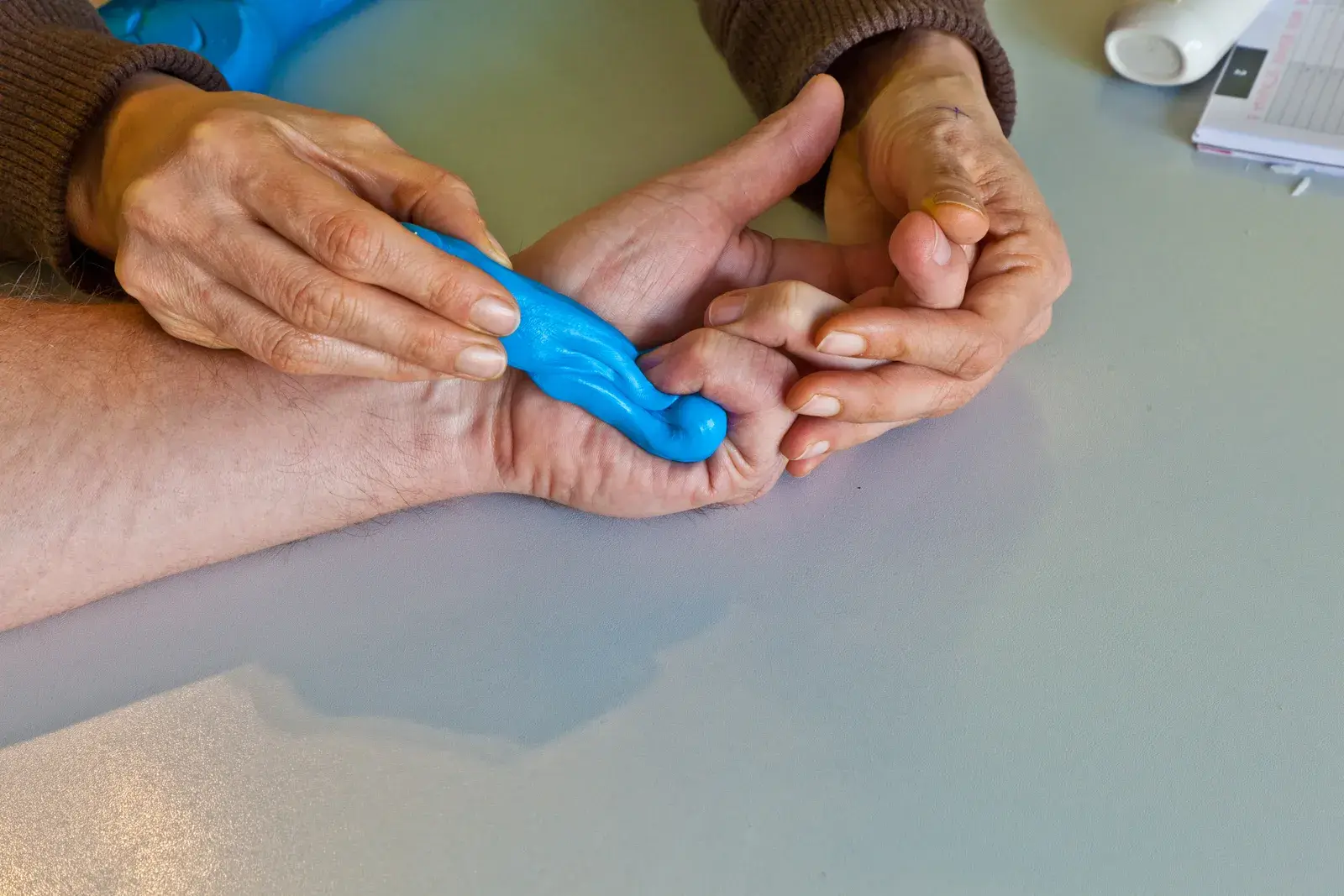
What is a certified hand therapist, and how is the credential earned?
A certified hand therapist is an occupational therapist or physical therapist who has passed an exam from the Hand Therapy Certification Commission. To sit the exam, a therapist needs at least three years of licensed practice and a minimum of 4,000 hours of direct practice in hand therapy. Certification is renewed periodically through further education or retesting.
Many CHTs come from occupational therapy, and physical therapists hold the credential too. In practice the title tells you that the therapist has spent years treating the hand, wrist, elbow and often the whole arm, including the post-surgical protocols and custom splints that hand surgeons rely on.
Which hand and wrist problems usually call for a certified hand therapist?
The more delicate the repair, the more a CHT’s experience matters. Hand surgeons commonly send people to a hand therapist after flexor or extensor tendon repairs, nerve repairs, finger fractures and dislocations that need protective splinting, replanted fingers, complex wrist fractures and burns or crush injuries. Many of those protocols change week by week, and a mistake in early motion can rupture a repair.
Custom thermoplastic splints, also called orthoses, are another reason. They are molded to your hand during the visit and adjusted as swelling changes. If your surgeon asks for a specific splint, ask the therapist’s office directly whether they fabricate it.
- Flexor or extensor tendon repairs in the fingers or hand
- Nerve repairs and complex crush injuries
- Finger fractures and joint dislocations needing custom splints
- Complex wrist fractures, especially after surgery
- Stiff, swollen hands after prolonged immobilization
When is an orthopedic physical therapist a good fit for hand, wrist or elbow pain?
For many overuse and joint problems, an orthopedic physical therapist is well equipped. Tennis and golfer’s elbow, many cases of wrist tendinitis, early carpal tunnel symptoms, a sprained wrist after the protective phase, and arm pain that actually starts in the neck all respond to the exam and loading-based care a general orthopedic therapist provides.
The neck connection is worth stressing. Tingling into the fingers can come from a nerve irritated at the neck, the elbow or the wrist, and sorting out which needs a look at the whole limb. The pages on carpal tunnel syndrome, tennis elbow and a pinched nerve in the neck describe what a therapist tests.
What happens at a first visit with a hand therapist?
Expect careful measurement. A hand therapist records the motion of each finger joint with a small goniometer, measures grip and pinch strength with dynamometers, checks sensation, and looks at swelling, scars and how you use the hand for real tasks such as buttoning a shirt or turning a key. Those numbers become the baseline for every later visit.
After surgery, the first visit often includes making or adjusting a splint, teaching protected exercises you do several times a day at home, and explaining exactly which movements are off limits and for how long. Bring your operative note or the surgeon’s protocol, a list of medications, and a description of your work and hobbies, whether that is typing at a desk off Meridian Street or swinging a golf club in the spring.
How does insurance treat hand therapy compared with physical therapy?
Hand therapy is billed as either occupational therapy or physical therapy, depending on the therapist’s license. Some plans keep separate visit limits for each discipline, and some combine them, which can matter if you need both a hand therapist and a physical therapist for the shoulder or neck.
Under Medicare Part B, physical therapy and speech-language pathology services share one KX modifier threshold, and occupational therapy has its own. Check your plan documents or ask member services how visits are counted before splitting care across two therapists. Before you book a physical therapist in the network, the matching team checks which therapists work with your plan, and the therapist’s office verifies benefits; see the cost and insurance page.
How do you find the right therapist for your hand near Carmel?
Start with your surgeon’s instructions, if you had surgery. If the protocol names hand therapy, ask the surgeon’s office which credentials they expect and whether a splint is needed. For problems without surgery, describe your symptoms honestly in the two-minute questionnaire.
Whether a therapist in the network has hand therapy training or the CHT credential depends on who is in the network at the time. The matching team tells you honestly, before anything is booked, whether a therapist in the network is a fit, and points you elsewhere if not. The hand therapy page explains what specialist hand therapy involves, and the carpal tunnel release rehab page covers one of the most common surgeries in the region.
Related questions
Is a hand therapist an occupational therapist or a physical therapist?
Either. Hand therapists are occupational or physical therapists who specialize in the upper limb; the CHT credential is open to both professions.
Do I need a certified hand therapist after carpal tunnel release?
Many people recover from a straightforward release with a short course of therapy from either a hand therapist or an orthopedic physical therapist. Follow your surgeon’s recommendation.
Can a physical therapist make a wrist splint?
Some physical therapists fit off-the-shelf braces, and some with hand training mold custom splints. Ask the office before booking if your surgeon has requested a custom orthosis.
What is the difference between occupational therapy and physical therapy in general?
Occupational therapy focuses on daily tasks and self-care, physical therapy on movement, strength and mobility, with plenty of overlap. The physical therapy vs occupational therapy answer explains more.
Keep reading
- Physical therapy vs occupational therapy: what is the difference?
- How do I choose a physical therapist?
- Can I choose my own physical therapist after surgery?
- Hand therapy explained
- Wrist fracture surgery rehab
- Trigger finger physical therapy
Sources
This page is general education, not medical advice. A physical therapist can only advise on your situation after an examination.
