Pain right on the sit bone (the ischial tuberosity) when you sit usually comes from the hamstring tendon where it attaches there, a problem called proximal or high hamstring tendinopathy, or from an irritated ischial bursa, the small cushion over the bone. Both are pressed by hard chairs, car seats and bike saddles. Sciatic nerve irritation and piriformis pain can feel similar, so a physical therapist tests which tissue is responsible before building a plan of gradual tendon loading.
Last reviewed By the Monon Therapy Collective editorial team
- Commonest source
- The hamstring tendon attachment on the sit bone
- Old name for the bursa problem
- “Weaver’s bottom”, from long hours on hard seats
- Usually aggravated by
- Hard chairs, long drives, bike saddles, hills and deep hip bends
- Usual approach
- Reduce compression, then load the tendon gradually
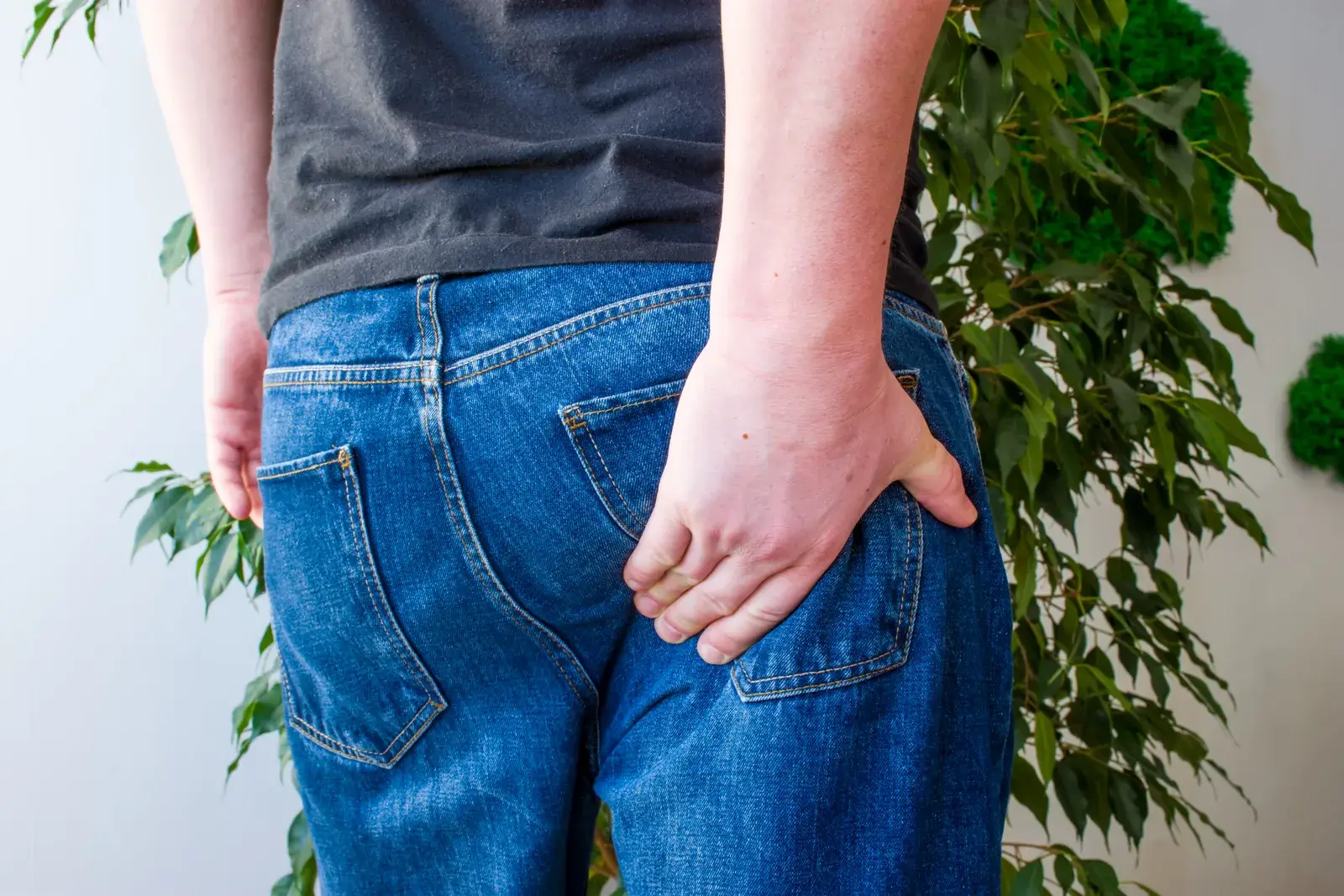
Why does the bone I sit on hurt?
The sit bone is where three hamstring muscles start, and the tendon that anchors them lies right under the point you sit on. Sitting squeezes that tendon against the bone, especially with the hip bent forward, so a tendon that has been overloaded by running, hill work, lunges or deadlifts protests most on a hard chair.
Cleveland Clinic describes ischial bursitis as a dull, deep ache that most people can pinpoint in the buttock or the back of the thigh, made worse by exercise or long sitting, and notes it was once called weaver’s bottom. It names hamstring tendonitis and sciatica among the look-alikes, because the hamstring tendon sits very close to the bursa. In practice the two often travel together, and the plan for both starts the same way.
| Likely cause | What it tends to feel like | Where to read more |
|---|---|---|
| High hamstring tendinopathy | Deep ache on the sit bone with sitting, hills, lunges and bending forward with straight legs; stiff at the start of a run | High hamstring tendinopathy |
| Ischial bursitis | Tender, sometimes swollen spot right on the bone; worst on hard seats and bike saddles | Hamstring strain and tendon problems |
| Sciatic nerve irritation | Burning or tingling that runs down the back of the leg, sometimes past the knee | Sciatica |
| Piriformis or deep gluteal pain | Ache deeper in the middle of the buttock, worse when sitting cross-legged | Piriformis syndrome |
| Hamstring tendon avulsion | A sudden pull or pop during a slip or sprint, then bruising down the back of the thigh | See a physician promptly |
Which quick checks point to the hamstring tendon?
Tendon pain is usually load-dependent: it hurts more the more the tendon is stretched and squeezed at the same time. Nerve pain behaves differently, spreading and tingling rather than staying on one spot.
- Sit on a hard kitchen chair, then on a folded towel placed so your sit bones hang slightly off the back edge. Clear relief suggests compression of the tendon or bursa.
- Stand, put your heel on a low step with the knee straight and lean forward. A deep pull right at the sit bone fits the tendon.
- Notice whether pain spreads below the knee or brings pins and needles. That pattern belongs to a nerve check.
- Think back to the start: a sudden pop and a large bruise on the back of the thigh needs a physician, because a torn-off tendon is time-sensitive.
What do physical therapists test for pain at the ischial tuberosity?
Expect a sequence of tests that load the tendon a little more each time, because tendon pain rises with load while bursal and nerve pain often do not. Typical ones are a single-leg bridge with the knee bent and then straighter, a bent-knee stretch that pulls the hamstring with the hip flexed, and a resisted knee bend while lying face down.
The therapist also presses the tendon and the bone, runs a slump or straight-leg raise test to see whether the sciatic nerve is sensitive, checks the lower back and sacroiliac joint, and asks about your training, your chair and your commute. A desk job in Carmel plus a weekend long run on the Monon is a classic combination for this problem.
How do I sit with high hamstring tendon pain?
Reduce the squeeze on the tendon first: a cushion with a cutout or a soft wedge behind the sit bones, a slightly higher seat so the hips sit above the knees, and a short stand-up break whenever the ache starts to build rather than once it has set in. On long drives, a folded towel under the thighs can shift pressure forward.
Avoid stretching the hamstring hard while it is sore; stretching and sitting compress the same spot. Cyclists can tilt the saddle nose slightly or try a wider saddle, and a desk ergonomics setup helps if you work from a hard dining chair at home.
How long does high hamstring tendon pain take to settle?
Tendon problems usually take months rather than weeks, because tendons adapt slowly to load. The plan most therapists use moves from holds that calm pain, such as an isometric bridge, to slow strengthening with bridges, hip hinges and hamstring curls, and finally to faster work like running drills and hill repeats.
Progress is judged by how the tendon feels the next morning, not during the set. Your therapist adjusts the load if sitting pain rises the day after. To start, use the hip questionnaire; the matching team proposes an independent therapist in the network and the therapist’s office confirms coverage. Runners can read how strength training supports runners while they wait.
When sit bone pain is urgent
Get medical care promptly rather than starting exercises if you have:
- A sudden pop at the top of the hamstring with large bruising down the back of the thigh
- Numbness in the groin, saddle area or inner thighs, or new bladder or bowel changes
- Fever, redness or a hot, swollen lump over the sit bone
- Night pain that does not change with position, or unexplained weight loss
If you think it is an emergency, call 911.
