Pain on top of the foot is commonly caused by irritated tendons, a stress fracture of a metatarsal (usually the second or third), midfoot arthritis, a sprain, or gout. A twist or fall with swelling on top and bruising underneath can be a Lisfranc midfoot injury, which OrthoInfo warns is easily mistaken for a sprain. Many people find lacing and shoe changes help quickly. A physical therapist screens for injuries that need imaging and then builds a graded plan for walking, running and work.
Last reviewed By the Monon Therapy Collective editorial team
- Most vulnerable bones
- Second and third metatarsals (stress fractures)
- Commonest trigger for stress fractures
- A sudden increase in activity
- Do not ignore
- Bruising on the sole after a twisting injury
- Easy first change
- Relace to skip the eyelets over the sore spot
What usually causes pain on the top of the foot?
Cleveland Clinic lists sprains and strains, osteoarthritis, tendonitis and gout as the main causes of pain on the top of the foot, and OrthoInfo adds stress fractures, most often in the second and third metatarsals. Location, swelling and how the pain began separate them.
Overuse problems build over days or weeks, often after a new shoe, a jump in mileage or a change in work. Injuries start with a moment: a twist, a fall or a foot stepped on. Gout tends to arrive suddenly with a hot, red joint and no injury at all.
| Likely cause | What it tends to feel like | Where to read more |
|---|---|---|
| Metatarsal stress fracture | Pinpoint pain over one long foot bone that worsens with each run or walk; swelling on top | Stress fracture |
| Tendon irritation on top of the foot | Ache along the tendons that lift the toes, worse with tight laces and uphill walking | Tendinitis |
| Midfoot arthritis | Ache and stiffness across the middle of the foot, sometimes a bony bump; worse in the morning | Arthritis |
| Big toe joint arthritis | Pain and a bump on top of the big toe joint, worse pushing off | Hallux rigidus |
| Front-of-ankle impingement | Pinching at the ankle crease when the shin moves forward over the foot, as in squats and hills | Ankle impingement |
How do I know if it is a stress fracture on top of my foot?
Suspect a stress fracture when pain sits on one spot of a bone, builds with weight-bearing activity, eases with rest and followed a sudden rise in activity. OrthoInfo names that sudden increase in frequency, duration or intensity as the leading cause, along with worn footwear, a change of surface and weak bones.
Early stress fractures often do not show on the first X-ray, so a physician may repeat it or order other imaging. OrthoInfo gives a typical recovery of about 6 to 8 weeks, longer for some bones, and warns that pushing on can turn a crack into a complete fracture. A therapist who finds this pattern will pause running and refer you before rehab continues.
Can tight shoelaces cause pain on top of the foot?
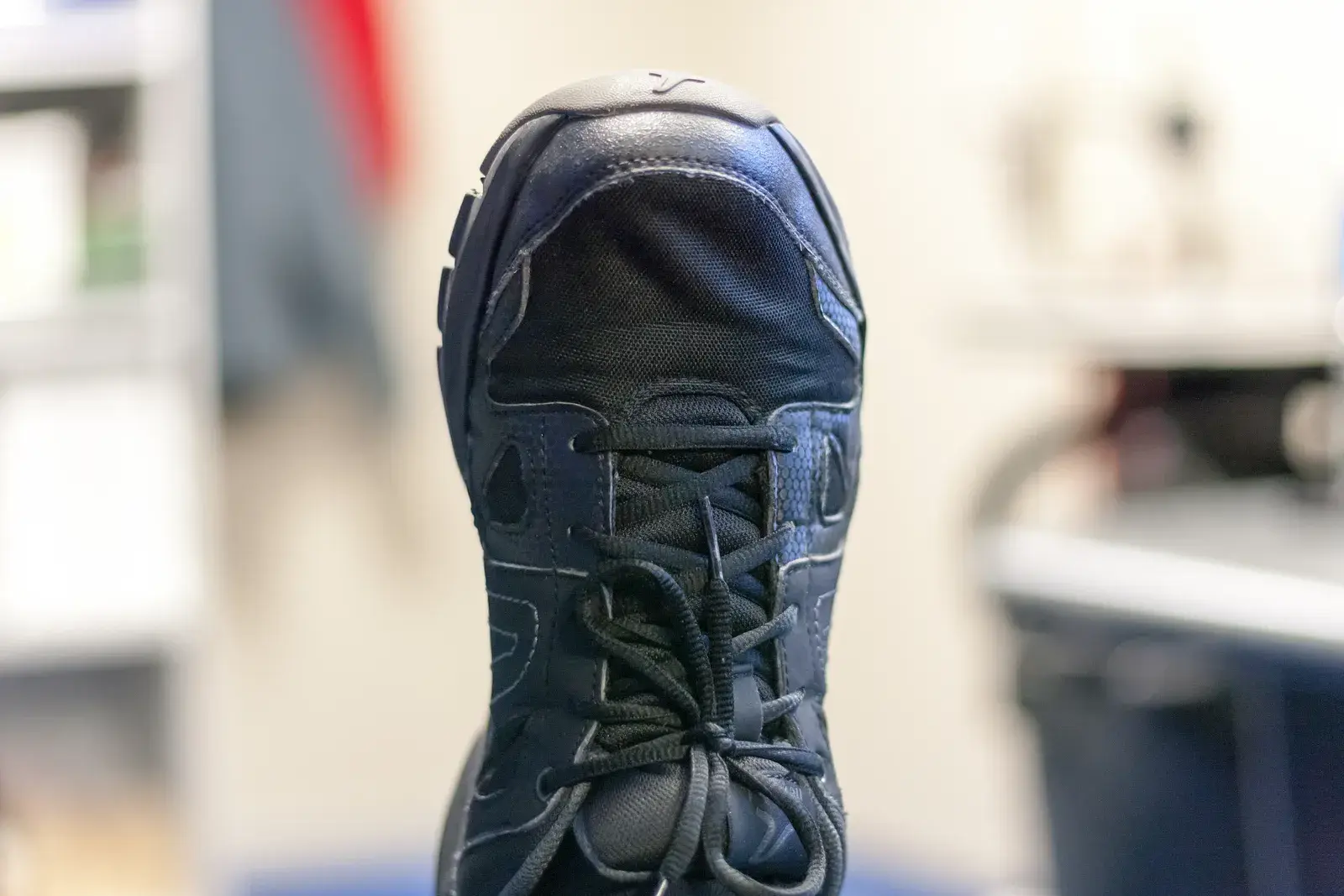
They can make it worse. Cleveland Clinic lists shoes that do not fit properly as a cause of foot pain, and on the top of the foot that usually means pressure from laces, a stiff tongue or a toe box that is too shallow over a tender tendon, bump or bone.
- Skip the eyelets that sit over the sore spot so the lace runs up the side instead.
- Loosen laces over the forefoot and lock them near the ankle.
- Check that the toe box is deep enough and that the shoe is not too small after swelling.
- Try a thinner tongue pad or a different model if one shoe always hurts.
What does a therapist check for top-of-foot pain?
First, the screen for injuries that need imaging: tenderness over individual metatarsals, a hop test only if safe, swelling and bruising patterns, and how the injury began. OrthoInfo points out that bruising on the bottom of the foot is highly suggestive of a Lisfranc injury, which can need months to heal and sometimes surgery; see Lisfranc injury rehab for that path.
Then the therapist tests the toe-lifting tendons against resistance, ankle bend in a knee-to-wall lunge, big toe motion and calf strength, and watches you walk and, if relevant, run. A runner’s weekly mileage, a new pair of shoes, or long shifts on a warehouse floor all shape the plan.
How do I get back to walking and running with top-of-foot pain?
Return in steps, keeping pain low and settled by the next morning. For tendon irritation that usually means lacing changes and a short break from hills, then calf, ankle and toe strengthening. After a stress fracture, a staged walk-run plan follows your physician’s clearance; the walk-run return plan shows how that progression is often built.
To be matched, pick “ankle and foot” on the questionnaire. The matching team proposes an independent, Indiana-licensed therapist and the therapist’s office confirms benefits; runners can read about running injury physical therapy while they wait.
When top-of-foot pain needs medical care first
See a physician or urgent care if you have:
- Swelling on top and bruising on the sole after a twist, fall or crush
- Being unable to take four steps on the foot
- A sudden hot, red, very painful joint without injury, which can be gout or infection
- Pinpoint bone pain that worsens with every walk or run
- Numbness, a color change or a wound on the foot, especially with diabetes
If you think it is an emergency, call 911.
