Lower back pain when coughing or sneezing happens because each cough or sneeze briefly raises pressure inside the abdomen and spine and jolts the trunk, which can sharply provoke an irritated disc, a strained muscle or, in people with weak bones, a compression fracture. MedlinePlus lists pain worse with sneezing, coughing or laughing as a typical feature of a herniated disc. If it comes with leg numbness, weakness or bladder changes, see a doctor; otherwise a physical therapist near Carmel can help.
Last reviewed By the Monon Therapy Collective editorial team
- Classic link
- Disc irritation (MedlinePlus)
- Also consider
- Muscle strain; compression fracture if bones are weak
- Questionnaire area
- Lower back
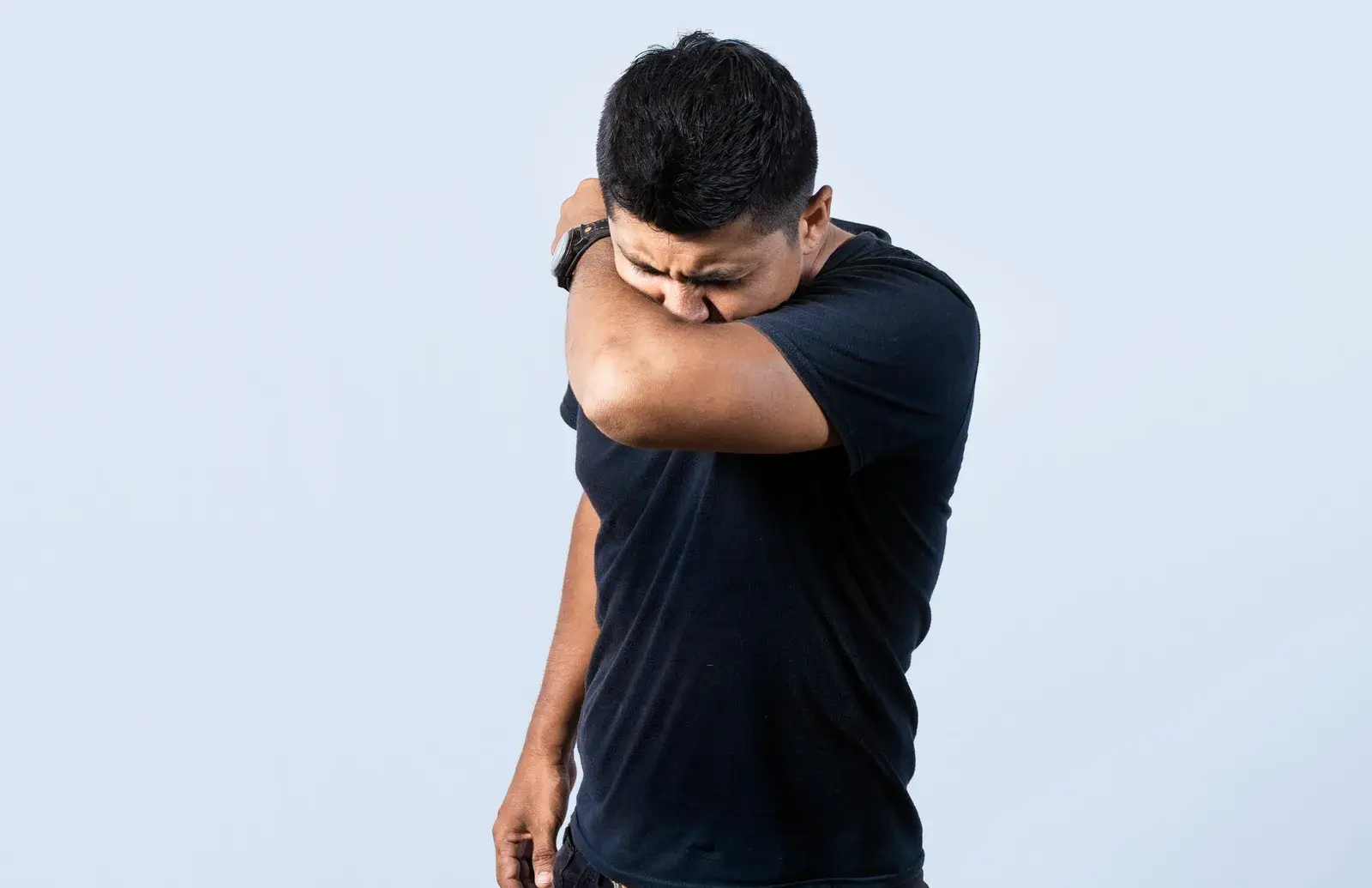
Why does a sneeze send a jolt through my lower back?
A sneeze or hard cough makes the diaphragm and abdominal muscles contract suddenly, which spikes pressure in the abdomen and around the spine and often snaps the trunk forward. A healthy back absorbs that easily. An irritated disc, a sensitive nerve root or a freshly strained muscle does not, so the pressure spike produces a sharp stab.
The useful detail is where the jolt goes. Pain that stays in the back is often a strain or a sensitive disc. Pain that shoots into the buttock or down a leg suggests a nerve root is involved, which is a pattern MedlinePlus links to herniated discs.
Which back problems hurt when you cough, sneeze or laugh?
The table lists the usual causes and the pattern each tends to follow. It is a guide to what to mention, not a way to diagnose yourself.
| Possible cause | What it tends to feel like | Read more |
|---|---|---|
| Herniated disc | Sharp back pain, often one-sided, that may shoot into the buttock or leg | Herniated disc |
| Nerve root irritation | Leg pain, tingling or numbness triggered by the sneeze | Sciatica |
| Muscle strain | Local soreness after a lift or awkward twist, tender to press | Low back pain |
| Compression fracture | Sudden, sharp midline pain in someone with osteoporosis, sometimes after nothing more than a cough or sneeze | Spinal compression fracture |
How do I brace my back before a sneeze?
Brace by changing position rather than tensing harder: as you feel a sneeze coming, stand tall or slightly lean back, put a hand on a counter or the small of your back, soften your knees, and avoid curling forward. Many people with disc pain find this takes the stab out of the sneeze.
- Standing: hand on a counter, knees soft, chest up, let the sneeze go straight ahead.
- Sitting: sit tall against the backrest instead of folding forward over the desk.
- Lying down: bend your knees and keep your back supported on the mattress.
- During a long cold or allergy season, treat the cough itself; ask a pharmacist or doctor.
When is back pain with coughing a sign of something serious?
It is serious when the cough or sneeze comes with neurological signs or bone warning signs. NHS guidance says to get emergency care for numbness around the genitals or anus, new bladder or bowel problems, or tingling, weakness or numbness in both legs. Those can signal pressure on the nerves at the bottom of the spine.
Older adults, people on long-term steroids and anyone with osteoporosis should also take sudden back pain after a coughing fit seriously, because MedlinePlus names osteoporosis as the most common cause of compression fractures, and AAOS OrthoInfo notes that bone weakened by osteoporosis can break during actions as innocent as coughing or sneezing. A therapist who sees those signs refers you to a physician first; the osteoporosis-safe exercise guide covers what comes after.
What does a therapist do for back pain that flares with sneezing?
A therapist runs a full back examination, including repeated movement testing to see whether some directions settle the pain, a neurological screen and nerve tension tests. Pain that eases with certain repeated movements, such as the prone press-up, often guides early exercise choices for disc-related pain.
Most disc-related pain improves a lot over weeks to months with graded activity, and MedlinePlus and the can a herniated disc heal on its own answer both describe that common course. Start with the lower back questionnaire.
Emergency signs with cough or sneeze back pain
- Numbness around the groin, genitals or buttocks.
- New difficulty passing urine, loss of bladder or bowel control.
- Weakness, numbness or tingling in both legs, or a foot that is dragging.
- Sudden severe back pain in someone with osteoporosis or a history of cancer.
- Fever and feeling very unwell with the back pain.
If you think it is an emergency, call 911.
