Heel pain in the morning that is sharpest on the first few steps out of bed and eases after a few minutes of walking is the classic pattern of plantar fasciitis, irritation of the thick band under the foot where it attaches to the heel. Calf and foot strengthening, a gradual return to activity and supportive shoes help most people, and AAOS OrthoInfo reports that more than 90% improve within 10 months of simple treatment. Pain at the back of the heel, or heel pain after an injury, points to other causes.
Last reviewed By the Monon Therapy Collective editorial team
- Typical pattern
- Worst on the first steps, eases with walking
- Common age range
- 40 to 60, per AAOS
- Heel spurs
- Common on X-rays, not the cause of the pain
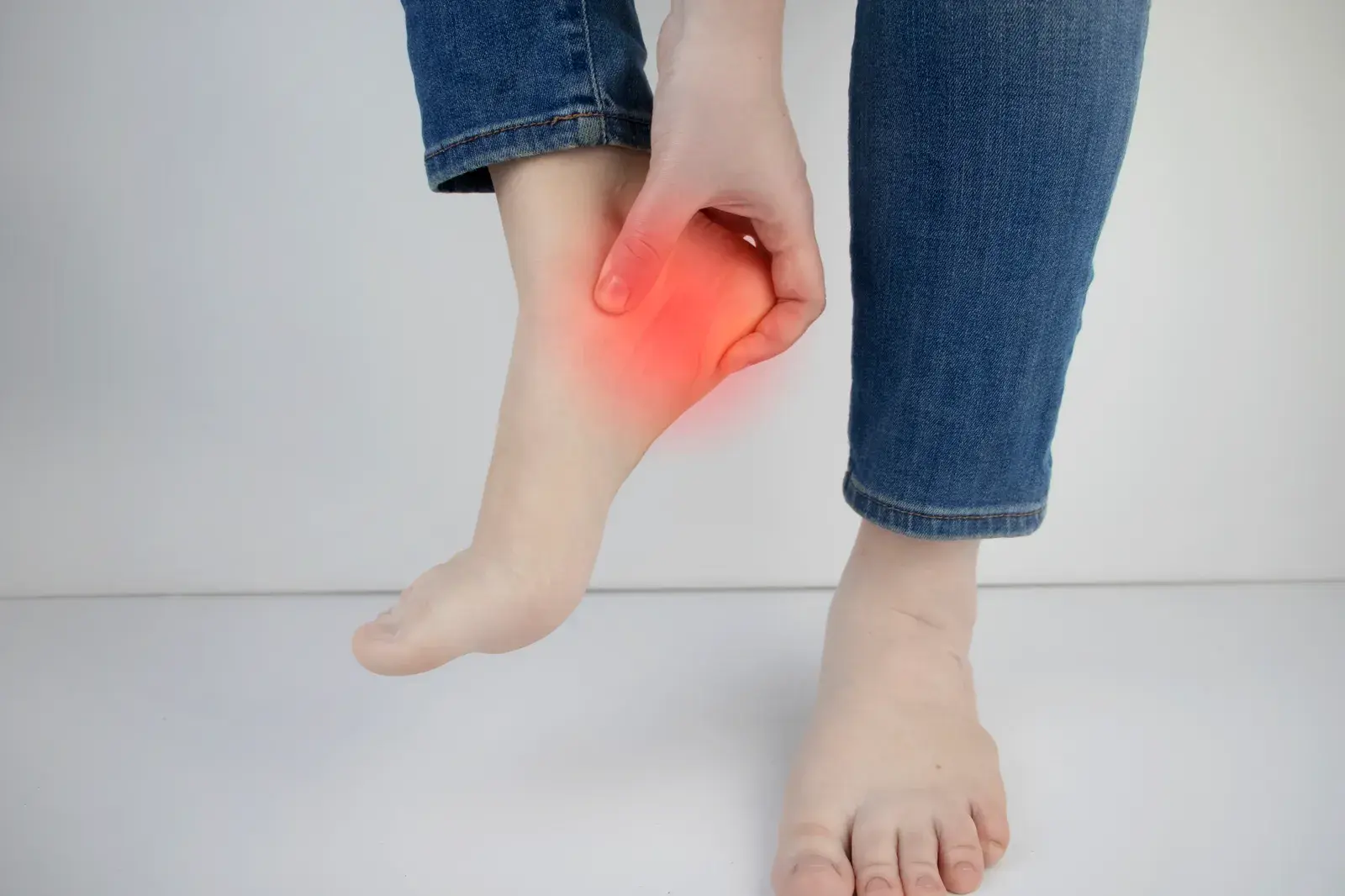
Why is the first step out of bed the worst?
Overnight your foot rests pointed slightly down, so the plantar fascia and calf sit in a shortened position for hours. The first steps suddenly stretch and load that irritated attachment at the heel, which is why the pain is sharp and then fades as the tissue warms and moves. The same thing happens after sitting through a long meeting or a drive.
If the pain is worse at the end of the day than the start, or builds steadily with walking rather than easing, the pattern is less typical of plantar fasciitis and worth describing carefully to your therapist.
What else can make my heel hurt first thing?
Plantar fasciitis is the most common cause, but the exact spot of the pain separates the alternatives. Press around the heel and note where it is most tender before you read the table.
| Likely cause | What it tends to feel like | Read more |
|---|---|---|
| Plantar fasciitis | Sharp pain under the inner heel on first steps, easing after walking a little | Plantar fasciitis |
| Achilles tendinopathy | Stiff, sore tendon at the back of the heel or just above it, worst in the morning | Achilles tendinitis |
| Calcaneal stress fracture | Ache that builds with walking or running, sore when the heel is squeezed from both sides | Stress fracture |
| Tarsal tunnel syndrome | Burning or tingling along the inner ankle and sole, sometimes worse at night | Tarsal tunnel syndrome |
Who tends to get plantar heel pain?
AAOS OrthoInfo lists the usual contributors: a new or increased activity, repetitive high-impact exercise, long hours standing on hard floors, tight calves, foot shape, higher body weight and age between about 40 and 60. Most people can name at least one change in the months before it started.
Around Carmel that change is often seasonal: training blocks for the Carmel Marathon in April or the Indy Mini in May, a jump in pickleball, or switching to bare feet on hard floors at home through the winter. Nurses, teachers and warehouse staff on concrete all day form another large group. Runners will find more on mileage planning in running injury physical therapy.
What does a physical therapist look for in a sore heel?
A therapist confirms the pattern by pressing the inner heel, stretching the big toe back to tension the fascia, and checking ankle bend (dorsiflexion) with the knee straight and bent to see whether the calf is limiting it. They will test calf strength with repeated single-leg heel raises, look at how your foot rolls in when you walk, and ask about shoes and your day on your feet.
A typical plan combines heavy, slow calf and foot strengthening, a short-term reduction in the activity that flared it, footwear or insert advice and a gradual return. Exercises people commonly encounter include the short foot exercise for the arch muscles and calf raises; your therapist chooses and doses them. Indiana direct access means you can start without a doctor’s referral, though your insurance plan may have its own rules.
What can I do tonight to ease tomorrow’s first steps?
Before standing, sit on the edge of the bed and pump the ankles up and down 20 to 30 times, then pull the toes back gently with a hand for a few slow breaths. Keep supportive shoes or slippers right by the bed so the first steps are not barefoot on a hard floor. The NHS suggests rest, raising the heel, ice for up to 20 minutes every few hours and cushioned, supportive footwear.
Trim, rather than stop, the activity that brought it on. If it has not improved after two weeks of home care, which is the point the NHS suggests seeking advice, the heel and foot questionnaire is the quickest way to reach the matching team. For a realistic time course, see how long plantar fasciitis lasts.
Get urgent medical help for heel pain when
- You heard a pop or snap at the back of the heel or ankle, or cannot push off
- The heel pain followed a fall or a jump from height and you cannot walk on it
- The calf is swollen, warm or discolored as well as painful
- The foot is red, hot and you feel feverish, especially if you have diabetes
If you think it is an emergency, call 911.
