
Work injury physical therapy in Carmel, Indiana
Work injury physical therapy rebuilds the strength, tolerance and movement your particular job demands after you were hurt on the job, from lifting and climbing to long shifts on your feet or at a keyboard. In Indiana the employer directs medical care on a workers’ compensation claim, so the first step is to report the injury and ask your employer or its insurer which providers are authorized. Near Carmel, the matching team asks whether your injury is a claim and tells you plainly, before anything is booked, whether a therapist in the network can see you under it.
Who chooses your physical therapist after an Indiana work injury?
On an Indiana workers’ compensation claim, your employer, usually through its insurance carrier, directs your medical care, including physical therapy. The Indiana Worker’s Compensation Board says this plainly in its guidance for employees, and it means the employer or carrier normally decides which physician and therapist are authorized to treat you and pay under the claim.
The Board also tells injured workers to report any accident to a supervisor immediately, and warns that a claim may be denied if you wait more than 30 days. If you feel the care you are receiving is not adequate, the Board’s route is an Application for Adjustment of Claim. For the coverage side in more detail, read workers’ compensation and physical therapy in Indiana.
Because of that structure, the network does not promise that any therapist here can treat a comp claim. The matching team asks about the claim on the questionnaire, and if no therapist in the network is authorized for it, they say so and suggest you ask the adjuster for the approved provider list.
Which on-the-job injuries respond well to physical therapy?
Most strains, sprains and overuse problems that happen at work respond to the same active, exercise-led physical therapy used for any musculoskeletal injury, with the difference that the end goal is a specific job. A warehouse worker hurt lifting cartons, a nurse who strained her back moving a patient and a desk worker with forearm pain from long hours of typing all need different finishing work.
What these injuries share is that rest alone rarely restores the capacity a job needs. Tissues recover their tolerance by being loaded gradually, so a plan that only calms pain can leave you sore again within a week of returning to full shifts. Therapy closes that gap on purpose, building from the weights and positions you can handle now toward the ones your work actually involves.
- Low back pain after lifting, pushing, pulling or a slip
- Shoulder strains and rotator cuff irritation from overhead work or reaching
- Repetitive strain injuries of the wrist, forearm and elbow from tools or keyboards
- Knee and ankle sprains from falls, ladders and uneven sites
- Neck pain and headaches linked to long hours at a screen or driving
- Recovery after surgery for a work injury, such as a rotator cuff repair
What job-specific rehab looks like, from first visit to full duty
Job-specific rehab starts with what your job actually asks of you, measured as closely as possible: how heavy, how often, from what height and for how long. Your therapist asks for a job description or simply asks you to describe a shift. A carpenter who lifts sheets of drywall overhead needs a different plan from a dental hygienist who leans over a chair all day.
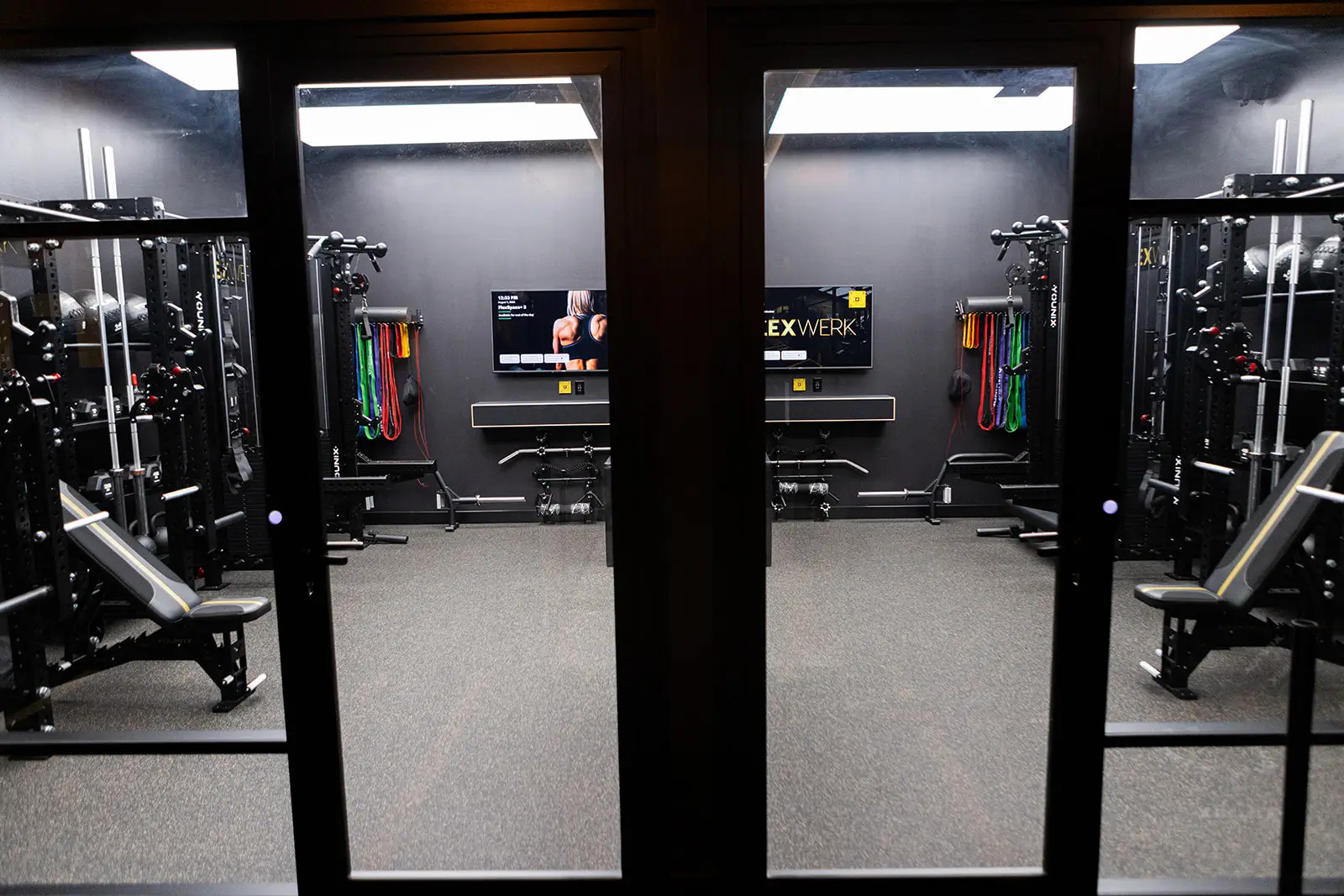
Early visits calm symptoms and restore movement. Middle visits build strength and tolerance, often with the rack, cable system and dumbbells in the suite set up to mimic the work: a floor-to-waist lift of a box, a carry, a push or pull at the height you work at, or a long stretch of standing. Later visits rehearse the full task at work pace. When you are close, your therapist can describe what you can safely do now, which helps your employer plan modified or light duty.
- Weeks 1 to 2: evaluation, symptom control, movement that keeps you as active as is safe
- Weeks 2 to 6: progressive strength and tolerance work aimed at the tasks you named
- Weeks 4 onward: rehearsal of the real job demands, timed and loaded, plus guidance for modified duty
- Discharge: a home and gym plan to keep the capacity you rebuilt
Work notes, modified duty and functional capacity evaluations
A physical therapist can describe your current physical abilities in writing, which employers often use to plan modified duty, but on a comp claim the authorized treating physician usually sets formal work restrictions. What a therapist can and cannot sign in Indiana is explained in can a physical therapist write a work note.
When a claim needs a formal, standardized measure of what you can lift, carry and tolerate over a day, the adjuster or physician may order a functional capacity evaluation. That is a separate, longer test with its own rules, and whether a therapist in the network performs one is confirmed case by case. If your physician declares you at maximum medical improvement and you disagree, the Worker’s Compensation Board describes how to request an independent medical examination.
Work-related pain that is not a comp claim, and when to see a doctor first
Not every work-related ache becomes a claim. Slowly building neck or wrist pain from desk work, or a sore back from a weekend move that your job now aggravates, is usually handled through health insurance or self-pay. Tell the matching team and the therapist’s office honestly how the problem started, because a health plan may refuse to pay for an injury that belongs to a comp claim, and it is far easier to sort out at the start. Guidance for desk-heavy jobs is on the page about physical therapy for desk workers.
Some symptoms after a work accident need a physician or emergency care before any rehab: a fall from height, a blow to the head, loss of bladder or bowel control, numbness spreading down a leg, a crushing injury, or pain over a bone with swelling and bruising. Report the accident, get seen, and then come back to therapy with the treating physician’s clearance.
Who it helps
Work injury physical therapy may suit you if
- You were hurt at work and want to return to your full job, not just get out of pain
- Your job involves lifting, carrying, climbing, kneeling or long shifts standing
- You are on modified duty and need a plan to rebuild toward full duty
- Pain from repetitive tasks or desk work is getting in the way of your shifts
- You had surgery after a work injury and need structured rehab afterward
Conditions
Problems this kind of care treats
 Low back painActive, one-on-one care for new or long-running low back pain, from first flare-up to confident lifting.
 Repetitive strain injuryCare for forearm, wrist, hand and neck pain from repeated work, combining strengthening with workstation changes.
 Rotator cuff injuryProgressive loading for cuff tendinopathy and tears, plus protocol-led rehab after surgical repair.
Two-minute assessment
Not sure which therapist is right for you?
Answer a few questions about what hurts, how long it has been going on and what you want to get back to. Our matching team reads every answer and proposes a licensed physical therapist in the network whose focus, schedule and coverage fit. Two minutes, no obligation.
- No referral needed to start in Indiana (first 42 days)
- We check which therapists work with your plan before you book
- One-on-one care in a private suite at Carmel City Center
Questions
About work injury physical therapy
Information on this website is general education, not medical advice, a diagnosis or a treatment plan. Only a licensed clinician who examines you can advise on your condition. If you may be having a medical emergency, call 911.
Something we did not cover? Ask the matching team or ring (888) 353-9975.
Can I go to my own physical therapist on an Indiana workers’ comp claim?
Usually only if your employer or its insurer authorizes it, because in Indiana the employer directs medical care. Ask the adjuster before booking, or the visit may not be paid under the claim.
How soon should I report a work injury?
Immediately. The Indiana Worker’s Compensation Board advises reporting any on-the-job accident to your supervisor right away and warns that waiting more than 30 days can lead to the claim being denied.
Will physical therapy keep me off work?
Rarely on its own. Most work rehab aims to keep you as active as is safe, and many people work modified duty while they attend sessions, early or late in the day.
Can therapy sessions fit around a shift?
The suites are open from 5 AM on weekdays and on weekend mornings, and therapists set their own schedules inside those hours. The matching team confirms which times the proposed therapist actually offers.
Does the therapist report back to my employer?
On a comp claim, progress notes usually go to the authorized physician and the insurer, which is part of how the claim works. Outside a claim, nothing is shared with your employer unless you ask for it in writing.
What should I bring to a work injury evaluation?
Bring your claim number and adjuster’s contact details if there is a claim, any work restrictions or physician notes, and a description of your job’s physical demands. Photos or a short video of the task can help.
Google reviews
What guests say about FlexWerk
These are live Google reviews of FlexWerk at Carmel City Center, the private-suite facility where therapists in the network practise.
Continue
Related services
 Functional capacity evaluationA structured day of physical testing that documents what work you can safely do, for return-to-work and claim decisions.
 Orthopedic physical therapyExercise-led care for back, neck, shoulder, hip, knee and ankle problems, delivered one-on-one in a private suite.
 Post-rehab strength trainingThe bridge from discharge to lasting strength: a written handoff from your therapist to a FlexWerk coach in the same building.
Page reviewed By the Monon Therapy Collective editorial team

Carmel City Center · Carmel, Indiana
Start with a conversation
Tell us what hurts and what you want to get back to. We will tell you honestly whether a therapist in the network is likely a good fit for what you describe, and match you with an independent, licensed therapist who is. Only that therapist can assess what will help.
885 Monon Green Blvd, Suite 120, Carmel, IN 46032 · Monday to Friday 5 AM to 9 PM · Saturday and Sunday 7 AM to 4 PM