Physical therapy for desk workers in Carmel treats the neck, mid-back, low back and wrist pain that builds over long screen days, then gives you a short routine and a workstation plan you can keep. The matching team proposes an independent, Indiana-licensed physical therapist who works one-on-one in a private suite at Carmel City Center, where the suites open at 5 AM on weekdays. No referral is needed to start in Indiana.
Last reviewed By the Monon Therapy Collective editorial team
- Typical complaints
- Neck, mid-back, low back, wrist
- Earliest suite access
- 5 AM on weekdays
- Referral
- Not needed to start in Indiana
- Main tools
- Exercise, movement breaks, desk changes
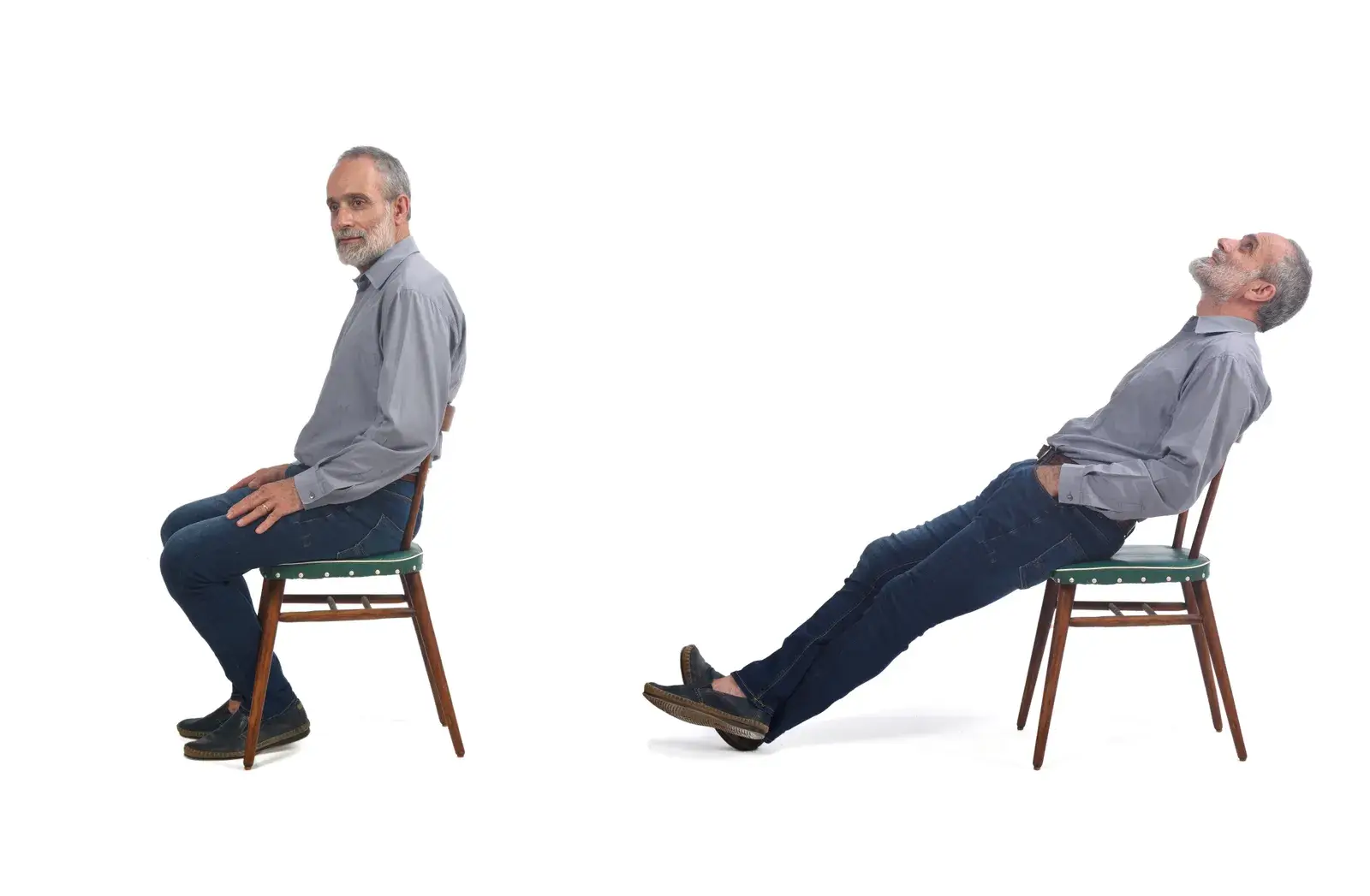
Why does sitting at a desk all day make my neck and back hurt?
Sitting is not harmful in itself; the trouble is staying in one position for hours while the same tissues carry the same load. Your neck holds the head forward toward the screen, the mid-back rounds, and the hip flexors sit shortened. Tissues tolerate this for a while, then complain, usually late in the afternoon or on the drive home up Keystone Parkway or US-31.
OSHA’s workstation guidance puts it plainly: there is no single correct posture. That is good news, because it means the fix is variety and capacity, not perfect alignment. A therapist looks for which positions provoke your pain, which ease it, and whether the tissues involved simply need more strength to tolerate a full workday. The posture question is answered in more depth elsewhere.
Which desk-related problems does a physical therapist see most?
The same handful of problems turn up again and again among office and hybrid workers. They often travel together: someone with neck pain also has tension headaches, or someone with low back stiffness also feels it in the front of the hip after a long call block.
| Complaint | What people usually notice | Read more |
|---|---|---|
| Neck pain | Ache at the base of the skull, worse by mid-afternoon | Neck pain when looking down |
| Headaches from the neck | One-sided headache that starts at the back of the head | Cervicogenic headache |
| Mid-back tightness | Burning between the shoulder blades during long typing sessions | Pain between the shoulder blades |
| Low back pain | Stiffness when you stand after a meeting | Lower back pain when sitting |
| Wrist and hand symptoms | Tingling in the thumb and first fingers at the keyboard or at night | Carpal tunnel syndrome |
What does a physical therapy plan for an office worker include?
A typical plan has three parts: calm the painful area, build capacity in the muscles that hold you up at the desk, and change the work pattern that keeps setting it off. Early sessions may include hands-on work and gentle mobility such as the open book stretch and the chin tuck.
Strength is what makes the change last. Rows on the cable system, carries, and hip hinging teach the upper back and hips to take load, which is why a private suite with a rack and cables suits this group well. Your therapist also sets movement breaks, often as simple as standing for one call each hour, because the healthiest position is the next one.
- Find the positions and tasks that provoke your symptoms
- Settle pain with mobility, hands-on work and short walks
- Build upper back, neck and hip strength over several weeks
- Adjust your workstation and meeting habits
- Keep a short routine you can do at home or the office
Can a physical therapist help me set up my home office?
Yes, a therapist can advise on your setup, and the advice is most useful when it is tied to your actual symptoms. OSHA’s general targets are a good starting point: the top of the monitor at or slightly below eye level, wrists in line with the forearms, the lower back supported, shoulders relaxed and feet flat on the floor.
Bring photos of your desk, laptop arrangement and chair to a session, or describe the kitchen-table days honestly. Laptop-only work is a frequent culprit for neck pain, and an external keyboard plus a raised screen often changes more than a new chair. The desk ergonomics guide for hybrid workers and the standing desk guide cover the details.
How do I fit physical therapy around a nine-to-five job in Carmel?
Book at the edges of the day. The suites at Carmel City Center are open from 5 AM to 9 PM on weekdays and 7 AM to 4 PM on weekends, and each independent therapist sets their own schedule inside those hours, so ask the matching team who has early or evening openings. See physical therapy before work in Carmel.
Many desk workers do well on one or two visits a week for a few weeks, then taper to occasional check-ins while the home routine carries the load. A session before work also means you leave with the exercises fresh, ready to try a movement break at your first meeting. If you work in Indianapolis, the drive south on Meridian Street or I-465 is easiest before the rush.
Hybrid schedules can help rather than hinder. Book sessions on office days when you are already near Carmel City Center, and use home days for the routine, since a kitchen counter and a doorway are enough for most of it. Tell the matching team which days you commute so they can propose a therapist whose openings line up.
See a physician promptly if
Desk pain is usually mechanical, but these signs need a medical check first.
- Numbness or weakness spreading in both arms or both hands
- Clumsiness, dropping things or trouble with buttons that is getting worse
- Neck pain with fever, unexplained weight loss or night pain that does not ease
- A sudden, severe headache unlike any before
- Numbness around the groin or new bladder or bowel changes with back pain
If you think it is an emergency, call 911.
