Rehab after a broken tibia (shinbone) usually starts with crutch walking and ankle and knee exercises in the first days, then rebuilds calf and thigh strength, balance and a normal stride as the bone heals. AAOS OrthoInfo says most tibial shaft fractures take four to six months to heal completely, and some take longer. Once you are home, the matching team can put you in touch with an independent, Indiana-licensed physical therapist who respects your surgeon’s weight-bearing rules for the shinbone.
Last reviewed By the Monon Therapy Collective editorial team
- Common repairs
- Rod in the bone, plate and screws, or a cast then brace
- Bone healing
- Usually 4 to 6 months
- Joint most likely to stiffen
- The ankle
- Emergency to know
- Compartment syndrome
How does the type of tibia repair change what I can do early on?
The repair decides how soon you may load the leg. OrthoInfo describes three surgical options: a metal rod (nail) inside the tibia with screws at each end, plates and screws on the outside of the bone, and an external frame with pins, plus a non-surgical route of a cast followed by a removable functional brace.
A nail often allows earlier weight bearing than a plate or a cast, but the fracture pattern matters as much as the hardware. Breaks near the knee or ankle joint, open fractures where the bone broke the skin, and fractures in several pieces usually come with stricter limits. If your break involved the top of the tibia at the knee, the tibial plateau fracture guide is the more relevant one.
Write down your weight-bearing instruction in the surgeon’s own words, such as touch-down, partial or as tolerated, and the date it changes. Your therapist will teach you exactly what that feels like on a scale.
There is no prehab for a sudden shinbone break, but the first outpatient visit often covers the same ground: how to shower safely in a boot or cast cover, which chair to use, and how to plan the week so you are not on your feet for hours at a time while the leg is still swelling.
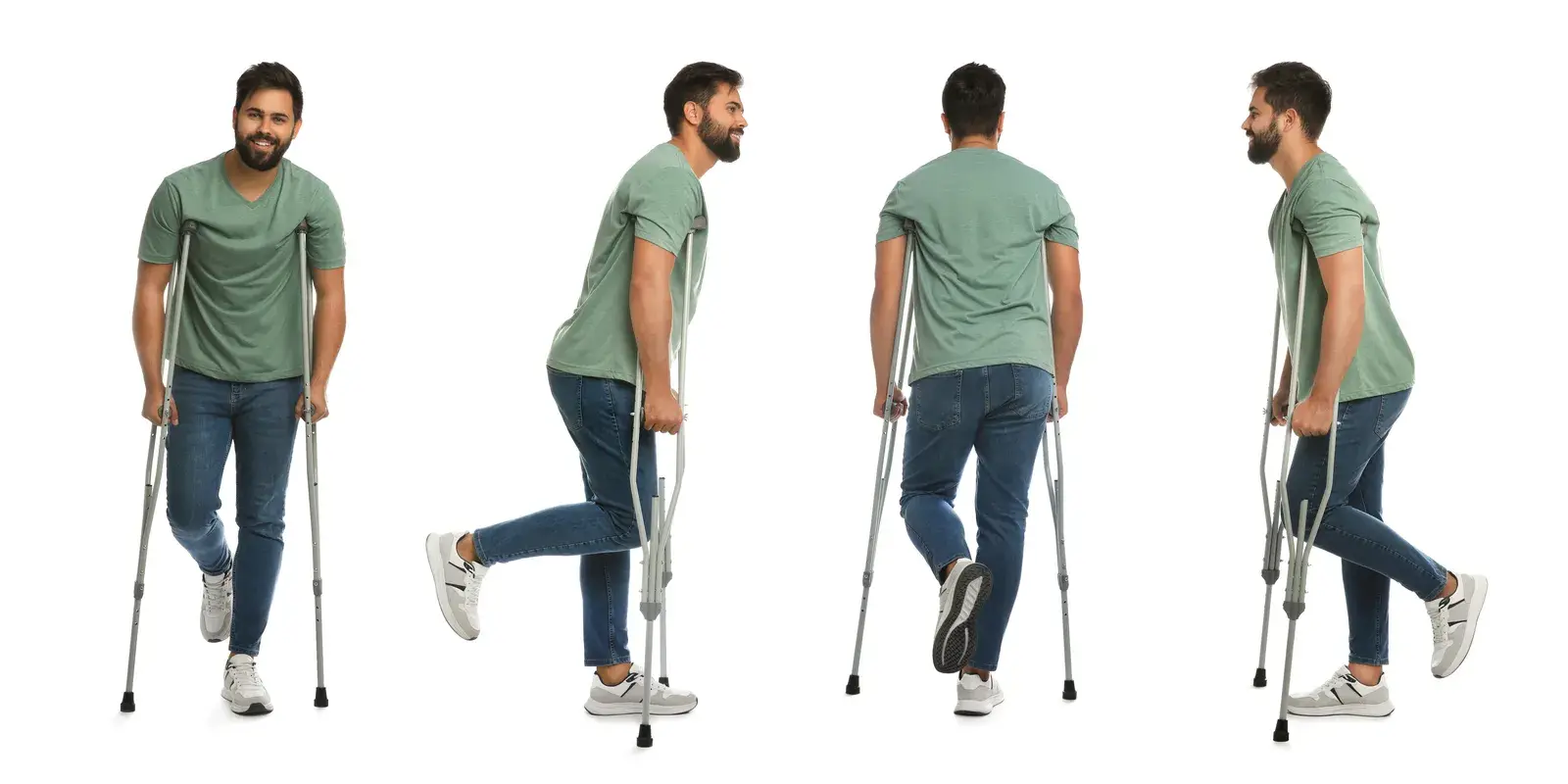
How do I walk on crutches with partial weight on a broken shin?
Partial weight bearing means letting only a set share of your body weight through the injured leg while the crutches carry the rest, and the easiest way to learn it is on a bathroom scale. Your therapist has you press down until the scale reads the allowed amount, so you can feel it, then practise the same pressure while walking.
The crutches and the injured leg move forward together, then the good leg steps through. On stairs, the good leg leads going up and the injured leg with the crutches leads going down. Getting this right protects the fracture, keeps your shoulders and wrists from overworking, and avoids a habit of hopping that slows the return to a normal walk.
- Practise the allowed weight on a scale before each new stage
- Keep the crutch tops a few finger-widths below the armpits, with weight on the hands
- Take shorter steps on wet or icy pavement during an Indiana winter
- Remove loose rugs and cords at home
Why does the ankle get so stiff after a shinbone fracture?
The ankle stiffens because it often spends weeks in a cast, splint or boot, the calf muscles shorten while you walk less, and swelling pools at the lowest point of the leg. Even when the ankle itself was not broken, bending it upward toward the shin is commonly the slowest motion to return.
That matters because walking, stairs and squatting all need the shin to move forward over the foot. Early on, a therapist teaches ankle pumps and alphabet tracing; later the work includes calf stretches in standing, knee-to-wall lunges and hands-on joint mobilization when the bone allows. The knee can stiffen too, particularly after a nail inserted through the front of the knee, so it gets measured as well.
What are the usual phases of tibial shaft fracture rehab?
Tibia rehab usually moves through protected walking, weaning off crutches, strength and balance, then return to running or heavy work once the bone has healed. The ranges below are typical rather than promised; open fractures, smoking and slow healing on X-ray push them later.
| Time after injury or surgery | Main goals | Typical milestones |
|---|---|---|
| 0 to 2 weeks | Control swelling, learn safe crutch walking | Ankle pumps, knee bends, getting around the house |
| 2 to 8 weeks | Increase load as allowed, restore ankle motion | Partial weight progressing, seated calf raises |
| 2 to 4 months | Wean crutches, rebuild calf and thigh strength | Walking without an aid, standing calf raises |
| 4 to 6 months | Balance, endurance, longer walks and stairs | Single-leg balance, step-downs, brisk walking |
| 6 months and beyond | Running, jumping or heavy work if healed | Hopping and a walk-run plan once cleared |
When is it reasonable to start running after a broken tibia?
Running usually waits until your surgeon confirms solid healing on X-ray, you walk without a limp, and you can repeat single-leg calf raises and hops on the injured side without pain. For many people that point falls somewhere after the four-to-six-month healing window, not before.
Your therapist will usually test hopping on the spot, controlled landings and calf endurance before building a gradual return. The walk-run plan for returning to running shows the kind of progression that follows. For Carmel runners who were training for the Carmel Marathon in April or the Indy Mini in May, expect the race to move to the next season; the shin needs time to adapt to repeated impact.
Cyclists often get back on an indoor bike well before running returns, once the surgeon allows weight through the foot, and that can keep fitness up through the slow middle months. Swimming is another option once wounds have fully closed.
What does the surgeon decide, and how do I find a therapist for tibia rehab?
The surgeon decides weight bearing, brace or boot use, X-ray timing, and what to do if healing is slow or hardware is uncomfortable. OrthoInfo lists nonunion and infection among the possible complications, and both are the surgeon’s call.
Your therapist works inside those limits and tells the surgeon’s office about anything worrying. To find one, complete the physical therapy questionnaire for after surgery and include your injury date and surgeon; the matching team proposes an independent therapist in the network and the therapist’s office confirms benefits before booking.
Go to the emergency department after a tibia fracture if
Compartment syndrome, a dangerous build-up of pressure inside the leg muscles, needs emergency surgery. OrthoInfo describes it as a painful condition that can follow a shinbone fracture.
- Leg pain is far worse than expected, keeps rising, and is not eased by elevation or medicine
- The calf or shin feels tight and hard, or stretching the toes causes severe pain
- Numbness, tingling or weakness develops in the foot
- Sudden chest pain or breathlessness: call 911
- Fever, or a wound or pin site that is red, hot or draining
If you think it is an emergency, call 911.
