Back pain from carrying a toddler usually comes from the sheer number of awkward lifts a day: reaching into a crib, twisting a car seat buckle, propping a child on one hip for twenty minutes. Bringing the child close before you lift, hinging at the hips, switching sides and building a little strength in the hips and trunk make most of those loads easier. If pain spreads down a leg, keeps you awake or has lasted more than a few weeks, an Indiana-licensed physical therapist can examine you, and in Indiana you can start without a referral.
Last reviewed By the Monon Therapy Collective editorial team
- Main culprit
- Many awkward, one-sided lifts a day
- Quick fix
- Hold the child close and switch hips
- Strength to build
- Hips, glutes and trunk
- Get checked if
- Leg pain, numbness or pain past a few weeks
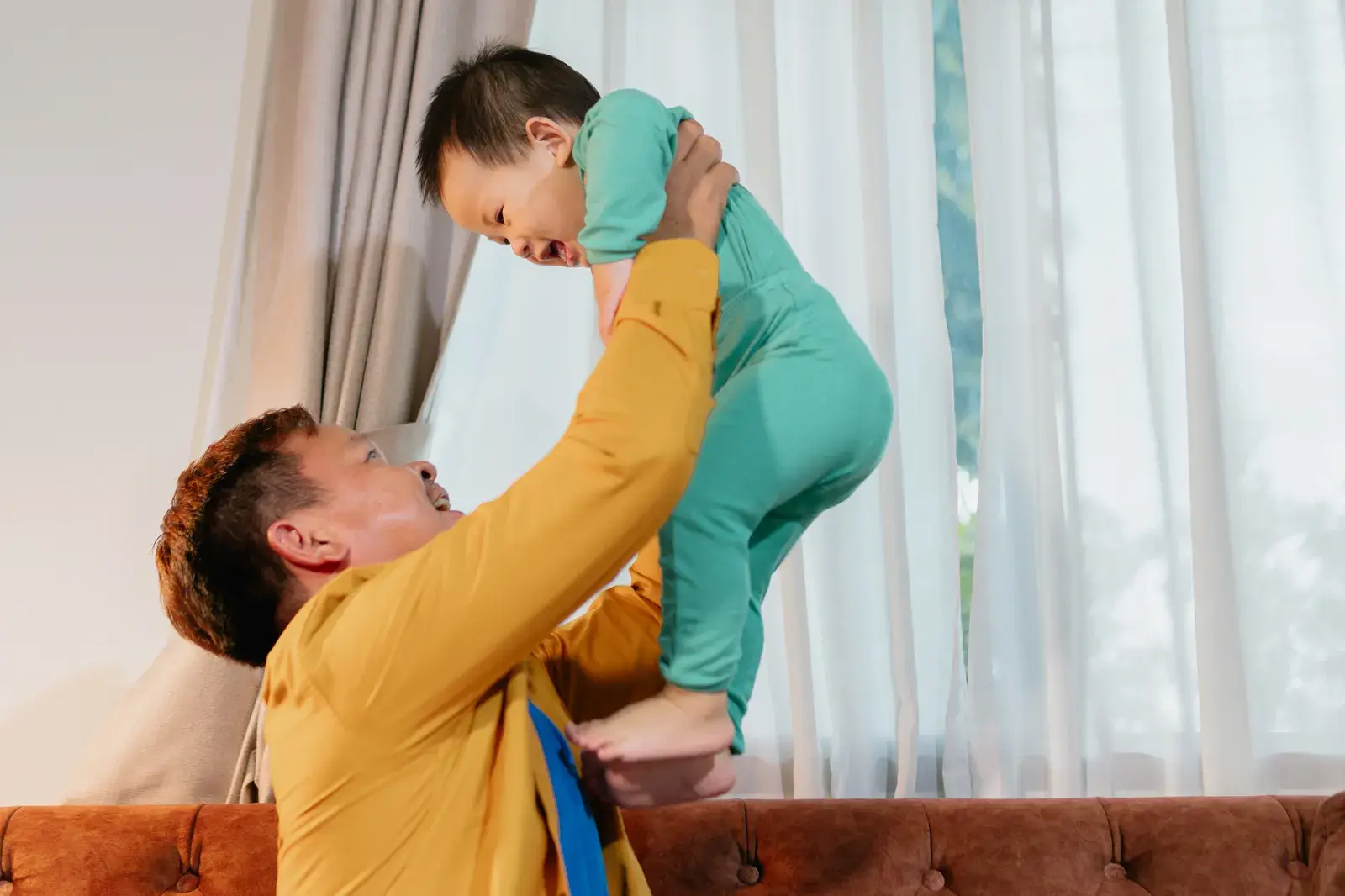
Why does carrying a toddler hurt more than lifting at the gym?
A toddler is a heavier, wigglier and far more frequent load than most gym weights, and you rarely get to set up for the lift. You might pick up a 25-pound child thirty or forty times on a busy day, often from the floor, often while turning, and usually on short sleep. The back tolerates heavy things well when they are lifted close and with some warning; it complains about lots of reaching, twisting lifts in a row.
The other difference is asymmetry. Most parents carry on the same hip every time, which keeps one side of the lower back and the opposite hip working much harder than the other. Add a diaper bag on the same shoulder and a phone in the free hand, and the same small set of muscles does almost all the holding. New parents recovering from pregnancy have a further factor: the abdominal wall and pelvic floor are still regaining strength, so the trunk has less support to offer for a few months.
How should I pick a child up off the floor?
Get close first, then lift with your hips and legs rather than by rounding forward from far away. Step in until your feet are on either side of the child or just behind them, bend at the hips and knees, slide your hands under the arms or around the trunk, pull the child to your chest, and stand up by pushing through your feet. The closer the child is to your body, the smaller the load on your lower back.
You do not need a perfectly flat back for every lift, and a little rounding is normal. The problem is the long-arm reach: bending over at full stretch to scoop a toddler from the far side of a play mat. The hip hinge exercise is a simple way to practise the pattern without a child attached, and a half-kneeling pickup (one knee down, child to chest, stand up) is a good option on days your back is already sore.
- Ask an older toddler to come to you or climb onto a step before you lift
- Exhale as you stand up instead of holding your breath
- Turn with your feet, not by twisting at the waist with the child in your arms
- Lower the crib mattress setting only as far as safe sleep requires, so you are not reaching deeper than needed
Is it bad to always carry a child on one hip?
It is not harmful in itself, but always using the same hip concentrates the strain on one side, which is a common reason one side of the lower back starts to ache. The simple fix is to swap hips on purpose, for example every time you walk through a doorway, and to set the child down for short breaks rather than carrying them through an entire errand.
When a carry will last longer than a few minutes, a well-fitted carrier spreads the load across both shoulders and the hips. Wear it high and snug so the child sits close to your chest, with the waist belt doing most of the work. A loose carrier that lets the child hang low and away from you pulls you into a backward lean, which many parents notice as tightness across the lower back by the end of a walk on the Monon Trail.
How do I get a child into a car seat without straining my back?
Climb partly in rather than leaning in from the open door. Put one knee on the back seat or step a foot into the footwell, bring the child level with the seat, lower them in close to your body, and only then reach for the buckles. The twist-and-reach from outside the car, with the child held at arm’s length, is the single lift parents most often describe when their back gives out.
Infant bucket seats are their own problem: a heavy carrier hooked over a forearm sits far from the body and pulls you sideways. Carry the bucket in front of you with both hands when you can, keep it on the stroller frame, or leave it clicked into its base and lift the baby out instead. In winter, put coats on after buckling, not before, and clear ice from the spot where you will stand, because slipping while holding a child is a real risk on Indiana driveways in January.
Which everyday lifts load the back most, and what helps?
The loads that bother parents most are the ones held away from the body or combined with a twist. The table below lists the common ones and a gentler way to do each.
| Everyday lift | Why it strains the back | A kinder way |
|---|---|---|
| Lifting from a crib | Long reach over the rail with a rounded back | Lower the side if it allows, step close, slide the baby toward you before lifting |
| Car seat buckling | Reach plus twist from outside the car | One knee on the seat, child close, then buckle |
| Bath time | Kneeling bent over the tub edge for minutes | Kneel on a folded towel, keep a hand on the tub, take breaks to sit back on your heels |
| Long hip carry | One-sided load for a long time | Switch hips often or use a snug carrier |
| Stroller into a trunk | Heavy, awkward object lifted at arm’s length | Fold it close to the bumper, lift it in two stages |
| Picking up from the floor | Rounding forward from far away | Step in, hinge, pull the child to your chest, stand |
What exercises make carrying kids easier?
A short routine for the hips and trunk, done two or three times a week, makes the hundreds of daily lifts feel lighter. The aim is to build capacity, not to achieve perfect posture. Five or ten minutes during a nap is enough to start.
Good starting points are the glute bridge for the hips, the bird dog and dead bug for trunk control, and a sit-to-stand from a chair, which is the same movement as lifting a child from the floor in slow motion. Later, carrying a heavy bag in one hand while walking tall is good practice for hip carries. If you are within the first months after giving birth, ask your obstetric provider when to begin, and see postpartum physical therapy for what recovery of the abdominal wall and pelvic floor involves.
When should a parent see a physical therapist for back pain?
See a therapist if back pain has lasted more than two or three weeks, keeps returning with ordinary lifts, or comes with pain, tingling or numbness down a leg. Those patterns suggest something a home routine is unlikely to settle on its own, such as an irritated nerve or a joint that needs more specific loading.
A physical therapist will ask which lifts hurt, test how your back and hips move, check nerve function, and then build a plan around your actual day, including the car seat and the stairs to the nursery. Read about low back pain physical therapy and sciatica, or fill in the back pain questionnaire. The matching team reads it and proposes an independent therapist in the network who works one-on-one at Carmel City Center, where early weekday suite hours from 5 AM can fit around a partner’s schedule.
Get urgent medical help, not exercises, if you notice
- Numbness around the groin or inner thighs, or new trouble controlling your bladder or bowels
- Weakness in both legs, or a foot that slaps or drags
- Back pain with fever, or pain after a fall or car accident
- Severe back pain in the weeks after birth with leg swelling, chest pain or shortness of breath
If you think it is an emergency, call 911.
