Ankylosing spondylitis physical therapy in Carmel, Indiana
Ankylosing spondylitis is an inflammatory arthritis of the spine, and regular exercise is one of the main treatments alongside the medication a rheumatologist manages. A licensed physical therapist matched through the network in Carmel can teach a daily routine for spinal extension, rib cage expansion, hip mobility and strength, then check posture and movement over time. The goal is to keep the spine as mobile and upright as possible and to make flares easier to manage.
At a glance
Common signs of ankylosing spondylitis
Also called: AS, Axial spondyloarthritis, Radiographic axial spondyloarthritis, Bechterew’s disease.
Why does ankylosing spondylitis back pain feel better when I move?
Ankylosing spondylitis pain feels better with movement because it is driven by inflammation rather than by a strained muscle or an irritated disc. Inflammatory back pain typically stiffens up during rest and overnight, then loosens over the morning as you get going, which is the opposite of most mechanical back pain.
The condition usually starts in the sacroiliac joints, where the spine meets the pelvis, and can climb into the lumbar and thoracic spine and the joints where the ribs attach. Over years, inflammation at the points where ligaments attach to bone can lead to new bone formation, and in some people parts of the spine slowly fuse. That process is why the same rheumatology guidance keeps returning to one theme: keep moving the spine into extension and rotation every day.
The HLA-B27 gene raises the risk, though many people who carry it never develop the disease. Ankylosing spondylitis can also involve the eyes, skin and gut, which is part of why care is shared between a rheumatologist and other clinicians.
What does a physical therapist measure at an ankylosing spondylitis evaluation?
A physical therapist measures how far your spine, rib cage and hips actually move, so that changes over months can be tracked against a baseline rather than guessed. Those numbers also give you and your rheumatologist a shared record of how the spine is behaving between appointments. Many therapists use simple, repeatable measures such as the distance from the back of your head to the wall while standing, how far the lower back opens when you bend forward, sideways reach, rotation and chest expansion with a tape measure.
The therapist will also look at how you stand and walk, test hip and shoulder range, check strength in the back extensors and glutes, ask about fatigue and sleep, and screen for anything that does not fit the known diagnosis. If you have not yet been diagnosed but your story sounds inflammatory, the honest next step is a referral to a physician or rheumatologist for blood work and imaging, not months of exercise alone.
Because Indiana allows direct access for up to 42 days, you can start without a referral, though many people with this diagnosis already see a rheumatologist and their insurance may ask for a referral anyway. The Indiana referral guide explains the rule.
Which exercises matter most for keeping an inflamed spine mobile?
The exercises that matter most are the ones you will do daily for years: extension of the upper back, rotation, deep rib cage breathing, hip opening and enough general strength and cardio to keep you capable. A therapist’s job is to choose a short list that fits your stiffness pattern and your schedule, then progress it.
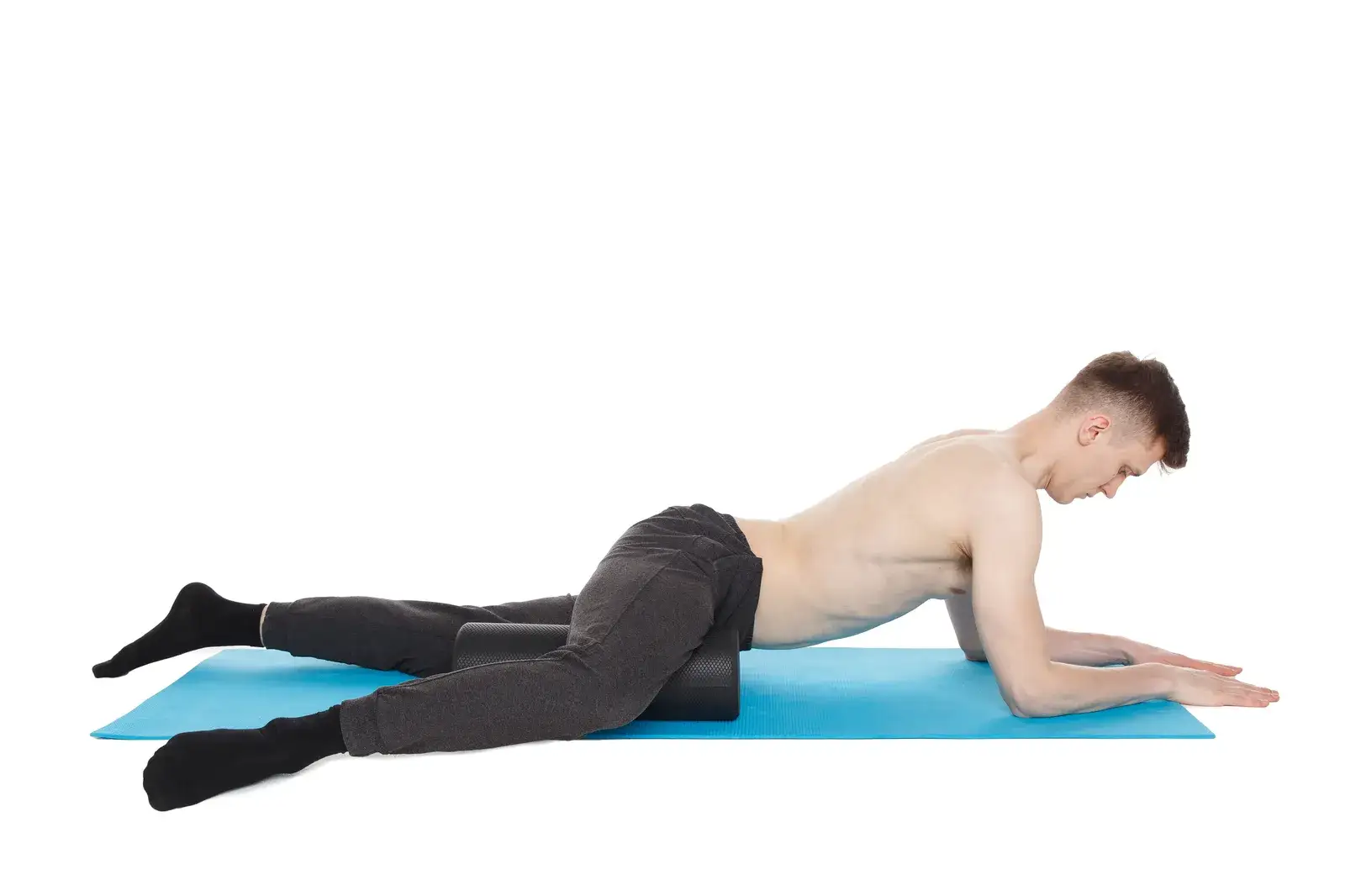
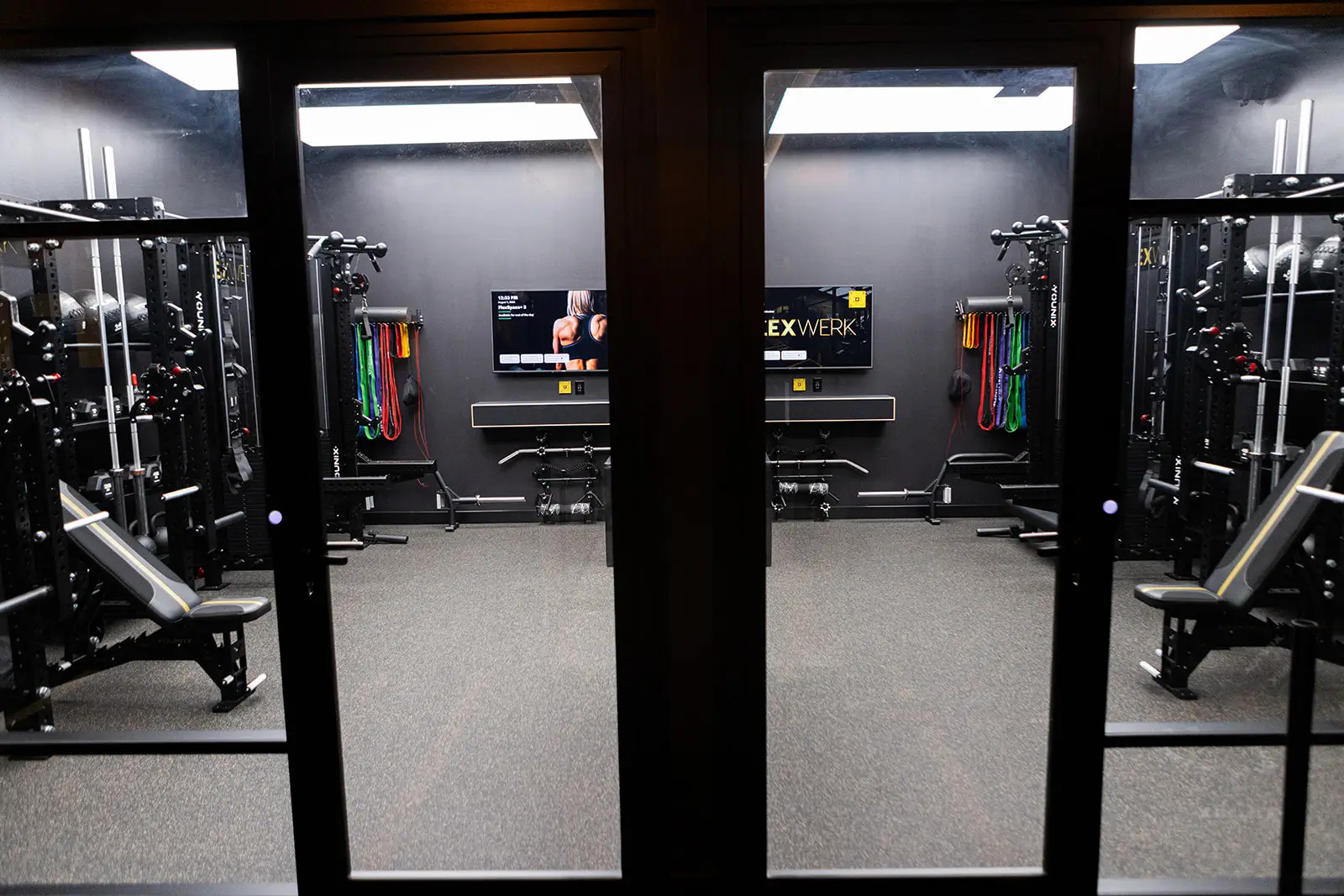
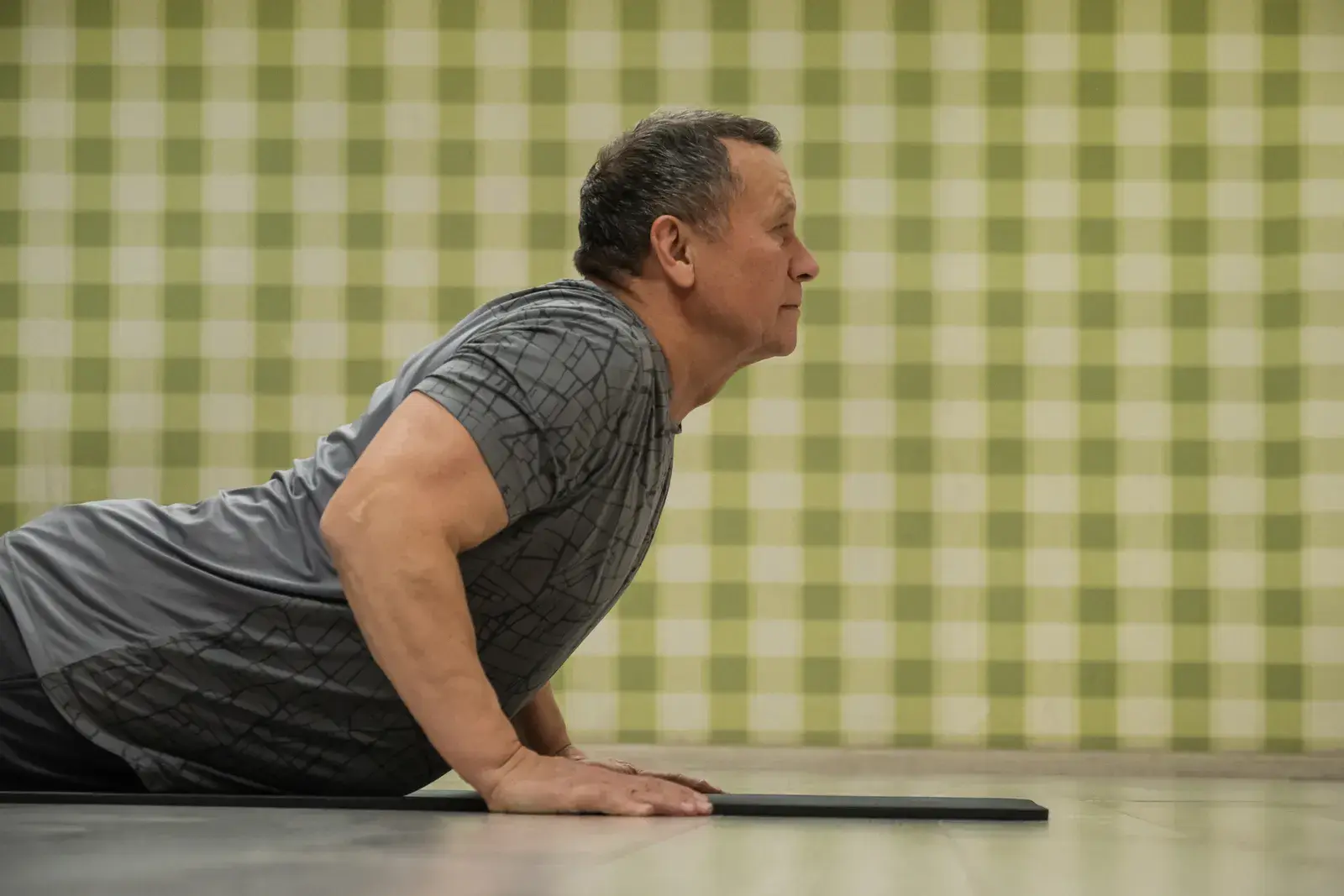
Sessions take place one-on-one in a private suite at FlexWerk, where a foam roller, bench and cable column are within reach. A typical program might include thoracic extension over a foam roller, the prone press-up as a spinal extension drill, open-book rotations, wall angels, hip flexor stretches, glute bridges, rows and carries. Breathing drills that expand the sides and back of the ribs help keep the chest wall mobile.
Cardiovascular fitness matters too, because inflammatory arthritis is linked with higher cardiovascular risk. Walking or cycling the Monon Trail, swimming and rowing are common choices. Your therapist will also talk through fall risk if your spine is already stiff, since a fused spine is more vulnerable to fracture after a fall.
- Daily extension and rotation work, most useful after a hot shower in the morning
- Rib cage breathing drills to protect chest expansion
- Hip mobility, because stiff hips quickly change how you walk
- Back extensor, glute and upper back strengthening
- Regular aerobic exercise you enjoy enough to keep doing
Is physical therapy for ankylosing spondylitis a short course or ongoing?
It is usually a short, focused block of visits followed by long-term self-management, with occasional check-ins. Ankylosing spondylitis does not go away, so the aim is not to be discharged "fixed" but to leave with a routine you understand and can adjust during flares.
A common pattern is weekly sessions for about four to eight weeks to learn and progress the program, then tune-ups every few months or after a flare, a new medication or a change in symptoms. Many people find the remeasurements motivating, because they show whether the daily routine is protecting their range.
Biologic and other medications prescribed by your rheumatologist can reduce inflammation considerably, which often makes exercise more comfortable and more productive. Physical therapy is meant to sit alongside that care, never instead of it, and the two together tend to give people the most control over their week. After the formal course, some people continue with a coach in the post-rehab strength training setting.
How should I adjust exercise during an ankylosing spondylitis flare?
During a flare, reduce the intensity and keep the movement. Gentle range-of-motion work, walking, warm showers and breathing drills are usually tolerated even when heavy lifting and long runs are not, and complete rest tends to make the stiffness worse.
Let your rheumatologist know about flares, especially if they are becoming more frequent, because medication changes may be needed. Watch for eye pain or redness with light sensitivity, which can signal uveitis and needs prompt eye care. Indiana winters can make mornings stiffer for some people, so a longer warm-up on cold days is reasonable.
If you want a structured plan or a reassessment, the two-minute assessment questionnaire lets the matching team know about your diagnosis and goals. They will propose a therapist in the network who works with inflammatory back conditions and confirm scheduling, which can run as early as 5 AM on weekdays when the suites open.
When to see a physician or go to the ER first
Physical therapy is the right start for most ankylosing spondylitis. These symptoms are different and need medical attention before, or instead of, a physical therapy visit:
- A painful, red eye with blurred vision or light sensitivity, which needs same-day eye care
- New back or neck pain after even a minor fall when your spine is known to be fused, which needs urgent imaging
- Numbness, weakness, or bladder or bowel changes
- Fever, night sweats or unexplained weight loss with back pain
- Chest pain or shortness of breath
If you think it is an emergency, call 911.
Two-minute assessment
Get your ankylosing spondylitis looked at
Tell us how your ankylosing spondylitis started, how long it has been going on and what it is stopping you from doing. The matching team proposes a therapist in the network who focuses on it, and you hear back, usually within one business day.
- No referral needed to start in Indiana (first 42 days)
- We check which therapists work with your plan before you book
- One-on-one care in a private suite at Carmel City Center
How therapists treat it
Kinds of care used for ankylosing spondylitis
Questions
Ankylosing spondylitis: what people ask
Information on this website is general education, not medical advice, a diagnosis or a treatment plan. Only a licensed clinician who examines you can advise on your condition. If you may be having a medical emergency, call 911.
Something we did not cover? Ask the matching team or ring (888) 353-9975.
Is it safe to lift weights with ankylosing spondylitis?
Many people with ankylosing spondylitis strength train safely once a therapist has checked their range and bone health. Exercises are chosen to favor extension and good alignment, and loads are progressed gradually.
Can physical therapy stop my spine from fusing?
No one can promise that. Exercise helps maintain mobility, posture and function, while medication from a rheumatologist is what targets the underlying inflammation; the two work together.
Is swimming good for ankylosing spondylitis?
Swimming is a popular choice because it combines aerobic work with extension and rotation of the spine. Breaststroke can be uncomfortable if your neck is stiff, so some people prefer freestyle with a snorkel or water walking.
Does ankylosing spondylitis cause heel pain?
It can, because inflammation often affects the places where tendons attach to bone, including the Achilles and the plantar fascia. Heel pain that resembles plantar fasciitis but comes with morning stiffness elsewhere is worth mentioning to your rheumatologist.
Should my therapist use spinal manipulation for ankylosing spondylitis?
High-velocity spinal manipulation is generally avoided in ankylosing spondylitis, because a stiff or partly fused spine is more fragile. Gentle mobilization of the ribs and hips, and plenty of active exercise, are the usual hands-on and hands-off tools instead.
What sleeping position helps ankylosing spondylitis?
Sleeping flat on your back with a thin pillow, or spending some time lying on your stomach, helps avoid curling forward for hours. A firm mattress is often more comfortable than a very soft one.
Google reviews
What guests say about FlexWerk
These are live Google reviews of FlexWerk at Carmel City Center, the private-suite facility where therapists in the network practise.
Related
Conditions that travel together
 Low back painActive, one-on-one care for new or long-running low back pain, from first flare-up to confident lifting.
 SI joint painTesting and strengthening for one-sided pain below the belt line from the sacroiliac joint.
 KyphosisBack extensor strength, mobility and balance training for a rounded upper back in teens and adults.
Page reviewed By the Monon Therapy Collective editorial team

Carmel City Center · Carmel, Indiana
Start with a conversation
Tell us what hurts and what you want to get back to. We will tell you honestly whether a therapist in the network is likely a good fit for what you describe, and match you with an independent, licensed therapist who is. Only that therapist can assess what will help.
885 Monon Green Blvd, Suite 120, Carmel, IN 46032 · Monday to Friday 5 AM to 9 PM · Saturday and Sunday 7 AM to 4 PM