Physical therapy built around exercise, education and graded activity has much stronger support for back pain and sciatica than nonsurgical spinal decompression, which is a form of motorized traction. The UK’s NICE guideline advises against offering traction for low back pain with or without sciatica, and Medicare has a national policy of not covering vertebral axial decompression. Some people do feel short-term relief on a decompression table, but it is hard to justify a large prepaid package when the evidence is thin.
Last reviewed By the Monon Therapy Collective editorial team
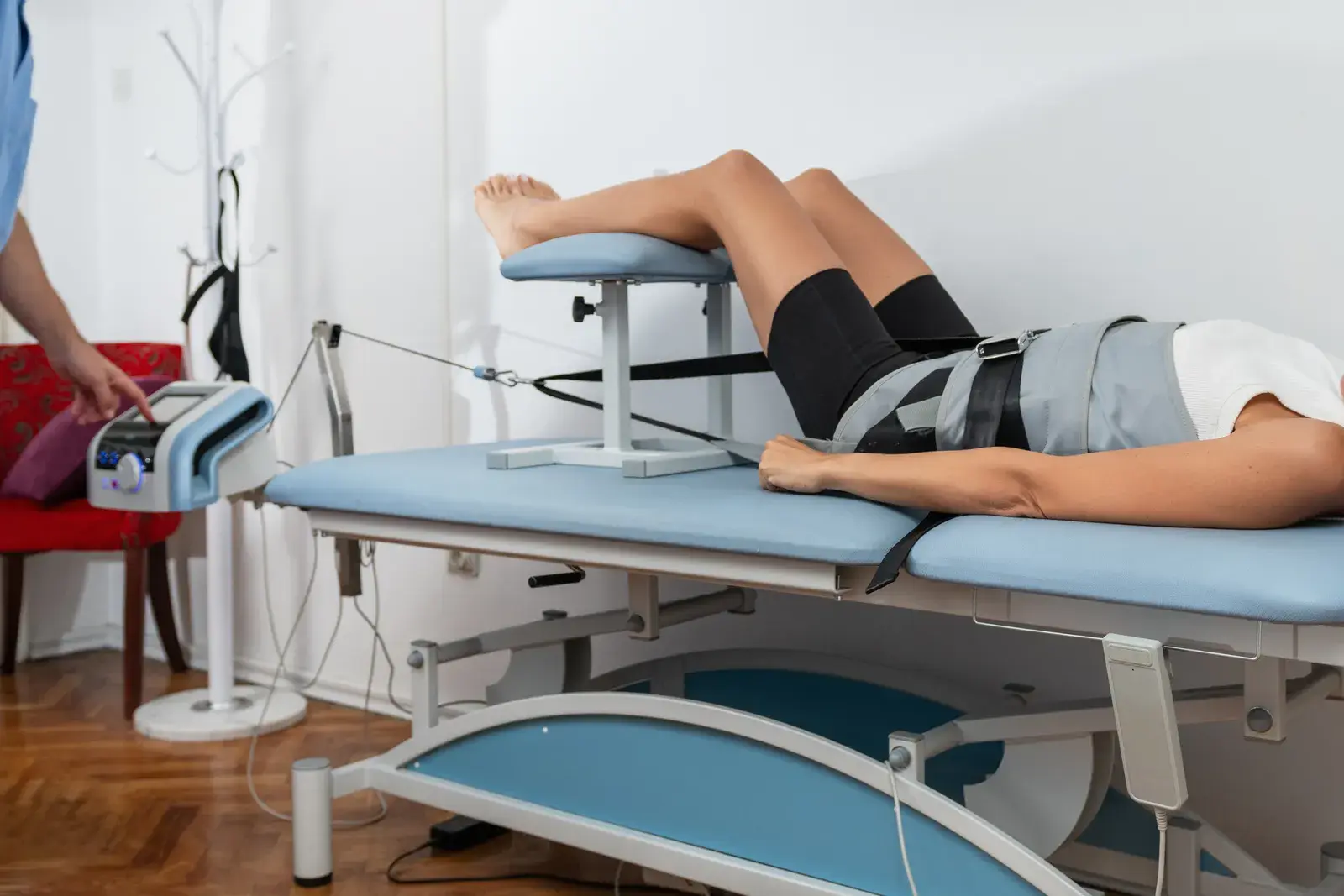
What is nonsurgical spinal decompression, exactly?
Nonsurgical spinal decompression is traction delivered by a computer-controlled table. You lie on the table with a harness around your pelvis or a cradle under your head, and the machine pulls in cycles, easing the force up and down. Marketing often claims the pull creates negative pressure inside the disc that draws a bulge back in and speeds healing.
It is different from surgical decompression, such as a laminectomy or a microdiscectomy, in which a surgeon removes bone or disc material that is pressing on a nerve. The similar names cause real confusion, so check which one a provider or advertisement means. Clinics usually sell decompression as a series of sessions over several weeks, often paid out of pocket.
What does the evidence say about decompression tables for back pain?
The evidence for traction of any kind is weak, and there is little high-quality research showing that motorized decompression tables do better than other traction or than placebo. NICE guideline NG59 states plainly that traction should not be offered for managing low back pain with or without sciatica.
Medicare reached a similar view in 1997. Its national coverage determination 160.16 lists vertebral axial decompression as not covered, because the clinical literature was not sufficient to show it is reasonable and necessary. Many commercial insurers have written medical policies along the same lines, which is one reason decompression is so often sold as a cash package. Short-term relief while lying on the table is common with many gentle treatments; what matters is whether you can do more weeks later.
What does physical therapy do differently for a bulging or herniated disc?
Physical therapy aims to change what you can do, not just how the spine feels on a table. A therapist examines which movements and positions ease or provoke your symptoms, checks nerve function and strength, and builds a plan of repeated movements, graded walking, strengthening and practice of the tasks you have been avoiding.
Discs commonly settle over time without any device. The answer on whether a herniated disc can heal on its own explains what typically happens, and the herniated disc physical therapy page covers the assessment. Therapists may use brief manual traction or other hands-on techniques as one small part of a plan, but exercise and education carry the weight.
- Directional movements that reduce leg symptoms, repeated through the day
- Walking in short bouts, often the easiest exercise for a sore disc
- Trunk, hip and leg strength built gradually under load
- A plan for sitting, driving and lifting while symptoms calm down
Is spinal decompression worth it if a package is offered?
Treat any large prepaid package with caution, whatever the treatment. Before you sign, ask what result you should expect by when, what happens if you do not improve, whether unused sessions are refunded, and whether the package includes an exercise program you can continue on your own. Ask how the provider decided you were a good candidate.
If a provider says decompression is the only thing that will help, or that you must commit to many sessions before any reassessment, get a second opinion. A therapist in the network can examine you and tell you what an active plan would look like, so you can compare options on what each one asks you to do and pay. The cost and insurance page explains how therapy is usually billed.
- What change should I notice, and by which session?
- What is the total cost, and is any of it refundable?
- Will my insurance pay for any part of it?
- What exercises will I continue once sessions end?
Who should avoid spinal traction or decompression altogether?
Decompression tables are generally not appropriate for people with spinal fractures, tumors, infection, severe osteoporosis, recent spinal surgery with hardware, or pregnancy, and anyone with signs of nerve compression that is getting worse needs a medical evaluation before any treatment. Those exclusions are one reason a proper examination should come first.
Symptoms such as numbness in the saddle area, new bladder or bowel changes, or weakness in both legs mean emergency care, not a table or a therapy booking. If you have been told you have spinal stenosis or osteoporosis, ask your physician whether traction is safe for you before trying it. When none of those apply, the two-minute questionnaire is the quickest route to a therapist in the network near Carmel City Center.
Related questions
Is spinal decompression the same as traction?
Nonsurgical spinal decompression is a motorized form of traction. Marketing describes it differently, but Medicare and most guidelines treat it as traction.
Does insurance cover spinal decompression therapy?
Medicare does not cover vertebral axial decompression under a national policy, and many private plans also exclude it. Check your plan’s medical policy before paying for sessions.
Can I do physical therapy and spinal decompression at the same time?
You can, but tell your therapist so changes in symptoms can be interpreted. If the decompression sessions crowd out time for exercise, the exercise is the part with stronger support.
Do inversion tables work like a decompression table?
They also apply a stretching force to the spine, with similar limits on the evidence and some extra risks. The inversion table answer covers them in detail.
Why does my back feel better on the table but not afterward?
Lying supported and unloaded for a while eases many sore backs, whatever the device. The test is whether walking, sitting and lifting become easier over the following weeks, which is what an active plan targets directly.
Keep reading
- Are inversion tables good for back pain?
- Can a herniated disc heal on its own?
- Can I lift weights with a herniated disc?
- Herniated disc physical therapy in Carmel
- Degenerative disc disease physical therapy
- Sciatica physical therapy
Sources
This page is general education, not medical advice. A physical therapist can only advise on your situation after an examination.
