Not every sprain needs it, but more ankles benefit than people expect. A mild sprain you can walk on, that improves steadily, often recovers with home care in about two weeks. Physical therapy makes sense for moderate or severe sprains, for ankles that have been sprained before, and for anyone returning to running, court or field sports, because OrthoInfo names incomplete rehabilitation as the most common cause of chronic ankle instability. Get an X-ray first if you could not take four steps after the injury or the bone is tender.
Last reviewed By the Monon Therapy Collective editorial team
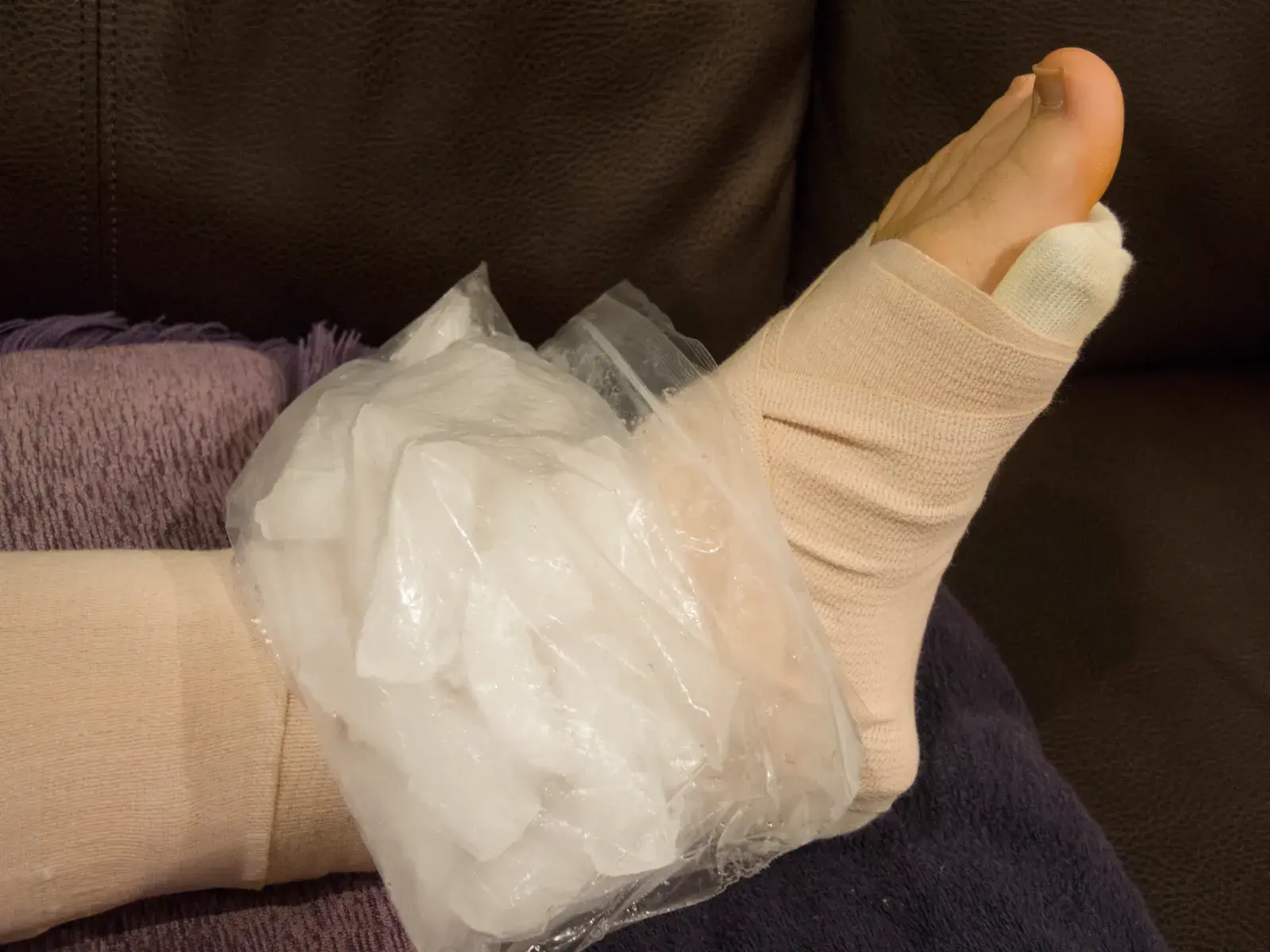
Which ankle sprains can be managed at home?
A grade 1 sprain, where the ligament is stretched with only microscopic tearing, usually can. You can walk with mild discomfort, swelling is modest, and each day is a little better than the last. OrthoInfo describes rehab for minor sprains taking as little as two weeks, and much of it can be done on your own.
Home care still means more than waiting. Once walking is comfortable, practise ankle circles, calf raises and standing on the injured leg, because the balance sense in the ligaments is affected even by mild sprains. An exercise such as single-leg balance is a simple test as well as a treatment: if you wobble far more on the injured side, the ankle is not finished.
Why do “minor” ankle sprains keep coming back?
Because pain goes away before the ankle is fully rehabilitated. Swelling and soreness fade within days to weeks, so people return to sport while the ligament is still remodeling and the muscles and balance reflexes that protect the joint are still weak. OrthoInfo states plainly that incomplete rehabilitation is the most common cause of chronic ankle instability after a sprain.
Each further sprain tends to come more easily, and some people end up with an ankle that rolls on a curb or uneven grass with almost no warning. Our page on chronic ankle instability covers what happens when that pattern sets in, and an ankle that keeps giving way describes how it feels.
When should a sprained ankle get an X-ray before rehab?
When the injury might be a fracture. Emergency and urgent care clinicians commonly use the Ottawa ankle rules, a short set of checks, to decide who needs an X-ray. A physical therapist screens for the same signs and sends you for imaging if they are present.
A different injury, the high ankle sprain, affects the ligaments above the joint and usually takes longer to recover. It tends to hurt with twisting and when the foot is turned outward. If that sounds familiar, see high ankle sprain physical therapy, and our answer comparing physical therapy and urgent care for a sprained ankle helps you decide where to go first.
- You could not take four steps, even limping, right after the injury or when first examined
- There is bone tenderness along the back edge or tip of either ankle knob
- There is tenderness at the base of the fifth metatarsal, the bony bump halfway along the outside of the foot
- There is tenderness over the navicular, a bone on the inner side of the midfoot
- The ankle looks deformed, or the foot is numb, cold or pale
What does physical therapy for a sprained ankle involve?
It follows the healing stages. OrthoInfo describes three phases: protecting the ankle and controlling swelling, then restoring motion and starting strength work, then advanced strengthening and balance training before return to sport. The 2021 JOSPT clinical practice guideline on lateral ankle sprains likewise supports exercise and balance training as core treatment.
In practice, a therapist measures motion, strength and balance on both sides and uses the uninjured ankle as the target. Later sessions add hopping, cutting and landing so the ankle is tested at game speed before you return. A resisted move such as banded ankle inversion is a typical early strengthening exercise, while hop tests come near the end. Your other ankle gives a ready-made benchmark, so return decisions rest on numbers rather than on how confident you feel.
- Swelling control and protected walking in the first days
- Restoring ankle bend, especially pulling the foot up, which often stiffens after a sprain
- Calf, peroneal and hip strengthening
- Balance work from firm floor to unstable surfaces, eyes open then closed
- Hopping, cutting and sport drills, with a side-to-side comparison before return
Is physical therapy worth it for a sprained ankle if I play sports in Carmel?
Usually, yes, because sport is where a half-rehabbed ankle gets tested. Basketball and volleyball landings, soccer cutting at Grand Park, quick changes of direction on a pickleball court, and trail running all ask more of the ankle than walking ever will. Winter adds icy sidewalks, which catch ankles that have lost their balance reflexes.
A short course of therapy, sometimes only a few visits plus a home program, can be enough for a moderate sprain in an active person. In Indiana you can see a physical therapist without a referral for up to 42 days. Start the two-minute questionnaire and the matching team will propose a therapist in the network who works with sports injuries; ankle sprain physical therapy in Carmel has the full condition guide.
Related questions
What is the usual healing time for a sprained ankle?
OrthoInfo describes rehab taking about two weeks for minor sprains and up to 6 to 12 weeks for more severe ones. Our answer on how long a sprained ankle takes to heal breaks that down by grade.
Should I wear an ankle brace after a sprain?
A brace or taping can help during return to sport, especially after a previous sprain. It works alongside strength and balance training, not as a replacement for them.
Can I walk on a sprained ankle?
If you can walk on it without severe pain and the fracture checks above are clear, gentle walking usually helps recovery. If you cannot take four steps, get it checked first.
Do ankle sprains ever need surgery?
Rarely. OrthoInfo reserves surgery for injuries that do not respond to a long course of nonsurgical treatment, such as persistent instability despite rehab.
Keep reading
- How long does a sprained ankle take to heal?
- What is the fastest way to heal a sprained ankle?
- Physical therapy or urgent care for a sprained ankle?
- Ankle sprain physical therapy in Carmel
- Sports physical therapy in Carmel
- Return-to-sport testing in Carmel
Sources
This page is general education, not medical advice. A physical therapist can only advise on your situation after an examination.
