Rehab after a broken femur usually begins in the hospital the day after surgery and continues as outpatient physical therapy for several months, because AAOS OrthoInfo notes most femoral shaft fractures take three to six months to heal completely and some take longer. With a rod inside the bone, many people are allowed to put weight through the leg early, using a walker or crutches, while therapy restores hip and knee motion, thigh and hip strength and a normal walk. For the outpatient months, the matching team can suggest an independent, Indiana-licensed physical therapist who works in private suites at Carmel City Center.
Last reviewed By the Monon Therapy Collective editorial team
- Most common repair
- A metal rod (intramedullary nail) inside the bone
- Weight bearing
- Often early, as your surgeon allows
- Bone healing
- Usually 3 to 6 months, sometimes longer
- Walking aid
- Walker or crutches at first
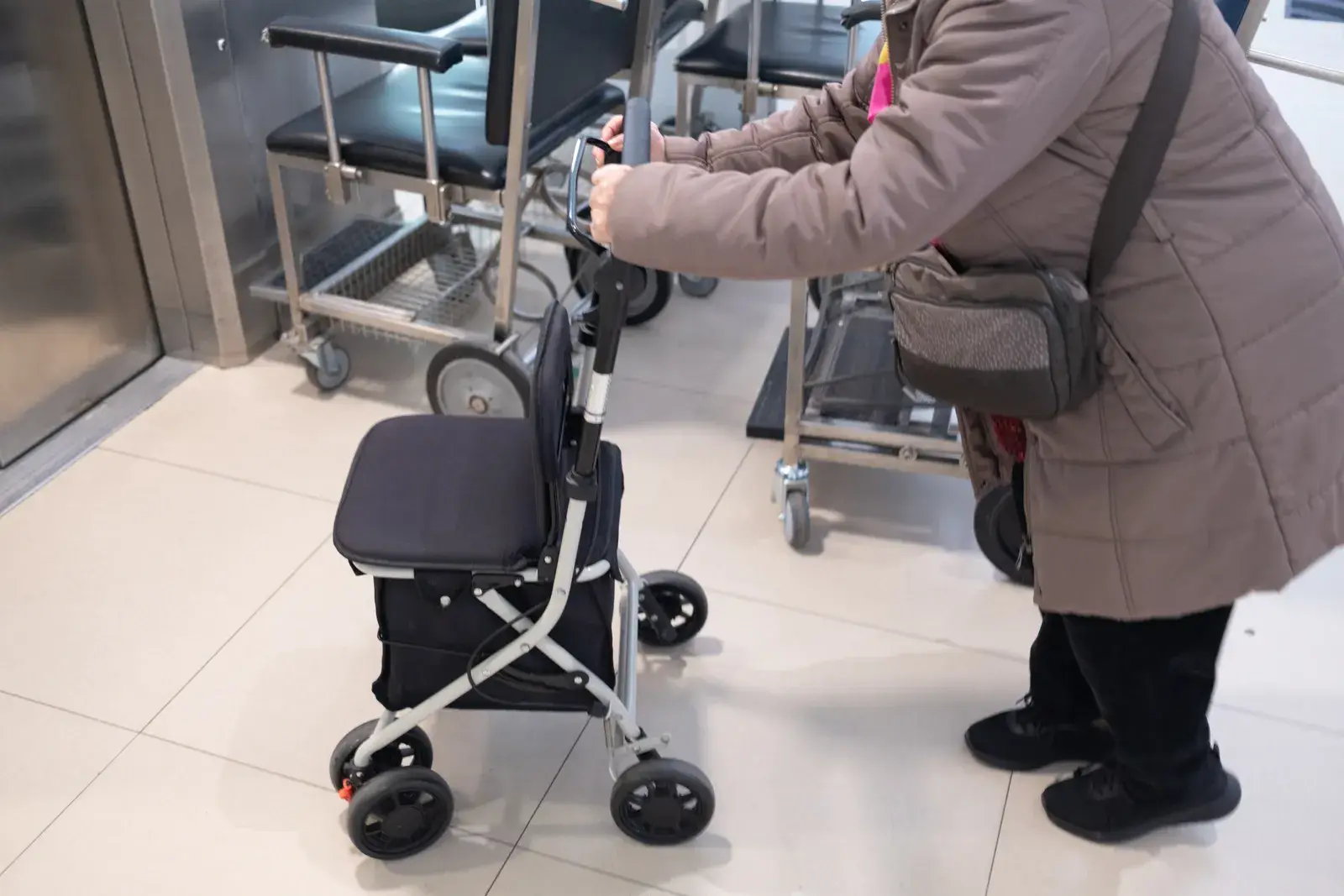
Can I put weight on my leg after a femur is fixed with a rod?
Often yes. AAOS OrthoInfo explains that most people with an intramedullary nail can bear weight right after surgery, though some must wait for early healing first. The answer depends on the fracture pattern, how stable the fixation is and any other injuries, so your surgeon writes the rule and your therapist follows it.
The nail is a long metal rod placed down the hollow center of the thighbone, with screws above and below the break holding length and alignment. It shares the load with the bone, which is why early walking is often allowed. Plates and screws, or a temporary external frame, are used when the break extends toward the hip or knee or when other injuries come first; those often carry stricter limits.
Whatever the rule, it is usually expressed in plain terms such as weight bearing as tolerated, partial, or touch-down. Ask your surgeon which one applies and for how long, and bring that note to your first outpatient visit.
Why do both the hip and the knee stiffen after a thighbone break?
The thigh muscles that move both joints were injured by the fracture and then by the surgery, and they guard and shorten while the bone heals. Days in bed, swelling and pain all add to it, so a femur fracture commonly leaves the knee slow to bend and the hip weak, even though neither joint was broken.
Therapists measure both joints early. Knee bending is usually the priority, because a knee that will not bend past about a right angle makes stairs, sitting and getting into a car hard. Hip strength, especially the muscles on the side of the hip that keep the pelvis level when you stand on one leg, matters for the limp that many people notice for months.
- Heel slides and assisted knee bends from the first days
- Gentle thigh and buttock tightening while lying down
- Side-lying and standing hip strength work as allowed
- A stationary bike once knee bend and wound healing allow
What are the stages of rehab after a femoral shaft fracture?
Femur rehab moves from protected walking to normal walking to full strength, at a pace set by bone healing on X-ray and by what you can do. The ranges below are typical and assume a nail with early weight bearing; open fractures, smoking and breaks in several pieces often slow things down, as OrthoInfo notes.
| Time after surgery | Main goals | Typical milestones |
|---|---|---|
| Hospital to week 2 | Safe walking with an aid, early knee and hip motion | Walker or crutches, getting in and out of bed alone |
| Weeks 2 to 6 | More knee bend, wean the aid as allowed | Stairs with a rail, bike when cleared |
| Weeks 6 to 12 | Normal walk, build thigh and hip strength | Walking without an aid for longer distances |
| 3 to 6 months | Full strength and endurance as the bone consolidates | Squats, step-downs, return to most work |
| 6 months and beyond | Running, jumping and heavy work if the bone has healed | Cleared by the surgeon after X-ray review |
What does my surgeon control during femur fracture recovery?
Your surgeon controls weight bearing, the timing of X-rays, any restrictions linked to other injuries, and decisions about slow healing or irritating hardware. OrthoInfo lists nonunion, where the bone fails to heal, and hardware irritation among the possible complications, and both are judged by the surgeon.
Your physical therapist controls the exercise plan inside those rules: how much knee bend to push for, how quickly to wean the walker, and how heavy the strength work becomes. If you feel new, deep thigh pain with walking after weeks of steady progress, your therapist will pause loading and contact the surgeon, because pain in the bone itself can be a sign that healing is lagging. The broken bone rehab guide explains how bone healing and loading interact more generally.
Before femur surgery there is rarely time for prehab, because the break is an emergency; the equivalent is the first outpatient visit, where the therapist checks the walking aid height, the route from car to door and the stairs at home, then sets the first exercises around them.
How do people get back to driving and walking the Monon after a broken femur?
Driving waits until you are off opioid pain medicine, can move the leg quickly and hard enough to brake, and your surgeon agrees; a right femur usually takes longer than a left in an automatic car. Practise getting in and out of the car with the seat pushed back before the first drive.
Walking distance builds gradually. Many people use a flat, well-surfaced route for their first longer walks; the Monon Trail through Carmel is paved and mostly flat, with benches along the way, which makes it practical for a walk that can be cut short if the leg tires. The garage at Carmel City Center is a short walk from the suites, worth knowing while you are still using a walking aid.
If you have a long commute or a job on your feet, tell your therapist the actual demands so the plan builds the endurance you need, not just the strength.
Who arranges outpatient therapy once I leave hospital with a broken femur?
The hospital team usually arranges therapy for the first stretch, at home or in a rehab unit, and outpatient therapy follows once you can manage the car. You can choose where to do outpatient rehab in most cases; the questionnaire for rehab after surgery lets the matching team propose an independent therapist in the network whose schedule and coverage fit.
Bring your discharge papers, the operative note if you have it, and your surgeon’s weight-bearing instructions. Your therapist, not the network, examines you and keeps your surgeon informed. If you are weighing home-based care against outpatient visits, the home health versus outpatient comparison sets out the differences.
Get urgent help after a femur fracture if you notice
- Thigh pain that keeps rising with tight, hard swelling, or numbness in the foot: go to the emergency department
- Sudden breathlessness, chest pain or coughing blood: call 911
- Calf swelling, warmth or pain in either leg
- Fever, or a wound that is red, hot or draining
- A new deformity, a sudden crack, or being unable to bear weight you managed before
If you think it is an emergency, call 911.
