Rehab after an ankle fusion (arthrodesis) begins with a period in a cast or boot while the bones knit, then teaches you to walk smoothly on an ankle that no longer bends up and down, with help from the joints around it and the right shoes. OrthoInfo puts full recovery at about four to nine months, with daily activities usually resuming at three to four months. Near Carmel, the matching team suggests an independent, Indiana-licensed physical therapist in the network who works one-on-one in a private suite and follows your surgeon’s instructions.
Last reviewed By the Monon Therapy Collective editorial team
- Full recovery
- About 4 to 9 months
- Daily activities
- Often resume at 3 to 4 months
- Early weeks
- Cast or boot, protected weight as the surgeon directs
- Long-term focus
- The joints next to the fused ankle
What changes in the way you walk once the ankle is fused?
After a fusion the main ankle joint no longer bends, so the foot cannot roll forward over the ankle in the usual way; the knee, the hip and the small joints of the foot have to share that job. Many people walk comfortably in everyday shoes once rehab is finished, but steep slopes, stairs and uneven ground feel different.
OrthoInfo notes that because the fused bones no longer move, the arthritis pain in that joint should stop, but the joints around it carry more stress and can develop arthritis of their own over time. Much of the rehab is about using those neighboring joints well: keeping the midfoot and subtalar joint mobile, the calf and hip strong, and choosing footwear that helps the foot roll through each step.
How long is the protected phase after ankle arthrodesis?
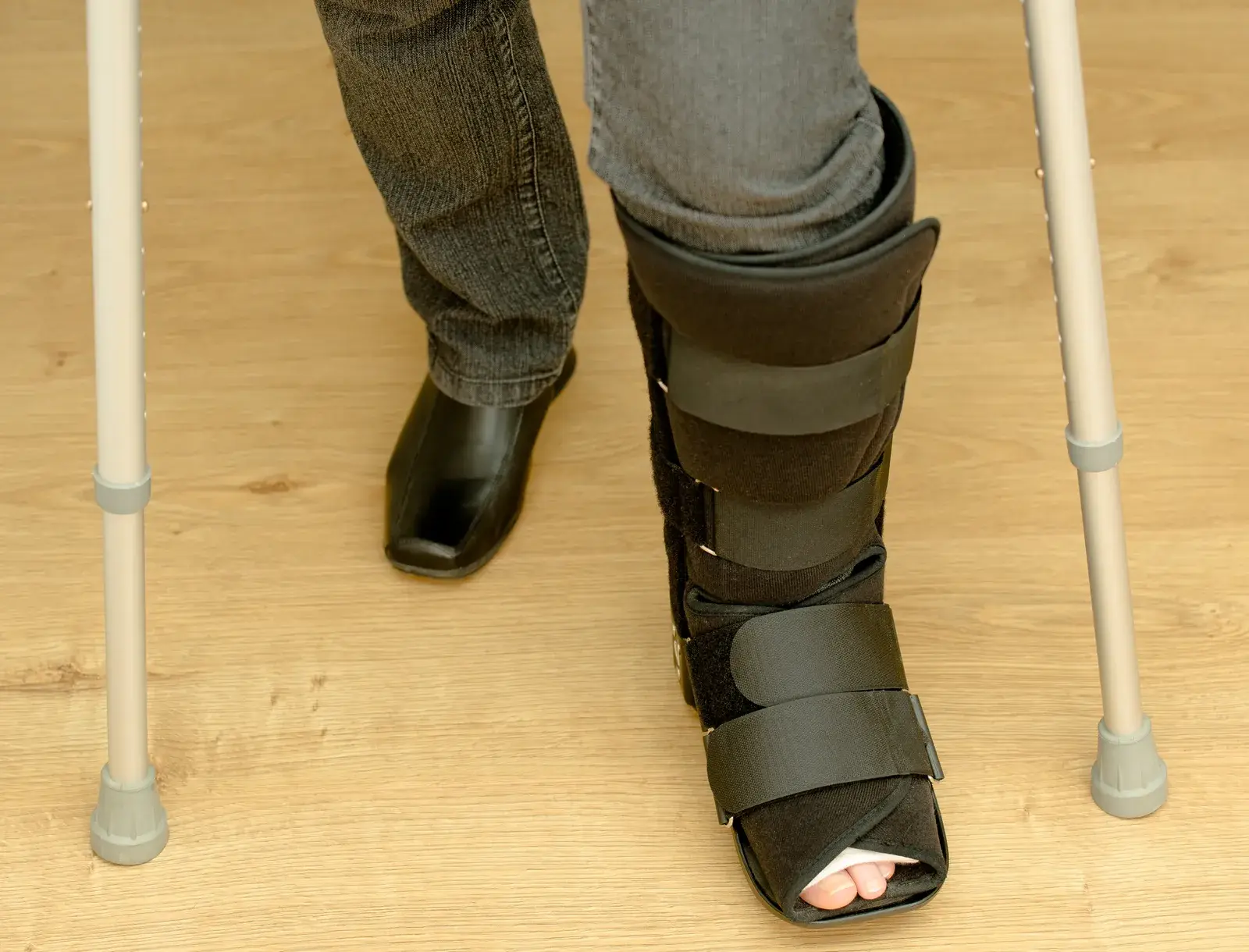
The protected phase lasts until X-rays show the bones joining, usually a matter of weeks in a cast and then a boot, with weight added in steps your surgeon sets. OrthoInfo explains that the cast limits movement to help prevent nonunion, where the bones fail to fuse, so this is not a phase to rush.
| Approximate time | Main goals | Typical milestones |
|---|---|---|
| First weeks | Protect the fusion, control swelling, stay strong elsewhere | Cast or splint; crutches, walker or knee scooter; hip and knee exercises |
| Middle weeks | Begin weight bearing in a boot as healing shows on X-ray | Partial then fuller weight in the boot; toe and knee motion |
| Roughly 3 to 4 months | Into a supportive shoe, normal daily activities | Walking indoors and short distances outside without the boot |
| 4 to 9 months | Endurance, slopes, stairs, longer walks | Walking the Monon Trail or a shopping trip without swelling the next day |
Which decisions belong to the foot and ankle surgeon?
Your surgeon decides when you may put weight through the leg, when the cast becomes a boot and the boot becomes a shoe, and whether any shoe modification is needed, because those depend on X-ray evidence of the bones joining. Smoking, diabetes and bone quality can all slow fusion, so timelines vary more than for many operations.
Your therapist decides how to rebuild strength, balance and walking within those limits: crutch or walker training, swelling control, foot and toe mobility, and gait practice once you are in a shoe. If pain at the fusion site rises as weight increases, the therapist reports it rather than pushing on, since persistent pain can be a sign the bones have not yet joined.
What shoes help most after an ankle fusion?
Shoes with a stiff sole and a rounded, rocker-shaped bottom usually help most, because the curve rolls the foot forward and stands in for some of the ankle bend you no longer have. A cushioned heel softens the moment the heel strikes the ground, when a fused ankle cannot absorb impact by flexing.
Your surgeon or therapist may suggest a particular style, a heel lift or an insert; OrthoInfo mentions that supportive footwear may be needed for a time after daily activities resume. Bring your usual walking shoes to a session so the therapist can watch you walk in them on the indoor turf corridor and on a hard floor.
- Stiff, rocker-bottom sole to roll through each step
- Cushioned heel to absorb impact
- Secure lacing or straps so the foot does not slide
- Enough depth for any insert your surgeon recommends
How do stairs, slopes and kneeling feel on a fused ankle?
Stairs and slopes take the most practice, because going down needs the shin to tip forward over the foot, which a fused ankle cannot do. Many people learn to place the whole foot on each step, turn slightly sideways on steep ramps, and use a rail on the way down.
Kneeling and deep squatting are often harder too, as they normally ask the ankle to point fully. A therapist works through the specific tasks in your life, such as the stairs at home, a sloped driveway in winter, or getting down to the floor and back up, and finds a method for each. The gait training page describes this kind of walking retraining in more detail.
Is there a role for prehab before an ankle fusion?
A short spell of prehab helps because several weeks without weight on the leg is hard on balance and on the other leg. Strengthening the hip, thigh and the opposite leg, and learning to use crutches, a walker or a knee scooter safely, makes the first weeks at home much easier.
It is also a chance to plan the house: a chair with arms, a shower seat, and fewer trips up and down stairs. If you are still deciding between surgery and non-surgical care, ankle arthritis physical therapy explains what rehab alone can offer.
How does the matching team arrange fusion rehab near Carmel?
Fill in the physical therapy questionnaire, choose after surgery and add the date and whether you are allowed weight on the leg yet. A person on the matching team suggests a therapist in the network whose schedule fits, and that therapist’s own office confirms your benefits and books.
The suites are inside FlexWerk at Carmel City Center, with garage parking a short walk away; if a scooter or walker makes that walk hard, say so on the form so the team can talk through arrival before your first visit.
Call your surgeon after an ankle fusion if
- Calf pain, swelling or warmth in the operated leg
- Chest pain or sudden breathlessness: call 911
- Fever, or a wound that is red, hot or draining
- Toes that are cold, pale or numb and do not improve with elevation
- A fall onto the operated leg, or sudden new pain at the fusion site
If you think it is an emergency, call 911.
