To prepare your home for a hip replacement, set up a main-floor living space if stairs are hard, remove loose rugs and cords, and put in the equipment the AAOS recommends: safety bars or handrails in the shower, a raised toilet seat, a stable chair with a firm seat cushion, a reacher, a dressing stick, a sock aid and a long-handled shoehorn. Move everyday items to between waist and shoulder height so you are not bending low. Ask your surgeon which hip precautions apply to you, because the surgical approach decides how much bending and turning is allowed at first.
Last reviewed By the Monon Therapy Collective editorial team
- Key equipment
- Raised toilet seat, reacher, sock aid, long-handled shoehorn
- Chair
- Stable, with arms and a firm seat cushion
- Help at home
- Often several weeks for cooking, shopping, bathing and laundry (AAOS)
- Light daily activities
- Most resume within about 3 to 6 weeks (AAOS)
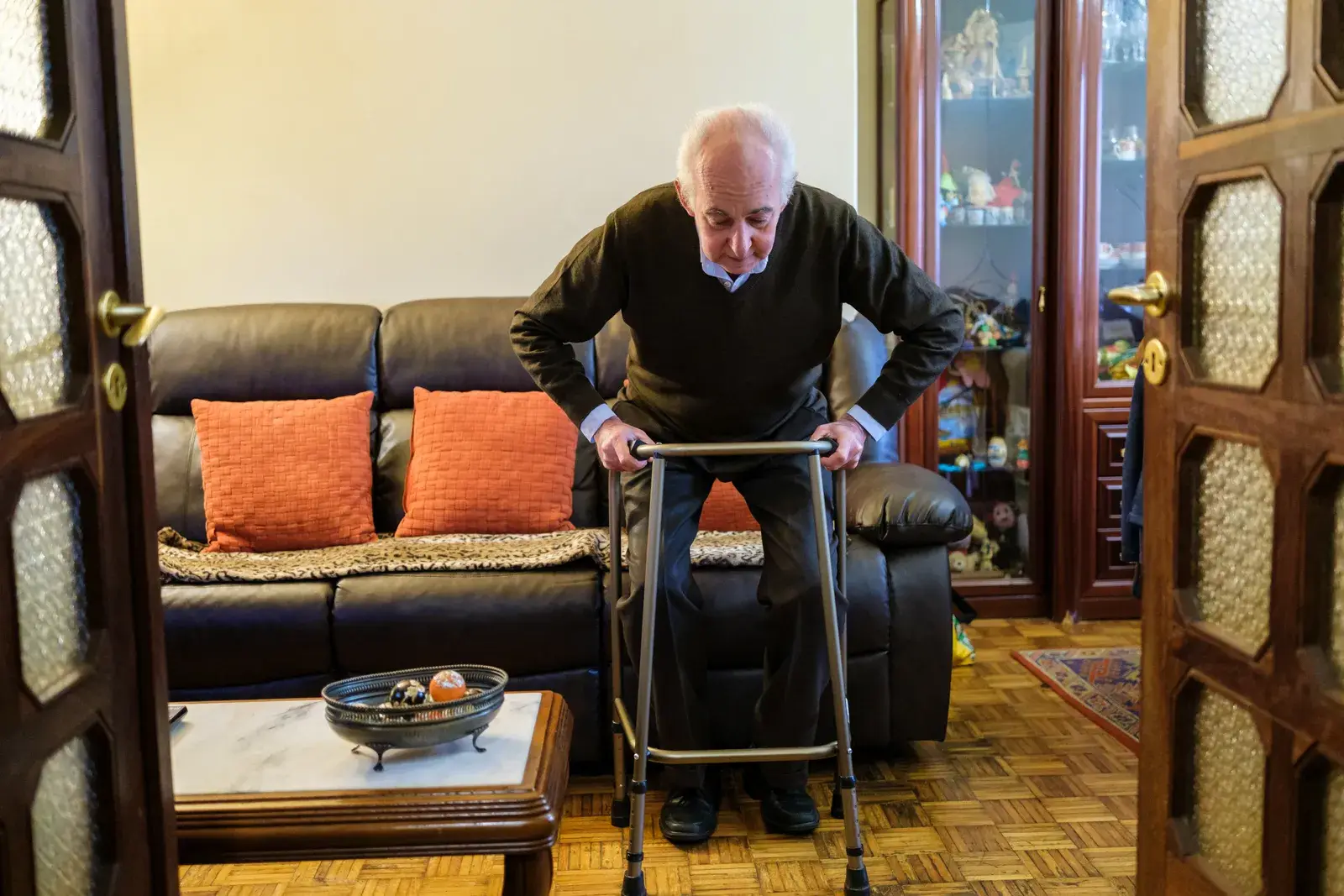
What do hip precautions mean for how I set up the house?
Hip precautions are temporary limits on deep bending, crossing the legs and certain twisting movements while the tissues around the new joint heal, and they shape almost every choice at home: chair height, toilet height, how you dress and where things are stored. Whether you have them, and which ones, depends on your surgeon and the surgical approach.
Some surgeons give strict precautions after a posterior approach, such as not bending the hip past 90 degrees, a right angle; NHS guidance lists that limit along with avoiding crossed legs and low chairs without arms. Others, particularly after an anterior approach, give fewer restrictions. Ask for your precautions in writing before surgery, then set up the house to match, so you are not improvising on day one at home.
Which equipment should be in place before I come home?
The AAOS lists a short set of items that make the first weeks safer and more independent. Most can be bought or borrowed in advance, and some hospitals supply a kit, so ask before you buy.
- Securely fastened safety bars or handrails in the shower or bath
- A raised toilet seat, ideally with arms
- A stable chair with a firm seat cushion and arms
- A reacher for picking things up without bending
- A dressing stick, a sock aid and a long-handled shoehorn
- A shower chair or tub transfer bench and a long-handled sponge
- Slip-on shoes with a closed back and non-slip soles
How should the bathroom be arranged for a new hip?
The bathroom is where most bending, twisting and slipping happen, so give it the most attention: a raised toilet seat, grab bars where you will actually reach for them, a seat in the shower and toiletries at waist height. Towel bars and sink edges are not built to hold your weight and should never be used as grab bars.
If you have a tub with a high side, a tub transfer bench lets you sit down outside the tub and slide across rather than stepping over the edge. Put a non-slip mat inside the shower and an absorbent one outside. A long-handled sponge and a handheld shower head make washing your feet and legs possible without bending past your limits. Practise getting on and off the toilet seat and shower bench with your walker before surgery.
If the only full bathroom is upstairs, plan for the early days: a bedside commode on the main floor and sponge baths can bridge the gap until stairs feel manageable. Ask your surgeon when the incision can get wet, because many people are told to keep it covered or dry for a period after surgery, which changes how you set up the shower.
How do I set up the bedroom, living room and kitchen?
Create paths wide enough for a walker, remove loose rugs and electrical cords from the areas where you walk, and put the things you use every day between waist and shoulder height. The AAOS suggests a temporary living space on the same floor if possible, since stairs are harder early on.
In the bedroom, the bed should be high enough that your hips stay above your knees when sitting on the edge; a firm mattress helps with getting in and out. Keep a phone, water, medicines and a night light within reach. In the living room, choose a firm chair with arms rather than a low sofa or recliner that you sink into. In the kitchen, move dishes, pans and food you use often to the counter or upper shelves, and use a backpack or a walker basket to carry things, because your hands are on the walker.
What about stairs, the car and getting out of the house?
If you must use stairs, make sure there is a sturdy handrail and practise the pattern before surgery: the stronger leg leads going up and the operated leg leads going down. Your physical therapist or the hospital team will teach this, but rehearsing it beforehand makes the first trip home less daunting.
For the car, push the passenger seat all the way back and recline it slightly, back up to the seat, sit down, then swing both legs in together; a plastic bag on the seat makes turning easier. NHS guidance advises waiting at least 6 weeks before driving and checking with your doctor. Plan rides to physical therapy for that period; the garage at Carmel City Center is a short walk from the suites, and the answer on parking for appointments has details.
How do I line up help and rehab before a hip replacement?
Arrange help for the first several weeks and book outpatient physical therapy before the operation. The AAOS notes that many people need some help for several weeks with cooking, shopping, bathing and laundry, and most resume light daily activities within about 3 to 6 weeks.
Ask your surgeon’s office for the rehab protocol and a referral, then use the physical therapy questionnaire to be matched with an independent therapist in the network. The total hip replacement rehab page shows the usual phases, and prehab before joint replacement explains how a few sessions before surgery help you practise the walker, the stairs and the car transfer. The recovery timeline after a hip replacement answer sets realistic expectations.
Get the house ready in five steps
Start two to four weeks before surgery so nothing is left for the last few days.
Get your precautions in writing
Ask your surgeon which movements to avoid and for how long, since this decides chair, toilet and bed heights.
Choose your main-floor base
Pick the room you will spend the day in and, if stairs are hard, where you will sleep on that floor.
Clear the paths
Remove loose rugs and cords, widen walkways for a walker and add night lights between the bed and the bathroom.
Install and test the equipment
Fit grab bars, a raised toilet seat and a shower seat; set out the reacher, sock aid, dressing stick and long-handled shoehorn, and practise with them.
Move everyday items up
Put clothes, dishes, food and toiletries between waist and shoulder height so you never need to bend low or reach overhead.
After surgery, call your surgeon or 911 if
- The leg suddenly looks shorter or turned, or the hip gives way with severe pain (possible dislocation)
- Calf pain, tenderness or swelling in either leg
- Sudden chest pain or shortness of breath (call 911)
- Fever, chills, or increasing redness, warmth or drainage at the incision
If you think it is an emergency, call 911.
