Gardening without back pain mostly comes down to three habits: work close to the ground by kneeling, half-kneeling or sitting instead of bending from standing, switch tasks every 20 to 30 minutes, and lift bags and pots with a hip hinge held close to your body. The first big spring cleanup after an Indiana winter is when most backs complain, because a season of light activity meets a full day of digging. If pain lingers or travels down a leg, a physical therapist can find which movement is the problem and adjust it.
Last reviewed By the Monon Therapy Collective editorial team
- Riskiest moment
- The first long day of spring cleanup
- Position rule
- Kneel, half-kneel or sit; avoid long standing stoops
- Switch tasks
- About every 20 to 30 minutes
- Lifting rule
- Hinge at the hips, load close, no twisting
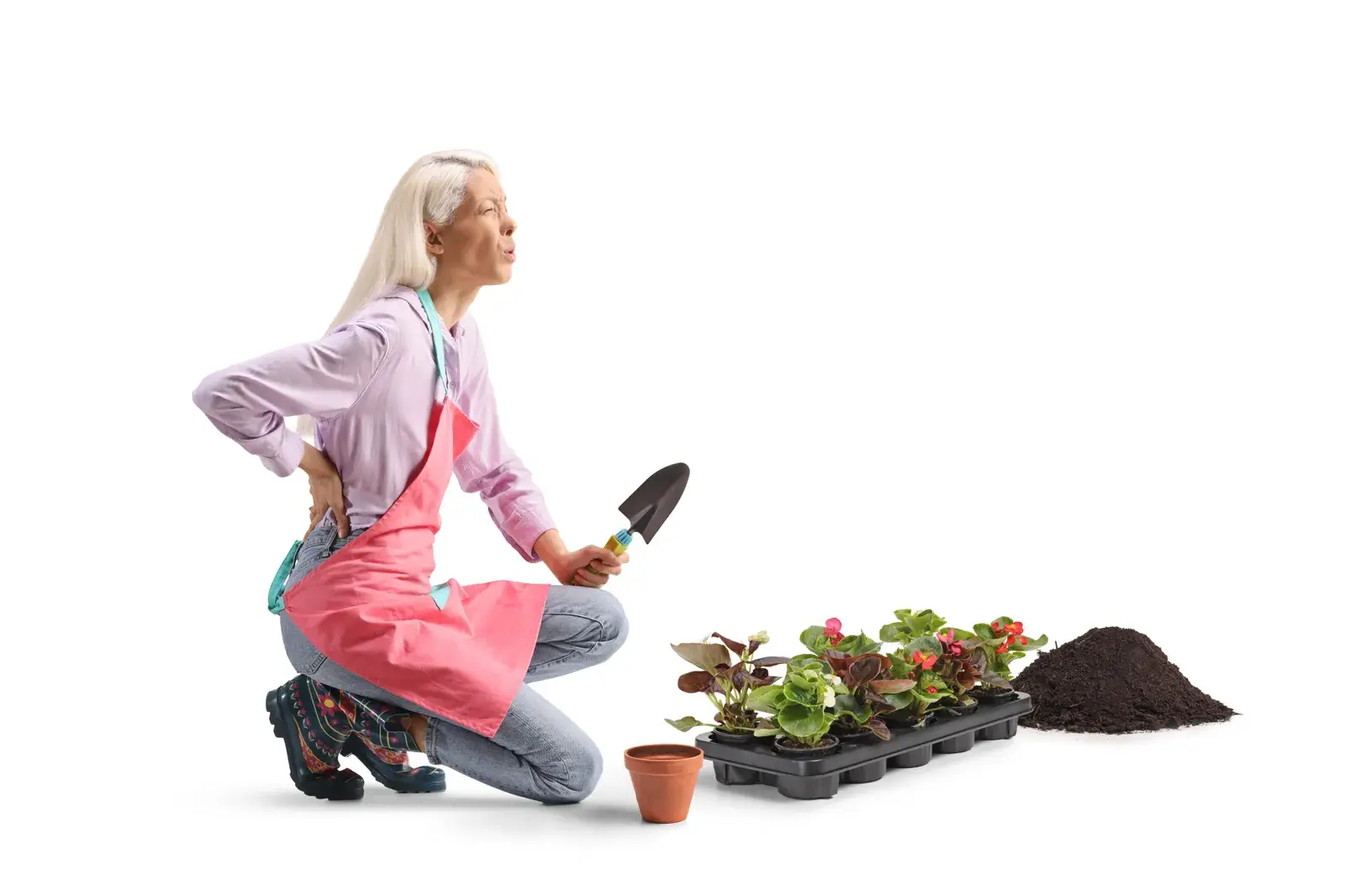
Why does gardening hurt the lower back so often?
Gardening keeps the spine bent forward for long stretches, often with a twist and a reach, and that sustained position fatigues the back muscles and irritates sensitive joints and discs. A single weed pull is harmless; ninety minutes of stooping over a bed is a different load.
Timing adds to it. In central Indiana, yard work tends to arrive all at once in spring: beds to clear, mulch to spread and borders to edge on the first warm weekends after months of mostly indoor life. Fall brings a second peak with leaves and bulb planting. The back is rarely injured by the garden itself; it is overloaded by doing a season’s worth of work in one Saturday.
People with a history of back pain, especially pain when bending, feel this first. If that sounds familiar, the back pain when bending over page covers the likely causes and what a therapist checks.
Which gardening positions are easiest on the back?
Get down to the work rather than bending to it. Kneeling on a pad, half-kneeling with one foot forward, or sitting on a low stool or garden seat lets you work at ground level with a fairly upright spine. Swap knees and positions every few minutes.
Half-kneeling is the most versatile: one knee on a pad, the other foot flat in front, trunk tall, working on the side of the front foot. It is also easy to get up from by pushing through the front leg. If kneeling bothers your knees, a kneeler with handles helps you get up and down, and knee pain when kneeling explains why some knees object.
For taller jobs such as pruning shrubs, stand close, face the work squarely and move your feet instead of twisting. Raised beds or containers at hip height take most of the bending out of vegetable growing altogether.
How do I lift mulch bags, pots and soil without hurting my back?
Use a hip hinge: feet shoulder-width apart, bend at the hips and knees with your chest up, hold the bag tight against your body, and stand by pushing through the legs. Turn by stepping your feet around, never by twisting with the load in your arms.
Make the load smaller before you make yourself stronger. Buy or split soil and mulch into bags you can handle, slide heavy pots on a dolly or towel rather than carrying them, and use a wheelbarrow with the load centered over the wheel. Two half-loads are easier on the back than one full one. The hip hinge exercise page teaches the pattern so it becomes automatic before the season starts.
| Task | What strains the back | Easier way |
|---|---|---|
| Weeding beds | Long standing stoop | Half-kneel on a pad, weed one arm’s reach, then shuffle along |
| Spreading mulch | Repeated bending and twisting | Rake from a wheelbarrow or tarp; switch hands and sides often |
| Digging holes | Deep forward lean with load | Long-handled spade, foot does the pushing, small scoops |
| Moving pots and bags | Lifting away from the body | Dolly or tarp drag, hinge-lift with the load close |
| Raking leaves | One-sided twisting | Step with the rake, switch the lead hand every few minutes |
| Hose and watering | Dragging heavy hose | Hose reel or cart, shorter hose sections |
How should I pace a full day of spring yard work?
Break it into 20 to 30 minute blocks of different tasks with short breaks, and stop before you feel exhausted rather than after. Rotating between bending jobs such as weeding and upright jobs such as pruning or raking gives the back a recovery period built into the work.
Plan the season too. Spread the big spring cleanup over two or three weekends instead of one, and do a few short sessions in the weeks before to remind the body what gardening feels like. A brief warm-up helps on cool mornings: walk the yard, do a few gentle back bends standing, some squats and arm circles.
At the end of the day, a short walk and lying on your back with knees bent often eases the stiffness that comes from hours of bending. Soreness the next morning that fades as you move is normal; pain that lingers for days or spreads into a leg is worth getting checked.
What strength work makes gardening easier on the back?
Hip and leg strength matter most because they let you squat, kneel and get up without the back taking over. Squats to a chair, lunges or step-ups, glute bridges and a farmer carry with a watering can in each hand cover the main demands of gardening.
Trunk endurance helps you hold positions without fatigue. Exercises such as the bird dog and side planks train the muscles that keep the spine steady while your arms work. Two short sessions a week through late winter can make the first spring weekend noticeably easier.
When should a gardener with back pain see a physical therapist?
See a therapist if back pain from gardening lasts more than a week or two, returns every season, or comes with pain, numbness or tingling down a leg. A therapist examines how you bend, kneel and lift and builds a plan that keeps you gardening while the back recovers.
No referral is needed to start: Indiana direct access covers the first 42 calendar days of physical therapy. Through the network, you can describe your symptoms in the lower back questionnaire and a person on the matching team proposes an independent therapist near Carmel. If the back has just gone out, start with the first 72 hours guide, and read low back pain physical therapy for what treatment involves.
Stop gardening and get medical help promptly if
- Numbness appears around the groin or buttocks, or bladder or bowel control changes: call 911.
- Weakness develops in a leg or foot, such as the foot slapping or catching when you walk.
- Pain is severe after a fall from a ladder or step.
- Your back pain arrives together with a fever, weight loss you cannot explain, or a past cancer diagnosis.
If you think it is an emergency, call 911.
