Neither wins outright for everyone. The American College of Physicians lists both acupuncture and exercise-based approaches among first-line non-drug options for low back pain, while the UK’s NICE guideline recommends exercise and advises against acupuncture. Physical therapy builds strength, movement and confidence you keep after care ends; acupuncture is a passive treatment some people find gives short-term relief. Many people near Carmel use exercise-based therapy as the core and treat acupuncture as an optional extra.
Last reviewed By the Monon Therapy Collective editorial team
What do the major back pain guidelines say about each option?
They disagree on acupuncture and agree on exercise. The American College of Physicians 2017 guideline recommends non-drug treatment first, naming superficial heat, massage, acupuncture or spinal manipulation for acute and subacute low back pain, and exercise, multidisciplinary rehabilitation, acupuncture, mindfulness, tai chi, yoga, motor control exercise and others for chronic low back pain. The NIH’s complementary health center describes the evidence behind acupuncture for chronic low back pain as moderate quality.
The UK’s NICE guideline NG59 recommends considering a group exercise program and manual therapy only as part of a package that includes exercise, and it advises clinicians not to offer acupuncture for low back pain with or without sciatica. Both bodies looked at much of the same research and weighed it differently. The common thread is that active approaches have the broadest support.
How does a physical therapy plan for back pain differ from a course of acupuncture?
Physical therapy is built around what you do, and acupuncture around what is done to you. A physical therapist examines how your back moves, which positions ease or aggravate it, and what you have been avoiding, then sets a plan of exercise, graded activity and education, with hands-on techniques as a supporting piece. You leave each visit with work to do between sessions.
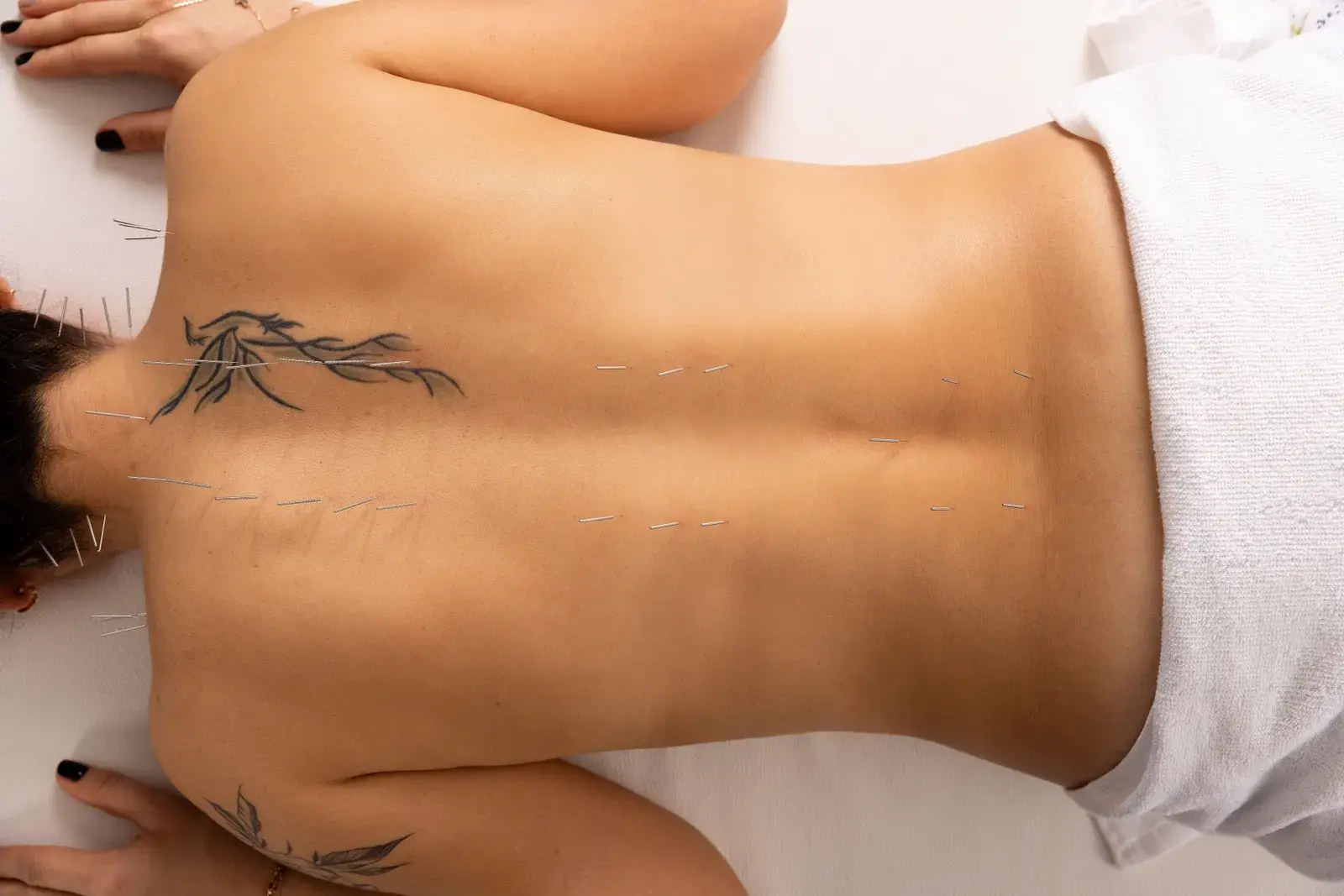
An acupuncturist inserts thin needles at chosen points, sometimes with heat or electrical stimulation, while you lie still. Sessions are often relaxing, and some people notice pain easing for hours or days. The effect on strength, fitness and tolerance for lifting or sitting is indirect. The low back pain physical therapy page describes the assessment and plan in more detail.
- Physical therapy: examination, exercise, graded return to activity, education, manual therapy as an adjunct
- Acupuncture: needles at chosen points, sometimes with heat or electrical stimulation, little homework
- Both: typically a course of visits over several weeks, with progress judged by function
Does Medicare or private insurance cover acupuncture for back pain?
Medicare Part B covers acupuncture only for chronic low back pain, defined as lasting 12 weeks or longer with no known cause and not related to surgery or pregnancy. Medicare.gov says it covers up to 12 treatments in 90 days, with 8 more if you improve, to a maximum of 20 in a 12-month period, and that Medicare does not pay licensed acupuncturists directly; the treatment must come from a qualified physician or other eligible provider who meets its training and licensing rules.
Private plan coverage for acupuncture varies widely, and many plans exclude it or cap it tightly. Outpatient physical therapy for back pain is commonly covered when medically necessary, subject to deductibles, copays and visit limits. Before you book, the matching team checks which therapists in the network work with your plan, and the therapist’s office verifies benefits; the cost and insurance page explains how.
Is dry needling the same as acupuncture?
No, although both use thin filament needles. Acupuncture comes from traditional Chinese medicine and is practised by licensed acupuncturists and some physicians. Dry needling is a technique some physical therapists use after additional training, aimed at tender, tight areas in muscle as one part of a broader rehabilitation plan.
Whether dry needling is available depends on the therapists in the network at the time, and the matching team tells you honestly, before anything is booked, whether a therapist in the network offers it. The dry needling page explains how it works, and whether dry needling hurts covers what it feels like.
Can you combine acupuncture with physical therapy for back pain?
Yes, and many people do. If acupuncture eases pain enough to make walking and exercise easier, it can support the active work. Problems start when the passive treatment takes the time, money or motivation that the exercise program needed, or when you wait for needles to fix a back that mostly needs gradual loading.
Tell both clinicians what you are doing. Give the combination a fair trial, perhaps four to six weeks, and judge it on what you can do: sitting through a Colts game, a round of golf, a commute down Meridian Street, or a Saturday of yard work. The answer on whether walking is good for lower back pain covers one of the simplest active steps, and the two-minute questionnaire lets the matching team propose a therapist in the network near Carmel City Center.
Related questions
How many acupuncture sessions does it take to help back pain?
Courses commonly run several weeks. Medicare’s rule of 12 sessions in 90 days, extended only if you improve, is a reasonable benchmark for judging whether it is working.
Is acupuncture safe for back pain?
Serious problems are uncommon when it is done by a qualified practitioner using sterile single-use needles. Tell the practitioner about blood thinners, pregnancy or a pacemaker if electrical stimulation is planned.
Which is better for sciatica, acupuncture or physical therapy?
Leg pain from an irritated nerve needs an assessment of nerve function and a plan for movement and loading, which is the core of physical therapy. The sciatica page explains what that involves.
Should I try yoga or Pilates instead of either?
Both are active options that some people find helpful. The comparisons of physical therapy and yoga and physical therapy and Pilates cover the differences.
What if my back pain has lasted more than three months?
Pain that persists beyond about 12 weeks is usually called chronic, and the plan tends to shift toward graded activity, strength and pacing rather than chasing short-term relief. That is also the point at which Medicare’s acupuncture benefit can apply.
Keep reading
- Is walking good for lower back pain?
- Physical therapy vs yoga for back pain: which helps more?
- Should I rest or keep moving with back pain?
- Low back pain physical therapy in Carmel
- Chronic pain physical therapy
- Dry needling explained
Sources
This page is general education, not medical advice. A physical therapist can only advise on your situation after an examination.
