Recovery after spinal fusion is measured in months. OrthoInfo notes it may be several months before the bone is solid, although comfort usually improves much sooner. Most people walk from the first days, and formal physical therapy typically starts 6 weeks to 3 months after surgery. Return to work, driving and lifting depends on the levels fused, your job and your surgeon’s restrictions, and smoking raises the risk that the fusion does not heal.
Last reviewed By the Monon Therapy Collective editorial team
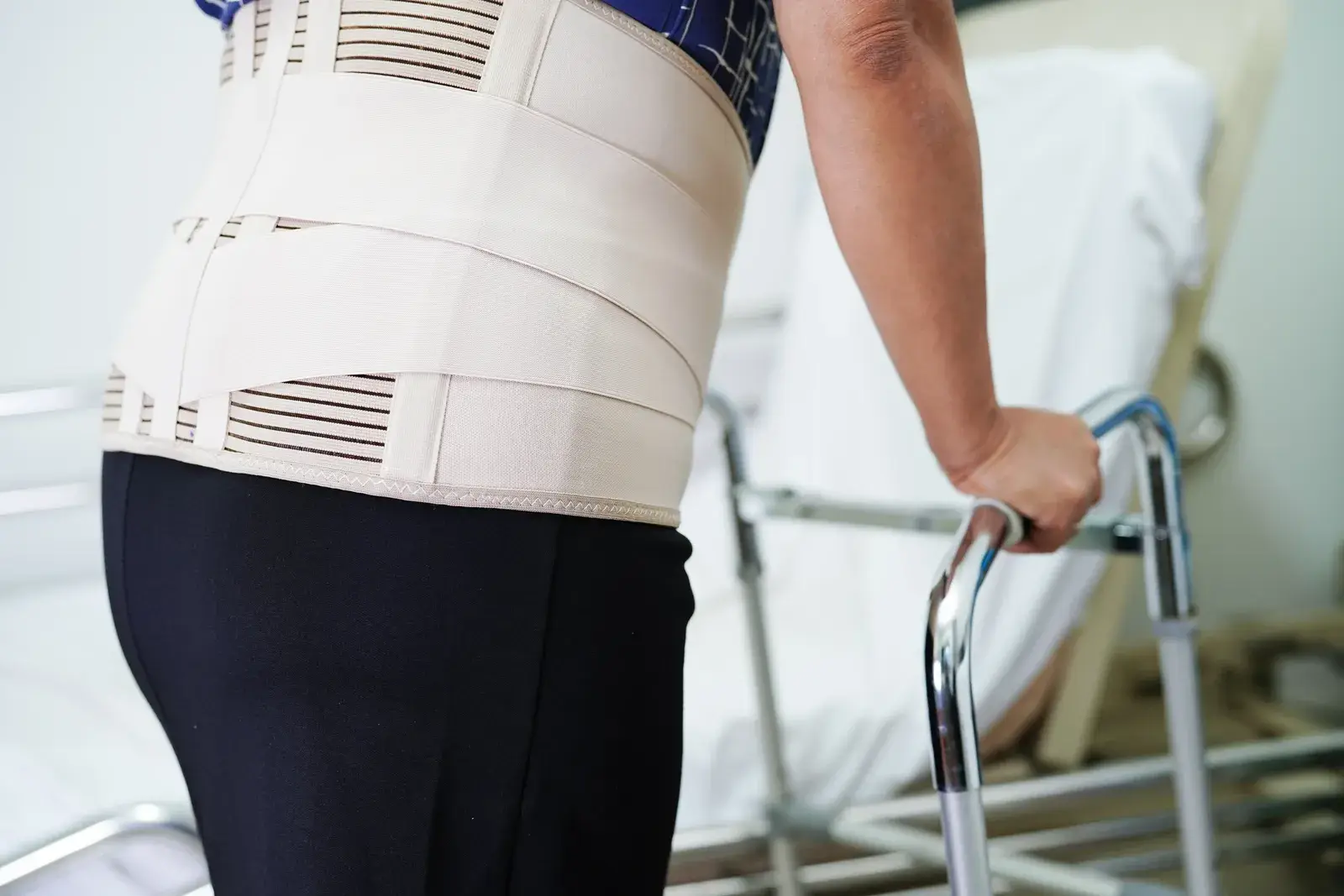
What has to heal after a spinal fusion, and why does it take months?
A fusion joins two or more vertebrae so they heal into a single solid bone. The surgeon places bone graft between them, usually held with screws and rods, and the body then has to grow new bone across the gap. OrthoInfo describes this as a welding process and notes that it may be several months before the bone is solid.
The hardware holds things steady in the meantime, but it is the bone growth that makes the result permanent. That is why surgeons limit bending, lifting and twisting early on even when pain has eased, and why some people are asked to wear a brace. OrthoInfo also notes that people who smoke are more likely to have the fusion fail to heal, a problem called pseudarthrosis.
What do the first six weeks after spinal fusion usually look like?
Mostly walking, rest and protecting the spine. OrthoInfo says your doctor may recommend only light activity like walking right after the operation, increasing gradually as you regain strength. Many people build up from short indoor walks to longer outdoor ones over these weeks.
Surgeons commonly give simple rules for this phase, often summarized as avoiding bending, lifting and twisting. The exact limits, including how much you may lift and whether you need a brace, come from your surgeon and differ between neck and low back fusions and between one level and several. Ask for them in writing before you leave the hospital.
- Walk several times a day, increasing time gradually
- Use a log-roll to get in and out of bed, as taught in the hospital
- Avoid lifting beyond the limit your surgeon sets, often only light objects at first
- Wear the brace if one was prescribed, for the hours your surgeon specifies
- Avoid nicotine, which interferes with bone healing
When does formal physical therapy start after spinal fusion, and what does it include?
OrthoInfo says physical therapy typically starts 6 weeks to 3 months after surgery, once the surgeon is satisfied with early healing. That later start is unusual compared with joint surgery and reflects the need to let bone begin to fuse before the trunk is loaded.
When it begins, therapy focuses on walking endurance, trunk and hip strength, and safe ways to bend and lift using the hips instead of the fused segment. A movement such as the hip hinge is often central, because it lets you pick things up while keeping the spine steady. Later sessions rebuild the specific demands of work, home and hobbies. See spinal fusion rehab in Carmel for the phases in detail, or ACDF surgery rehab if your fusion was in the neck.
When can I drive and go back to work after a spinal fusion?
Both depend on your surgeon’s clearance, your pain medicine and your job. Driving usually waits until you are off opioid pain medicine and can turn and brake safely; your surgeon will tell you when. Sitting tolerance is often the limit early on, so short trips with breaks come before longer drives.
Desk-based work often returns sooner than physical work, sometimes with a phased schedule and permission to stand and walk regularly. Jobs involving heavy lifting, repeated bending or vibration usually take longer and may need written restrictions for a period. A therapist can help you build up sitting time, lifting capacity and the specific tasks your job requires. For long desk days, a timer that prompts a short walk every 30 to 45 minutes is a simple habit that many people find eases stiffness.
Which warning signs after spinal fusion need a call to the surgeon right away?
Some symptoms need prompt medical attention instead of waiting for your next therapy session. Call your surgeon the same day, or seek emergency care for the most serious signs below.
Expected recovery feelings, such as incision soreness, tiredness and stiffness, tend to ease week by week. New nerve symptoms, signs of infection or a sudden change in bladder or bowel control are not part of normal healing. Once you are cleared and ready, start the two-minute questionnaire, choose after surgery, and the matching team will propose a therapist in the network for spine rehab at Carmel City Center.
- New or worsening weakness or numbness in the legs or arms
- Loss of bladder or bowel control, or numbness in the groin or saddle area: emergency care
- Fever, increasing redness, warmth or drainage from the incision
- Calf pain or swelling, chest pain or shortness of breath: emergency care for chest symptoms
- Sudden severe pain after a fall or a jolt
Related questions
Will I lose movement in my back after a fusion?
You lose motion at the fused levels, but other segments and the hips do much of the bending. How noticeable it is depends on how many levels were fused and where.
Can I walk on the Monon Trail after spinal fusion?
Walking is usually encouraged from the first days, and a flat, paved path suits building distance gradually. Follow your surgeon’s guidance on distance and avoid icy surfaces in winter.
How long until I can lift weights again after a spinal fusion?
Heavy lifting is typically one of the last things cleared, after the fusion has healed and strength is rebuilt. Our guide on returning to the barbell after back pain covers how a gradual return is usually structured.
Do I need a referral for physical therapy after spinal fusion?
Your surgeon normally provides an order with restrictions, and therapy should follow it. Indiana’s direct access rule matters less after surgery than the surgeon’s timing.
Keep reading
- How soon after surgery should I start physical therapy?
- Is it okay to skip physical therapy after surgery?
- Can I lift weights with a herniated disc?
- Spinal fusion rehab in Carmel
- Post-surgical rehabilitation in Carmel
- Low back pain physical therapy in Carmel
This page is general education, not medical advice. A physical therapist can only advise on your situation after an examination.
