Rehab after knee cartilage repair is slow by design: new or transplanted cartilage needs weeks of protected weight bearing, often with a continuous passive motion machine, before it can take load, and OrthoInfo notes it may be several months before sports are safe. The exact rules change with the procedure (microfracture, an osteochondral graft or MACI) and with where on the joint surface the defect sat. For people near Carmel, a person on the matching team reads your questionnaire and suggests a therapist in the network, an independent Indiana-licensed practice that works one-on-one in a private suite at Carmel City Center.
Last reviewed By the Monon Therapy Collective editorial team
- Crutches
- First few weeks, or longer, per the procedure
- Early motion
- Often a continuous passive motion machine
- Return to sport
- Several months at minimum
- Biggest variable
- Defect location and procedure type
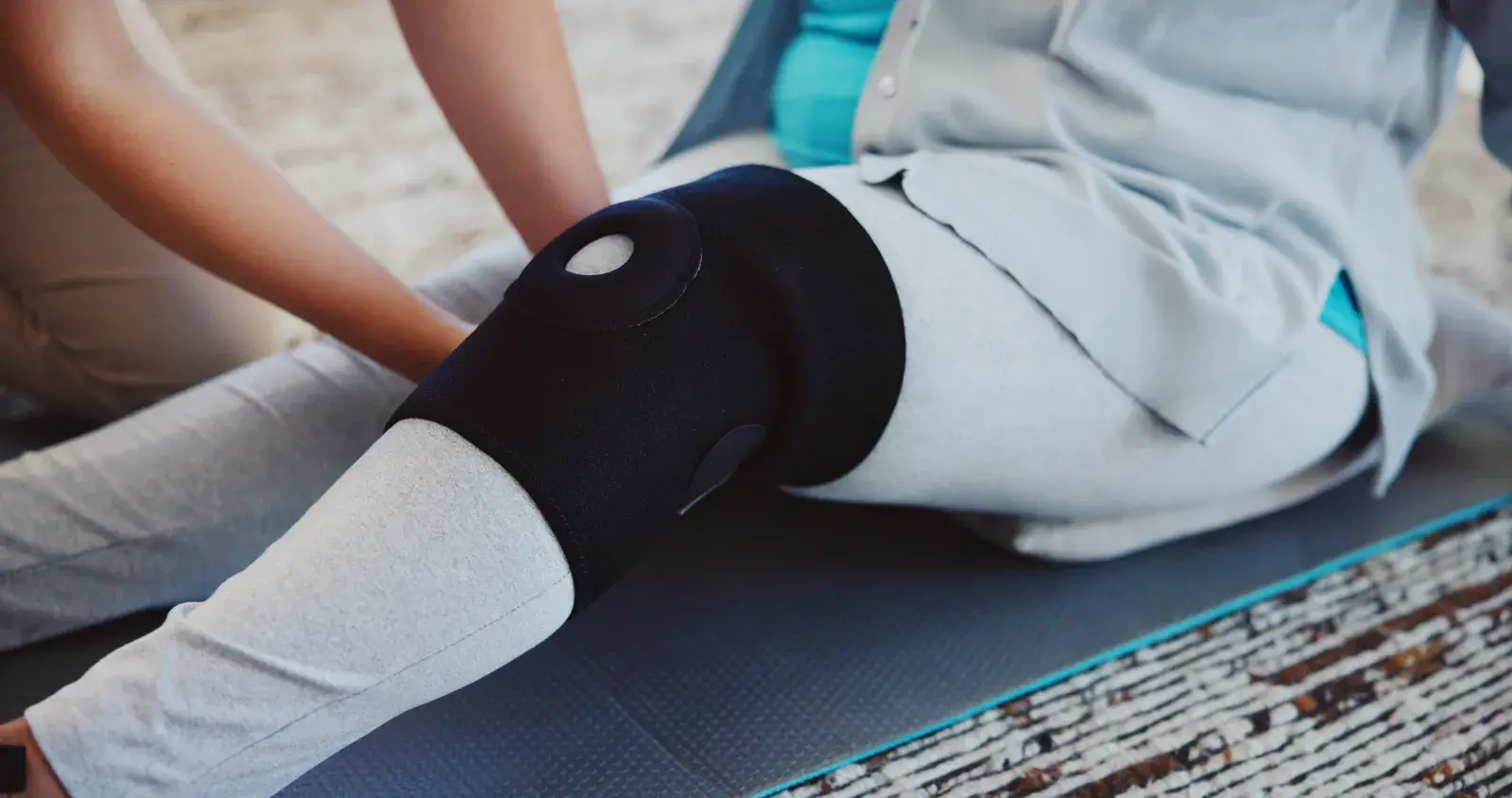
Which cartilage procedure did I have, and how does each one heal?
Your rehab depends on which of four main procedures was used, because each produces a different repair tissue on a different timetable. OrthoInfo describes microfracture as making small holes in the bone to bring up cells that form fibrocartilage, a tougher scar-like tissue that is less durable than the original surface.
Osteochondral autograft transfer (often called OATS) moves plugs of your own cartilage and bone from a less loaded part of the knee; an osteochondral allograft does the same with donor tissue for larger defects. MACI is a two-stage operation in which your own cartilage cells are grown in a laboratory and implanted weeks later. Plug and allograft procedures rely on bone healing, while microfracture and MACI rely on new tissue maturing, so the protected phase looks different.
- Microfracture: fibrocartilage fills the defect over months
- OATS (autograft): your own bone-and-cartilage plugs must fuse into place
- Osteochondral allograft: donor plug, used for larger defects
- MACI: cultured cells implanted in a second operation
Why does the defect’s position on the knee change the rules?
Where the cartilage was repaired decides which movements load it. A defect on the weight-bearing part of the thighbone (the femoral condyle) is loaded mostly by standing, so protocols commonly restrict weight for weeks but encourage early bending, often with a continuous passive motion machine.
A defect behind the kneecap or in the groove it slides in (the patellofemoral joint) is loaded by bending under weight, so many protocols allow standing in a brace locked straight but limit how far the knee bends while loaded. Mixing the two up is a common source of confusion, which is why your therapist reads the operative note before choosing a single exercise.
What does a typical cartilage repair timeline look like?
Most cartilage protocols span many months and progress by criteria as well as time. The broad stages below are typical; weeks vary widely with the procedure, so treat them as a map rather than a schedule.
| Approximate time | Main goals | Typical milestones |
|---|---|---|
| First weeks | Protect the repair, keep the joint moving, keep the quadriceps awake | Crutches with limited weight; passive motion within set limits |
| Roughly 6 to 12 weeks | Gradual weight bearing, normal walking, full motion | Weaning crutches as allowed; stationary bike; light closed-chain work |
| Roughly 3 to 6 months | Strength and endurance without irritating the joint | Progressive leg press, step-ups, longer walks, swelling stays quiet |
| Several months onward | Impact, running and sport where the surgeon permits | Graded jogging and agility only after clearance, often later after larger repairs |
What does your surgeon’s cartilage protocol control?
The surgeon controls weight-bearing amounts, brace settings, bending limits, use of the passive motion machine, and the earliest dates for impact, because only the surgeon knows the size, depth and position of the defect and how the repair sat. Any other procedure done at the same time, such as realigning the bone or stabilizing the kneecap, adds rules of its own.
Your therapist chooses exercises that respect those limits, teaches partial weight bearing on crutches, measures swelling and motion, and reports whether you meet each criterion. Swelling that rises after a session is treated as a signal to scale back, because irritating a maturing repair tends to cost more time than it saves.
How do you walk on crutches with only partial weight after cartilage surgery?
Partial weight bearing means letting only a set share of your body weight, or just the touch of the foot, rest on the operated leg while the crutches take the rest. Protocols often express it as toe touch, a percentage or a number of pounds, and it changes in steps as the weeks pass.
People rarely judge it accurately by feel. A common teaching method is to stand with the operated foot on a bathroom scale and press down until the number matches the target, so you learn what that amount of weight feels like. Your therapist will also check your crutch height, the order of crutches and feet on stairs, and how you manage curbs and the garage ramp, so the limit is respected outside the suite as well as in it.
How can I get ready before cartilage surgery?
The useful preparation is a knee that fully straightens, a quadriceps you can contract hard, and confidence with crutches at partial weight, since you may need them for weeks. For MACI, the gap between the two operations is a natural window for a few prehab sessions.
Think through logistics too: a stationary bike at home helps, and stairs, a long walk from a parking spot or a desk job without a footrest all matter. Garage parking at Carmel City Center is a short walk from the suites; mention crutches on the questionnaire so the team can plan around it.
What happens in later cartilage rehab in a private suite?
Later rehab is long, steady strength work that never asks the repair for more than it can take, then a careful return to impact. In a one-on-one suite with a rack, cable system and dumbbells, a therapist can load the hip, thigh and calf heavily while choosing knee angles that spare the repaired area.
To get started, complete the physical therapy questionnaire and mention the procedure and the date. Related reading: knee arthroscopy rehab for the approach itself and return to sport testing for the last stage.
Contact your surgeon after cartilage surgery if
- The knee becomes hot, red and increasingly swollen, or you have a fever
- Calf pain, swelling or warmth in the operated leg
- Chest pain or sudden breathlessness: call 911
- A new catching, locking or clunking sensation in the joint
- You accidentally put full weight through the leg and pain persists
If you think it is an emergency, call 911.
