Long drives and flights aggravate back pain mainly through hours of unbroken sitting, so the fix is a well-adjusted seat with low-back support, a planned break to stand and walk every hour or so, and small movements in the seat between breaks. The CDC notes that anyone traveling more than four hours can be at risk of blood clots and advises moving the legs often and exercising the calf muscles. If your back reliably flares on every road trip, a physical therapist can work out why sitting provokes it and build tolerance before the next one.
Last reviewed By the Monon Therapy Collective editorial team
- Blood clot risk
- Any trip over 4 hours (CDC)
- Breaks
- Stand and walk about every hour if you can
- Seat
- Hips level with or slightly above knees, low back supported
- Luggage
- Lift in two stages, close to the body
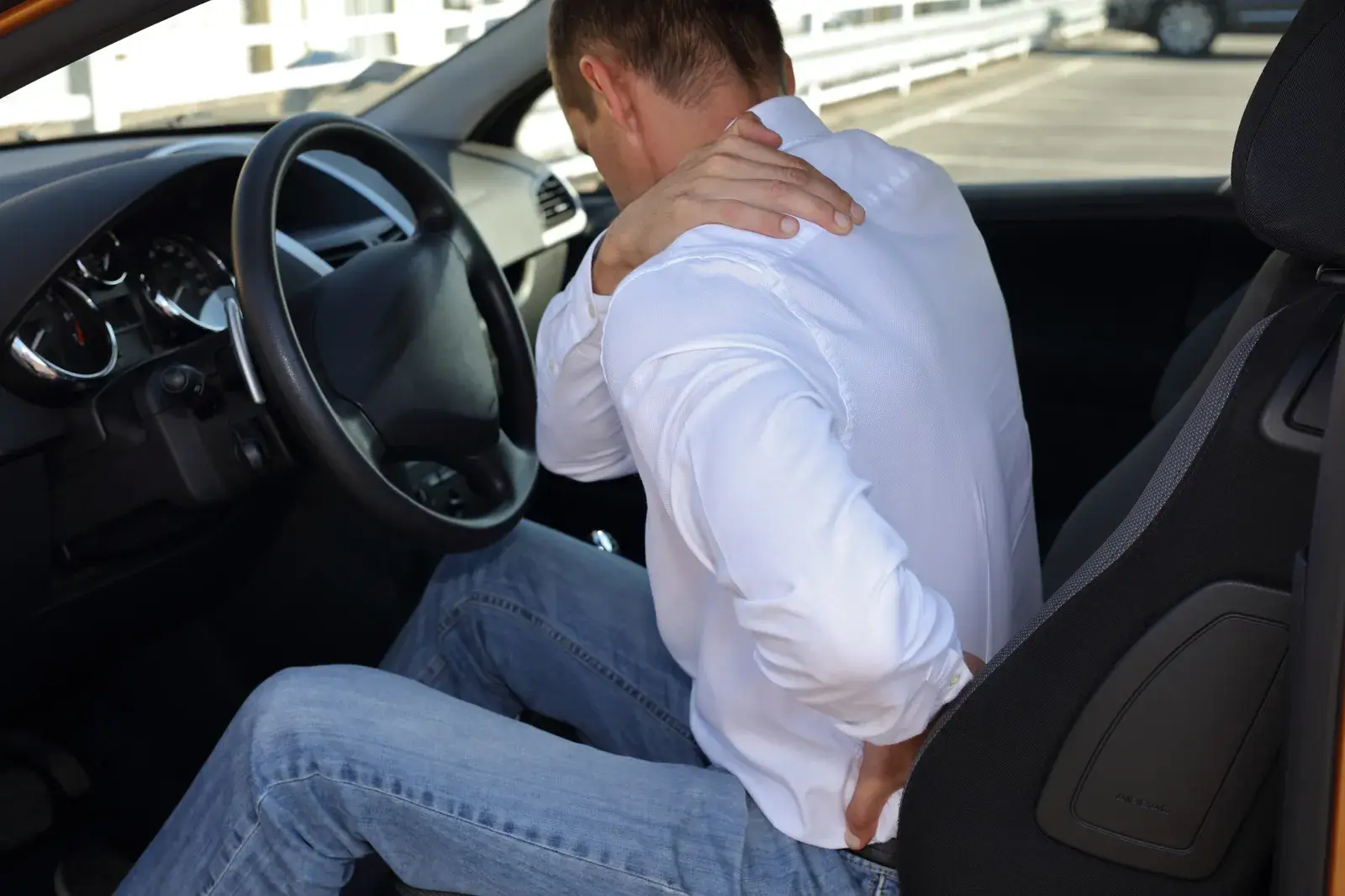
Why do long car rides make back pain worse?
Sitting holds the hips and spine in one position for hours, and many car seats encourage the low back to round while road vibration adds a constant small load. Tissues that are already sensitive dislike sustained positions far more than movement, so pain builds the longer you sit.
Drivers have it harder than passengers. Your right foot works the pedals, so the pelvis tilts slightly, and you cannot shift position freely. People whose pain is worse with sitting in general, a pattern described on the back pain when sitting page, usually feel it within the first hour of a long drive.
How should I set up a car seat for a long drive?
Raise the seat so your hips are level with or a little above your knees, slide it close enough that you can press the brake fully with a slight knee bend, and recline the backrest only slightly past upright. Then add support at belt height, either the built-in lumbar adjustment or a small rolled towel.
Bring the steering wheel toward you so your elbows stay bent and your shoulders rest against the seat; reaching forward to the wheel pulls you off the backrest within minutes. Empty your back pockets, since sitting on a wallet tilts the pelvis. Adjust the mirrors after you are sitting well, so that slumping makes them look wrong and reminds you to sit back up.
Heated seats feel good to many people with stiff backs and are fine to use. Cruise control on open highways such as I-65 or I-70 lets you move both feet and shift your hips periodically, which drivers rarely get to do otherwise.
How often should I stop on a road trip with a bad back?
Plan to stop and walk for a few minutes about every hour, and sooner if pain starts to build. Breaks before pain arrives work better than breaks after it, because a back that has already flared takes longer to settle.
A practical approach for a drive from Carmel to Chicago, Louisville or Cincinnati is to map rest areas or fuel stops in advance so a break never depends on willpower. At each stop, walk for three to five minutes and do a few standing back bends with your hands on your hips. Passengers can share the driving so nobody holds the driver’s position for hours.
| Trip length | In the seat | Breaks | Extra |
|---|---|---|---|
| Under 1 hour | Lumbar support, change position now and then | Usually none needed | Walk for a minute on arrival |
| 1 to 4 hours | Pelvic tilts, shoulder rolls, ankle pumps every 20 to 30 minutes | Stand and walk about every hour | Drink water so stops happen naturally |
| Over 4 hours | Calf exercises often, as the CDC advises | Hourly walking breaks; aisle walks on flights | Know the signs of a blood clot |
What can I do in a plane seat to protect my back?
Choose an aisle seat if you can, place a rolled sweater or small pillow behind your low back, keep your feet flat on the floor or on a bag, and stand to walk the aisle when the seatbelt sign is off. Small, frequent movements in the seat in between keep tissues from stiffening.
Useful in-seat movements include gentle pelvic tilts, pressing the low back into the support and releasing it, shoulder blade squeezes, ankle pumps and heel raises. The CDC specifically advises moving your legs frequently and exercising the calf muscles on long trips to keep blood flowing.
At Indianapolis International Airport, treat the walk from security to the gate as part of the plan: walk rather than sit while you wait to board, and stand at the gate instead of taking a seat for the last half hour.
How do I lift luggage into the car or overhead bin safely?
Lift in two stages: first from the floor to a seat armrest or your thigh, then up into the bin, keeping the bag close and turning your feet instead of your trunk. For a car trunk, put one knee or foot on the bumper and slide bags rather than lifting them over the lip from a stoop.
Pack lighter than you think you need, choose a bag with four wheels, and split heavy items between two bags. Ask for help with the overhead bin; it is the most awkward lift of the whole trip, done at arm’s length above your head in a narrow aisle.
How do I recover the evening after a long travel day?
Walk for 10 to 15 minutes as soon as you arrive, then lie on your back with knees bent or calves on a chair for a few minutes before sitting down to dinner. Moving first helps undo the stiffness of hours in one position, and the supported rest lets back muscles relax.
Gentle movements that ease your back at home work on the road too: knee rocking lying down, a few standing back bends, or cat-cow on the hotel bed. Heat from a warm shower helps many people. Choose a firm surface or put pillows under your knees if a hotel mattress is very soft. The sleeping positions guide covers setups for unfamiliar beds. Expect the next morning to be a little stiff; it should improve as you move.
How can a therapist help before a big trip?
A physical therapist can test which positions and movements provoke your back, then build sitting tolerance and strength so long trips become manageable. For many people that means a few weeks of graded sitting, hip mobility and trunk endurance work before the trip, plus a short routine to use at stops.
If a trip is coming up, start early. Indiana allows direct access to a physical therapist for 42 calendar days without a referral. Through the network, describe your travel plans in the questionnaire for back pain; a person on the matching team proposes an independent therapist, and weekday suites open at 5 AM. If leg pain comes with the back pain, read sciatica physical therapy, and if you are traveling mid-rehab, the guide on keeping rehab progress while you travel helps you keep exercises going.
Seek medical help immediately if, during or after travel
The CDC lists these signs of a blood clot in the leg or lungs.
- Swelling, pain or tenderness you cannot explain, warmth or redness in one leg or arm.
- Difficulty breathing, chest pain that worsens with a deep breath or cough, or a fast or irregular heartbeat.
- Lightheadedness or fainting.
- Back pain with numbness around the groin or new bladder or bowel changes: call 911.
If you think it is an emergency, call 911.
